
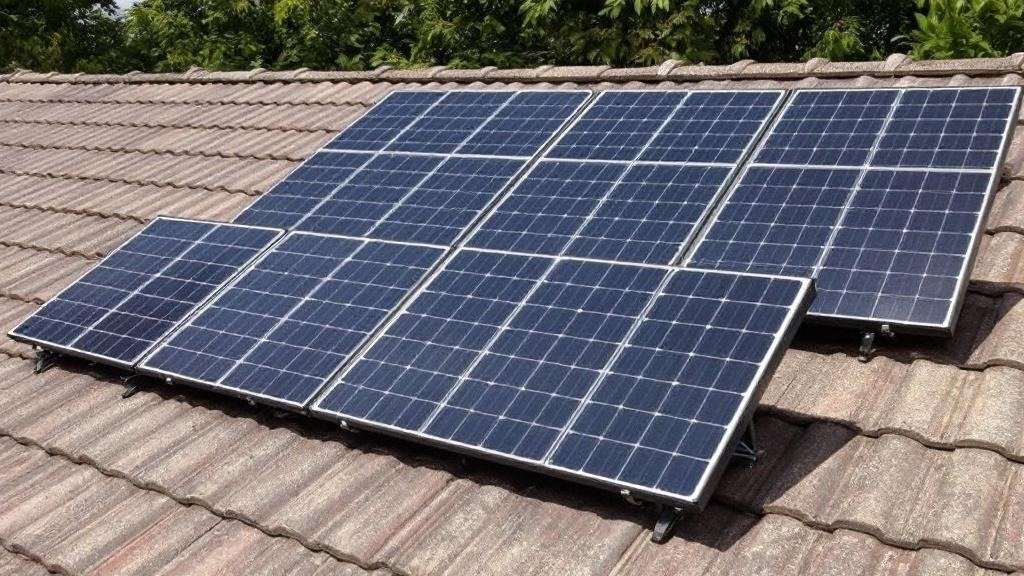


If you’ve been flirting with the idea of going off-grid or just want to keep your RV batteries topped up without running a noisy generator all day, the Renogy 200 Watt 12V kit is probably already on your radar. It’s a compact, approachable way to get into solar without needing an engineering degree or a full weekend lost in wiring diagrams.
What stood out to me with this kit is how thoughtfully it’s packaged for beginners. Instead of piecing together panels, brackets, cables, and a charge controller from different brands, you get a complete bundle that’s designed to work together from day one. That means fewer compatibility headaches, fewer surprise trips to the hardware store, and a much smoother first experience with solar.
Below, I’ll walk through how this kit performs in the real world, what it does well, where it falls short, and who it’s actually right for. I’ll also share some ideas on how to build around it with other upgrades if you decide to expand later.
- 【Efficient Performance】The 200W Solar Panel Starter Kit will produce an average of 1000Wh of electricity per day (Based …
- 【Solid Quality】Advanced encapsulation material with multi-layered sheet laminations protects cells from physical damage …
- 【Smart Function】The Wanderer PWM Charge Controller is compatible with four different types of batteries: Sealed, Gel, Fl…
Renogy 200W Monocrystalline Starter Kit: Product Showcase
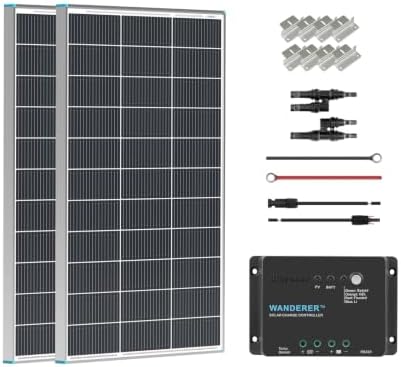
The Renogy 200W Starter Kit is built around two 100W monocrystalline panels paired with a 30A PWM charge controller. In practical terms, this gives you enough solar to comfortably handle light-to-moderate off-grid use think running lights, fans, charging laptops and phones, maybe a 12V fridge, depending on your battery bank and overall setup.
Renogy has been a go-to name for RV and off-grid solar for years, and this kit is very much their “entry gateway” product. You get the essentials: two panels, controller, Z-brackets, cabling, and connectors. If you’re mounting on the roof of an RV, small cabin, shed, or boat, it’s sized in that sweet spot where installation is still manageable without a crew or special tools.
The big appeal here is that everything is purpose-built to work together. You’re not guessing about wire gauge or wondering whether your controller can safely handle the panels. Out of the box, it’s a cohesive system aimed at people who want reliable energy, but don’t enjoy tinkering for weeks to get things running.
Renogy rates the kit to produce around 1000Wh per day in good sunlight. While your actual results will depend on your location and roof angle, it’s a realistic expectation if you average about five hours of direct sun. For weekend trips or modest boondocking setups, that’s a respectable amount of power from a starter system.
Pros & Cons of the Renogy 200W Starter Kit
Key Pros
First, the obvious win: convenience. This kit really does give you a turn-key starting point for small off-grid systems. The panels arrive with pre-drilled holes, the brackets are sized correctly, and the cables are properly rated so you’re not guessing about safety. For a first install, that peace of mind matters a lot.
Second, the panel efficiency is genuinely solid. With cell efficiency up to 22% and monocrystalline construction, you’re getting strong output even on cooler days or when the light isn’t absolutely perfect. The bypass diodes help maintain production if part of a panel is shaded, which is a big deal on RV roofs where vents and AC units can cast awkward shadows.
Third, the PWM Wanderer controller supports several battery types, including lithium, which is important if you plan to upgrade your batteries later. It uses a four-stage charging profile (bulk, boost, float, equalization) to keep your batteries happier and healthier over the long term, reducing the risk of overcharging or chronic undercharging.
Notable Cons
The most obvious limitation is that this is a PWM controller, not MPPT. PWM is perfectly functional, especially at this size, but you’re leaving some potential efficiency on the table, particularly in colder weather or when your battery voltage is significantly below panel voltage. For a serious, high-demand system, MPPT would be the better choice.
Another consideration is that 200W, while a great starting point, may not be enough for heavy off-grid usage, especially if you’re running a compressor fridge, water pump, and lots of electronics daily. You can expand the system up to 400W with the included controller, but that’s something to plan for if your power needs are growing.
Also, while the kit is advertised as “ready to install,” you may still want additional mounting hardware or sealant depending on your roof material and layout. The included Z-brackets work, but some users prefer tilt mounts or low-profile mounting for specific installations, especially on boats or curved RV roofs.
- 【Efficient Performance】The 200W Solar Panel Starter Kit will produce an average of 1000Wh of electricity per day (Based …
- 【Solid Quality】Advanced encapsulation material with multi-layered sheet laminations protects cells from physical damage …
- 【Smart Function】The Wanderer PWM Charge Controller is compatible with four different types of batteries: Sealed, Gel, Fl…
Description of the Renogy 200W Monocrystalline Kit
Real-World Power Output and Performance
Under decent conditions clear skies and midday sun you can expect these panels to put out near their rated wattage, especially when wired and positioned correctly. Across a full day, the claimed average of around 1000Wh is achievable in many parts of the U.S., assuming five hours of solid sun. That’s enough to top off a pair of 100Ah AGM batteries if you’re being mindful of your consumption.
Because these panels are monocrystalline, they tend to perform better in marginal light than cheaper polycrystalline options. In cloudy or hazy settings, you won’t see miracles, but you will see steady trickle charging rather than a complete drop-off. The TPT back sheet helps shed excess heat, which keeps voltage and output more stable on hot days.
The bypass diodes built into the junction box help mitigate partial shading. On an RV roof that’s a nice touch: if half a panel ends up shaded by a vent or ladder, the whole array doesn’t just collapse in output. It’s not a replacement for smart panel placement, but it does buy you a bit more forgiveness.
Build Quality and Durability
The panels themselves use advanced encapsulation materials with multi-layer laminations. In plain language, the cells are well protected from moisture, mechanical stress, and thermal expansion. That matters if your rig lives outside all year, or if you travel through big temperature swings from desert sun to mountain nights.
The frames are aluminum with a reasonably rigid profile, so flexing is minimal when mounted correctly. As long as you use proper backing and sealing on the roof, these panels should ride well through highway speeds and strong winds. Renogy’s panels have a solid track record in RV and marine circles, and this kit is very much in line with that reputation.
If you’re new to solar, you’ll also appreciate that the connectors and cables feel substantial, not flimsy. The 10AWG wiring is appropriately sized for this wattage and reduces voltage drop over the included 20-foot run, which helps keep more of your generated power actually reaching the batteries.
Charge Controller Features and Safety
The Wanderer 30A PWM controller is the brains of the system. It supports sealed, gel, flooded, and lithium batteries, which is crucial if you don’t want to be locked into one chemistry. Being able to adjust or select charging profiles means you can start with affordable lead-acid and upgrade to lithium later without replacing your whole system.
Inside, it manages a four-stage charging algorithm: bulk (fast charge), boost (near full), float (maintenance), and equalization for certain chemistries. That gives you better battery life than a simple on/off regulator. Overcharging, reverse polarity, short circuit, and overload protections are built in, so if you miswire something or a component fails, the controller is there as a first line of defense.
The 30A rating means that, at 12V, you can expand up to around 400W of solar with similar panels without needing a new controller. For many RV and small cabin setups, that expansion path is ideal: start small, learn the ropes, then double your array if you find you’re pushing your limits.
Installation Experience
Installation is where this kit shines for hands-on DIYers who are willing to put in a few hours but don’t want a full electrical engineering project. The panels come with pre-drilled mounting holes that match the supplied Z-brackets, saving you from having to drill into the frames yourself. That lowers the chance of mistakes and speeds up the process.
The included cables and MC4-style connectors click together intuitively. You’ll still need to plan your cable routing carefully and seal any roof penetrations with an appropriate sealant, but you’re not starting from scratch with raw parts. For many first-timers, that’s the difference between finishing in an afternoon and stalling for weeks.
One thing to keep in mind: you’ll want basic tools (drill, wrenches, crimpers, and a good sealant) and a bit of patience. If you’re adding this to an existing RV electrical system, take the time to map out your battery location, controller mounting spot, and cable paths before you start drilling anything.
- 【Efficient Performance】The 200W Solar Panel Starter Kit will produce an average of 1000Wh of electricity per day (Based …
- 【Solid Quality】Advanced encapsulation material with multi-layered sheet laminations protects cells from physical damage …
- 【Smart Function】The Wanderer PWM Charge Controller is compatible with four different types of batteries: Sealed, Gel, Fl…
Specs and Technical Overview
Solar Panel Specifications
The kit includes two 100W, 12V-rated monocrystalline modules. Each panel is designed to deliver its rated output under Standard Test Conditions, with a cell efficiency up to 22%. That’s very competitive in the consumer space and contributes to a smaller footprint for the same power, compared to older or cheaper technologies.
They use a TPT back sheet to manage heat and multi-layer sheet laminations to protect the cells. Connectors are industry-standard, so adding additional compatible panels later isn’t difficult. While exact voltage and current specs vary slightly, they’re tailored for 12V battery banks and common RV systems.
Charge Controller and System Capacity
The Wanderer Li 30A PWM charge controller is rated for up to 30A at 12V, which practically supports up to about 400W of solar input when wired correctly. That gives you room to double your array without upgrading the controller. It’s compatible with sealed, gel, flooded, and lithium batteries, so your storage options are flexible.
The controller includes protections for reverse polarity, overcharging, short circuits, and overload. It’s designed to live near your battery bank, minimizing voltage drop on the battery side wiring. For most compact systems, it strikes a good balance between features and simplicity.
Included Accessories and Wiring
In the box, you get a 20-foot 10AWG adaptor kit for connecting the panels to the controller and an 8-foot 10AWG tray cable for the controller-to-battery link. Renogy also includes a pair of branch connectors for parallel wiring and two sets of Z-brackets for mounting the panels.
This means you’re largely set for a basic installation without immediately hunting for extra components. Depending on your layout, you may still want additional cable length or protective conduit, but many users can get fully up and running with just what’s in the kit plus sealant and fasteners appropriate for their roof or structure.
Why We Recommend This Kit
The main reason this kit earns a recommendation is that it lowers the barrier to entry for solar in a very real way. You don’t have to know everything about solar design to end up with a safe, working system. The pieces are matched, the instructions are reasonably clear, and the performance is strong enough to make a noticeable difference in how you use your rig or small off-grid space.
In everyday use, it’s the convenience that makes the difference. Instead of running a generator just to top up batteries or worrying whether you have enough power to make it through a cloudy day, you have a consistent stream of charge feeding your batteries whenever the sun is out. Over time, that makes camping quieter, simpler, and often cheaper.
We also like that this kit is a solid foundation rather than a dead end. You can add more panels up to 400W total, change your battery chemistry later, and integrate it into a broader off-grid system if your needs grow. You’re not locked into a proprietary ecosystem or forced to replace everything just because you want more capacity.
If you’re interested in picking it up, you can check current pricing and availability here: Renogy 200W Starter Kit on Amazon. Renogy frequently adjusts prices and offers bundles, so it’s worth looking at any current deals.
- 【Efficient Performance】The 200W Solar Panel Starter Kit will produce an average of 1000Wh of electricity per day (Based …
- 【Solid Quality】Advanced encapsulation material with multi-layered sheet laminations protects cells from physical damage …
- 【Smart Function】The Wanderer PWM Charge Controller is compatible with four different types of batteries: Sealed, Gel, Fl…
Who This Is NOT For
This kit is not ideal if you’re trying to power a full-time off-grid home with heavy loads like air conditioning, electric heating, or large kitchen appliances. In that scenario, you’ll want a significantly larger array, an MPPT controller, and a more substantial battery bank. Think of this as a starter or supplemental solution, not a whole-house system.
It’s also not the right fit if you already know you’ll be upgrading immediately to a high-end, fully optimized system. For power users who need every possible watt out of their array, starting directly with an MPPT controller and larger panels may be more cost-effective in the long run.
Finally, if you’re extremely uncomfortable with any wiring or drilling at all, you may prefer a folding, briefcase-style portable kit that requires almost no installation. This Renogy kit assumes you’re willing to mount panels and integrate them into your existing battery system with at least a modest amount of DIY effort.
Complementing Ideas and Next Steps
Once you’ve set up your 200W kit and lived with it for a bit, you may find yourself wanting a bit more power or flexibility. One natural next step is to add a compact inverter, so you can run select AC devices from your DC battery bank. Pairing this solar kit with a modest pure sine wave inverter gives you far more flexibility without dramatically increasing system complexity.
If you’re outfitting an RV, you might also be considering upgrades like better insulation, vent fans, or power monitoring. We’ve covered related upgrades and practical installation tips in other resources, such as our guide to RV-ready systems and battery setups here: RV solar kit installation tips. Combining panel upgrades with smarter energy use often produces better results than simply throwing more wattage at the problem.
For cabin or shed applications, think about integrating this kit with a modest battery bank and a small backup generator. That hybrid approach keeps your fuel use low while still giving you a safety net during long stretches of cloudy weather. You can find more ideas on system design and storage options in our overview of off-grid setups: off-grid solar battery planning.
And if portability is important say you want something you can move between a campsite, a workshop, and an emergency backup setup at home you might consider pairing a permanent installation like this with a smaller portable solar panel and power station combo for maximum flexibility.
For higher-demand RV users, another longer-term path is upgrading to lithium batteries while keeping this kit as your primary charging source. You can see current lithium-compatible options here: RV-ready solar kits and batteries, which often pair nicely with the starter kit if you prefer to expand piece by piece.
If you discover that 200W just isn’t enough and know you’ll be expanding quickly, it may be worth planning your roof layout and wiring with a future upgrade in mind. Browsing larger 200 watt solar panel options can give you a sense of how your system might evolve from a simple starter kit into a more robust long-term setup.
- 【Efficient Performance】The 200W Solar Panel Starter Kit will produce an average of 1000Wh of electricity per day (Based …
- 【Solid Quality】Advanced encapsulation material with multi-layered sheet laminations protects cells from physical damage …
- 【Smart Function】The Wanderer PWM Charge Controller is compatible with four different types of batteries: Sealed, Gel, Fl…
Your Questions, Answered
How much power can I realistically expect from the Renogy 200W kit each day?
In real-world conditions, most users can expect around 600–1000Wh per day from the Renogy 200W kit, depending on location, time of year, and roof angle. Renogy’s estimate of roughly 1000Wh assumes about five hours of strong, direct sunlight. If you camp in shaded areas or during winter at higher latitudes, you’ll be on the lower end of that range; if you spend summers in wide-open, sunny areas, you may see performance close to or even above the rated output during peak hours.
Can this kit fully power an RV off-grid without a generator?
It depends on how you use your RV. For light-to-moderate use LED lights, water pump, fans, phone and laptop charging, maybe a small 12V fridge this 200W system can significantly reduce or even eliminate generator runtime when paired with an appropriately sized battery bank. However, it will not power air conditioning, electric heaters, or high-draw kitchen appliances by itself. Many RV owners use this kit as a core charging source, then supplement with occasional generator use during cloudy stretches or heavy-demand days.
Is the included PWM controller good enough, or should I upgrade to MPPT?
For many users, the included PWM controller is perfectly adequate, especially at the 200–400W scale. It’s reliable, simple, and cost-effective. That said, an MPPT controller can extract more usable power in cold weather, low-light conditions, and when there’s a larger voltage difference between the panels and the battery bank. If you know you’ll eventually expand beyond 400W or you want to squeeze every possible watt from your array, you might start with this kit, learn the basics, then later upgrade to an MPPT controller while keeping the same panels.
Can I use this kit with lithium batteries?
Yes. One of the strengths of the Renogy 200W Starter Kit is that the Wanderer Li 30A PWM charge controller is compatible with lithium batteries in addition to sealed, gel, and flooded lead-acid options. You’ll want to double-check the controller settings and choose the correct profile for your specific lithium battery to ensure proper charging and protection. Many people start with lead-acid batteries to keep initial costs down and then transition to lithium later without needing to replace the entire solar charging system.
Is this kit suitable for a small cabin or shed, not just an RV?
Absolutely. While the kit is heavily marketed to RV owners, it works just as well on small cabins, sheds, workshops, or off-grid offices. As long as you can safely mount the panels in a sunny location and run the cables to a battery bank and the charge controller, the system will perform the same. For a cabin or shed, you’ll want to think carefully about how many lights, devices, and any 12V or inverter-powered appliances you plan to run daily, then size your battery bank to match what the 200W array can reasonably recharge between uses.

We are a collective of off-grid enthusiasts, solar technicians, and sustainable living advocates dedicated to making energy independence accessible. From blackout-proofing suburban homes to engineering mobile power for the road, we rigorously test every kit and component we review. Our mission is to help you cut the cord and power your life on your own terms.