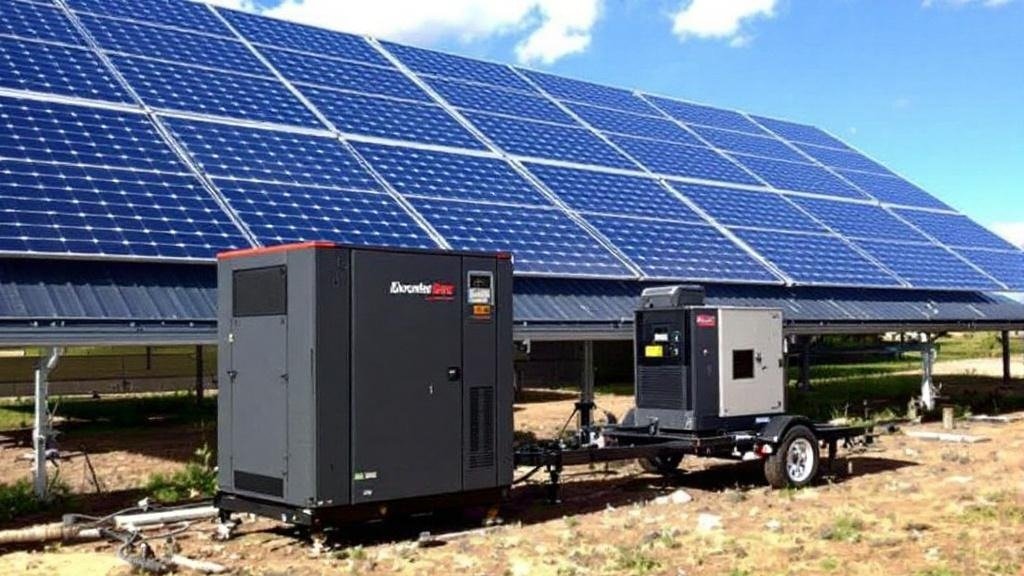


If you’ve ever sat in the dark during an outage wondering how long the food in your fridge will last, or how you’d keep the furnace running in a winter storm, you already know why a serious inverter generator matters. There’s a big difference between a noisy jobsite unit that just “makes power” and a cleaner, smarter option that can safely run your whole house electronics without frying them.
The model we’re looking at today sits squarely in that second category. It’s not a tiny camping unit; it’s a heavyweight, home‑backup workhorse that still behaves like a refined, modern power source. After spending time digging into how it’s built, how it’s meant to be used, and where it outshines the typical portable unit, this one stands out as a realistic alternative to a permanent standby system for a lot of households.
Below, I’ll walk through what this generator actually offers in real-world terms, where it shines, and a few things you should know before you commit because this is a serious purchase, and it should genuinely fit your situation, not just look good on a spec sheet.
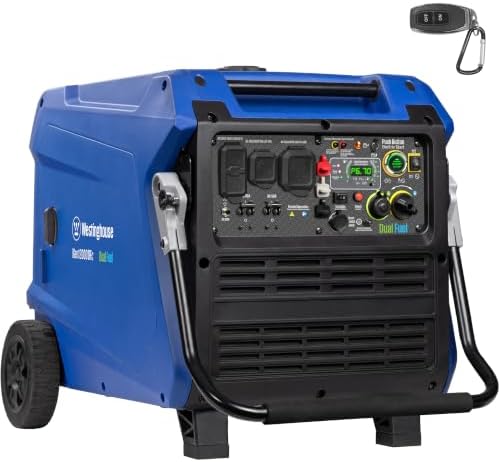
- HOME BACKUP POWER, ≤3% THD: The Westinghouse iGen12000DFc dual fuel inverter generator provides whole home backup power …
- POWERFUL ENGINE, VERY QUIET OPERATION: Eco Mode, insulation and mufflers keep this generator neighborhood friendly with …
- SAVE UP TO 50% IN FUEL COSTS: Inverter technology matches engine speed to power demand to cut fuel consumption in half v…
Westinghouse 11000DF Inverter Generator Product Showcase
This Westinghouse dual fuel unit is designed as a full-scale home backup and RV power solution that still delivers the clean output you expect from an inverter. In practical terms, that means you can keep big loads going air conditioning, fridges, sump pumps while still trusting it with sensitive electronics like laptops, smart TVs, and Wi‑Fi gear.
Under the hood you get a 457cc 4‑stroke OHV Westinghouse engine paired with an inverter module that keeps total harmonic distortion under 3%. That’s the big technical way of saying the power is stable and clean, much closer to what comes from your utility than from a typical open-frame contractor generator. If you’ve had bad experiences with buzzing or failing electronics on rough power, this immediately matters.
In use, the most striking thing about this model is how well it’s set up for real emergencies. Remote electric start, a large fuel tank, long run times, transfer switch–ready outlets, and a built‑in CO sensor all point to a generator that was actually designed with home backup in mind, rather than just rebranding a jobsite machine.
Westinghouse also includes genuinely useful accessories right in the box: a remote start key fob, 12V battery charger, oil, funnel, and a basic tool kit. That means you’re not scrambling for a bunch of extra bits the first time a storm knocks power out you can realistically get it running within an hour of unboxing.
If you like the general Westinghouse approach to design and support, you might also want to compare this with a smaller home backup option on their site later; the brand tends to keep controls and layouts consistent across models, which makes owning more than one less confusing.
Pros & Cons
Key Advantages
First, power output. On gasoline, you get up to 11,000 peak watts and 9,000 running watts. On propane, it still delivers 10,000 peak and 8,100 running watts. That’s enough for most average homes to run key appliances at once think a central or large window AC unit, refrigerator, freezer, sump pump, some lighting, plus routers and chargers when wired through a transfer switch.
The second big win is fuel flexibility. Being dual fuel means you can run it on gasoline or propane. In longer outages, that’s a huge comfort. Gas can be hard to find or store safely in quantity, while propane tanks are often already on hand for grills or home heating. Having the choice spreads your risk and can significantly cut downtime in a prolonged emergency situation.
Ease of use is another strong point. Remote electric start with the included key fob, plus push-button and recoil backup, makes actually starting the unit simple, even if you’re not mechanically inclined. If you’ve ever stood in the rain yanking on a stubborn pull cord, being able to start the generator from inside or from a dry spot feels like a luxury that quickly becomes a necessity.
Finally, Westinghouse backs this model with a 3‑year limited warranty and lifetime technical support. They also functionally test every portable unit at the factory, which is why you might notice a faint fuel smell or a touch of residual oil out of the box. That’s not a defect; it’s a sign it’s actually been test‑run before shipping.
Potential Drawbacks
No generator at this size is truly “grab and go,” and this one is no exception. While the included never-flat wheels and handle make it movable, you’re still dealing with a substantial piece of equipment. If you have steep steps or very uneven terrain between your storage spot and where you plan to run it, moving it can be a two-person job.
Noise is improved compared to traditional open-frame units, but it’s still a high-output machine. It’s quieter and smoother than many comparable models, yet you will definitely hear it when it’s under load. If you’re in a dense neighborhood, you’ll want to be mindful about placement and possibly add some sound-conscious positioning behind fences or landscaping.
Another consideration is that, while it’s transfer switch ready, you’ll still need a licensed electrician to install that switch if your home doesn’t already have one. That’s not a flaw of the generator, but it is part of the real-world cost of putting its full capabilities to work for whole-home backup.
Lastly, while propane operation is incredibly convenient and often cleaner, you should expect slightly reduced running watts compared to gasoline. That’s completely normal for dual fuel designs, but it’s something to factor in when you’re planning which appliances you want to run simultaneously.
- HOME BACKUP POWER, ≤3% THD: The Westinghouse iGen12000DFc dual fuel inverter generator provides whole home backup power …
- POWERFUL ENGINE, VERY QUIET OPERATION: Eco Mode, insulation and mufflers keep this generator neighborhood friendly with …
- SAVE UP TO 50% IN FUEL COSTS: Inverter technology matches engine speed to power demand to cut fuel consumption in half v…
Description & Real-World Performance
Clean, Stable Power for Home Electronics
One of the main reasons people seek out an inverter generator instead of a standard portable model is power quality. This Westinghouse unit keeps THD under 3%, which puts it in the “safe for electronics” category. In practice, that means your computers, televisions, gaming consoles, and smart home hubs are much less likely to experience glitches, overheating, or damage from voltage swings and ugly waveforms.
If you rely on home office equipment, remote work, or online schooling, this becomes more than a convenience. Clean power allows you to keep working or studying through an outage without constantly wondering if your UPS will start beeping or your laptop charger will fail. It’s essentially bringing a mini power plant up to a standard that modern electronics expect.
Because of the inverter design, power output is also more consistent under varying loads. When big appliances cycle on and off like refrigerators and AC units the generator isn’t constantly surging and dipping in a way that stresses components. That smoother behavior extends the life of both the generator and the connected devices.
Engine, Runtime, and Fuel Use
At the heart of the system is a 457cc 4‑stroke OHV Westinghouse engine with a cast iron sleeve. Cast iron sleeves are a small detail that quietly matters; they help the engine stand up better to long runtimes and heavy loads, which is exactly what you’ll see during serious outages. Combined with automatic low oil shutdown, it’s designed to protect itself from the common ways generators get abused.
On gasoline, the 7.92–9.8 gallon tank (Westinghouse’s materials describe the capacity slightly differently by market) can deliver up to 17 hours of runtime, depending on how heavily you’re loading it. In a real-world backup scenario, that usually means you can run through the night without getting up at 3 a.m. to refuel, then top it off in the morning when it’s safer and easier.
Propane operation will typically mean slightly shorter runtimes per tank and lower peak output, but it also brings cleaner burning, easier long-term fuel storage, and less worry about stale gasoline. For many homeowners, the ideal strategy is to run gasoline when you need full output and use propane for extended, lighter loads.
Westinghouse also includes a visible fuel gauge and an LED Data Center that shows remaining runtime, power output, and fuel level, so you’re not guessing. When the lights are out and conditions are stressful, having that information in front of you makes planning refueling and load management much less chaotic.
CO Sensor and Safety Features
Carbon monoxide safety has become non‑negotiable with modern generators, and this unit includes an integrated CO sensor designed to shut the engine down if dangerous levels are detected. It’s not an excuse to misuse the machine you still need to run it outdoors, away from windows and doors but it is an important last line of defense.
All outlets on the control panel feature rubber covers to protect against moisture and accidental contact, and the unit includes two GFCI 120V 20A household outlets for safer use with standard cords. These touches don’t make it invincible, but they do add layers of protection for hurried, real-world use when you’re plugging in gear during a storm.
The automatic low oil shutdown is another safety net. Under heavy use, engines can consume a bit of oil, and not everyone is diligent enough to check levels as often as they should. This feature helps prevent a simple oversight from turning into an expensive repair.
Portability and Setup Experience
Physically, this is a substantial machine, but Westinghouse has done what they can to keep it manageable. The included never-flat wheels, fold-down handle, and lift bracket make it feasible to reposition for storage or to load into a trailer or truck with assistance. If you’re planning on keeping it in a garage or shed, think of it as something you’ll roll into place rather than carry.
The “plug‑and‑play” orientation is not just marketing language. Out of the box, you get oil, funnel, tools, and a 12V charger; add fuel, hook up a properly rated cord or transfer switch, and you’re operational. Minimal assembly is required, mainly attaching the wheels and handle. If you’ve set up other power equipment, this will feel straightforward, and even first‑timers should be able to follow the user-friendly manual.
Remote start via the key fob is a quality-of-life upgrade that you quickly get used to. Being able to start the generator from inside the house or RV before stepping out to manage cords or check loads saves time and keeps you out of the worst of the weather.
Specs & Power Configuration
Power Output and Fuel Ratings
On gasoline, this generator delivers 11,000 peak watts and 9,000 running watts. On propane, it’s rated for 10,000 peak and 8,100 running watts. Those numbers place it beyond the “just run a fridge and a couple lights” category and firmly into “support key circuits in a home” territory when combined with a proper transfer switch.
THD under 3% classifies this as a clean power unit, backed by its inverter design. That level is typically recommended for devices with sensitive electronics, switch‑mode power supplies, and medical or communication equipment that specifically calls for stable, low‑distortion power.
Fuel capacity is listed as approximately 7.92 to 9.8 gallons depending on documentation, with up to 17 hours runtime at lighter loads. Realistically, with mixed household loads cycling on and off, you’ll often see something slightly below that, but still easily enough for overnight operation.
Outlet Layout and Connectivity
The control panel is set up to handle both everyday plug‑ins and more serious backup configurations. You get two GFCI 120V 5–20R 20A standard household outlets for typical extension cords or small appliances. For heavy loads, there’s a transfer switch–ready 120V L14‑30R 30A outlet and a 120/240V 14‑50R 50A outlet.
That 14‑50R is a big deal if you want to power an RV or supply a larger home transfer switch with a single cord. It reduces the need for awkward multi‑cord setups, simplifies installation, and helps ensure you’re using appropriately rated connections for the wattage you’re drawing.
All the outlets have rubber covers, which is especially reassuring in rain‑prone or dusty environments. While you should still protect the entire generator from direct rainfall and standing water, those covers help avoid accidental debris, splash, and curious fingers during operation.
Controls, Monitoring, and Extras
At the center of the control panel sits the LED Data Center. It cycles through fuel level, power output, remaining run time, voltage output, and total lifetime hours. In practice, these readouts are most helpful for three things: pacing your refueling, keeping your load within a comfortable margin, and staying current with maintenance intervals.
For long‑term owners, the lifetime hours display is underrated. It takes the guesswork out of oil change schedules, spark plug replacements, and general inspections. Instead of vaguely remembering “I think I used it a lot last storm,” you can simply check the actual hours and service accordingly.
Out of the box, Westinghouse bundles in a remote start key fob, 12V battery charger, oil, funnel, and a tool kit. That means you’re not stuck raiding your garage for random wrenches and funnels when the forecast suddenly takes a turn and you decide to set it up.
- HOME BACKUP POWER, ≤3% THD: The Westinghouse iGen12000DFc dual fuel inverter generator provides whole home backup power …
- POWERFUL ENGINE, VERY QUIET OPERATION: Eco Mode, insulation and mufflers keep this generator neighborhood friendly with …
- SAVE UP TO 50% IN FUEL COSTS: Inverter technology matches engine speed to power demand to cut fuel consumption in half v…
Why We Recommend This Model
The main reason this particular generator is worth recommending is balance. It sits at a sweet spot between raw power, clean output, and genuinely practical features for real emergencies. You’re not just buying a big engine on a frame you’re getting a thought‑through home backup system that happens to be portable.
With 9,000 running watts on gasoline, it’s realistic to support critical loads for many average homes without resorting to constant juggling of breakers and cords. The presence of both a 30A and 50A transfer‑switch‑ready outlet means it integrates naturally into a backup panel setup instead of remaining a “last‑ditch extension cord” solution.
The clean power aspect is another strong driver. Many people underestimate how much of their home depends on sensitive electronics now furnace control boards, fridges with digital panels, routers, modems, home office equipment, even newer washing machines. Having a generator that treats those devices gently is a long-term investment in avoiding nuisance repairs.
Dual fuel flexibility, the CO sensor, and remote start round out the package in a way that feels tailored for real storms and real households, not just spec sheet bragging rights. When you’re cold, tired, and the power’s been out for hours, those small quality-of-life touches combine to make a surprisingly big difference.
If you want to check current pricing and availability, you can see it here: Westinghouse iGen11000DFc on Amazon. Just remember that prices and deals can change quickly, especially around major weather events.
Who This Is NOT For
Despite all its strengths, this is not the right choice for everyone. If you’re a casual camper who only needs to charge a phone, run a small fan, and maybe power a low-wattage cooktop for a few hours, this machine is overkill. A smaller portable unit will be cheaper, lighter, and easier to toss in the back of a car.
It’s also not ideal if you live in a small apartment with nowhere appropriate to run or store a large generator. You must operate it outdoors, away from windows and doors, and that simply isn’t realistic in many multi-unit buildings. In those cases, a smaller indoor-safe power station or carefully chosen battery backup solution often makes more sense.
If your budget is extremely tight and you just want the least expensive way to keep a fridge running occasionally, a basic non‑inverter unit might be tempting. You’ll give up clean power and some convenience, but you will save money upfront. Just be honest about what devices you plan to plug in and how often you’ll rely on it.
Finally, if you’re looking for a fully automatic, “never think about it” solution that kicks on by itself the second the grid fails, then a permanent standby generator with an automatic transfer switch is what you actually want. It will cost more, but it’s a different category entirely in terms of convenience and integration.
Complementing Ideas & Helpful Resources
Before you actually buy, it’s worth reading a clear explainer on how inverter models compare to conventional units, especially if this is your first time shopping for serious backup power. Our guide on how these generators work can help you understand why power quality, THD, and engine design matter more than just the wattage number on the box: Department of Energy emergency preparedness resources.
If you’re on the fence between this and a smaller or larger Westinghouse model, you may find it helpful to see how different wattage ranges translate into real household loads. We break that down in detail here: Consumer Reports generator buying guide. It’s a good way to sanity‑check whether you’re choosing the right size for your home and expectations.
Once you’ve settled on this generator, you’ll also want to think about accessories: a properly rated 30A or 50A cord, a safe outdoor location to run it, and ideally an installed transfer switch. For a step‑by‑step look at how we plan and stage emergency power setups, including cord management and fuel storage, take a look at our home backup planning article: emergency generator setup checklist.
If you’re comparing multiple brands of westinghouse generators or trying to decide whether a propane‑capable model is worth the extra cost, we also walk through common scenarios in our dual‑fuel comparison guide: dual fuel vs gas generator comparison. It’s aimed at homeowners who want a clear, non‑technical breakdown of tradeoffs.
Finally, when you’re ready to move from research to purchase, here are a few hand‑picked listings that often offer competitive pricing and fast shipping on this model and closely related units: Westinghouse dual fuel inverter generator (main listing), Westinghouse generator family on Amazon, portable inverter generator alternatives, and propane‑ready backup generators. Comparing a few options side by side can help you feel more confident that this one truly fits your home and budget.
- HOME BACKUP POWER, ≤3% THD: The Westinghouse iGen12000DFc dual fuel inverter generator provides whole home backup power …
- POWERFUL ENGINE, VERY QUIET OPERATION: Eco Mode, insulation and mufflers keep this generator neighborhood friendly with …
- SAVE UP TO 50% IN FUEL COSTS: Inverter technology matches engine speed to power demand to cut fuel consumption in half v…
Your Questions, Answered
Can this generator really power most of a typical home?
Yes, for many average-size homes this unit can comfortably cover core circuits during an outage when it’s connected through a properly sized transfer switch. With 9,000 running watts on gasoline and 8,100 on propane, you can typically support a refrigerator, freezer, sump pump, some lighting, Wi‑Fi gear, and often a central or large window AC unit, depending on its starting requirements. The key is to prioritize critical loads, avoid running every high-draw appliance at once, and have an electrician configure your backup panel with realistic expectations in mind.
Is it safe to run computers, TVs, and other sensitive electronics on this generator?
This model is specifically built as an inverter generator with less than 3% total harmonic distortion, which is considered a clean output suitable for electronics. That low THD means the waveform is smoother and more consistent than a typical open-frame contractor unit. In real use, that translates to less stress on power supplies and circuit boards in computers, TVs, networking gear, and modern appliances. You should still use quality surge protection and follow manufacturer recommendations, but this design is exactly what you want for mixed household loads.
How loud is it compared to a standard open-frame generator?
While exact decibel figures vary by load and measurement distance, this inverter-style design is noticeably smoother and generally quieter than many traditional open-frame models in the same power class. That said, it’s still a high-output machine, so you will hear it when it’s under significant load. Placement makes a big difference: putting it farther from living spaces, behind a fence or structure, and avoiding reflective corners can significantly reduce perceived noise inside the house or RV.
What kind of maintenance does this generator require over time?
Maintenance is similar to other gasoline and propane engines but made easier by the built-in hour meter on the LED Data Center. You’ll need to change the oil at the intervals listed in the manual, check and occasionally replace the air filter, inspect and replace the spark plug when needed, and keep fuel fresh. Periodically running the generator under load, even when you don’t have an outage, is important to keep everything lubricated and confirm that it starts easily. The cast iron sleeve and automatic low oil shutdown help protect the engine, but regular service is still essential for long life.
Do I need a transfer switch to use this generator for home backup?
Technically, you can power individual appliances using heavy-duty extension cords plugged directly into the generator’s outlets. However, for safe and convenient whole-home or multi-circuit backup, a transfer switch is strongly recommended and, in many jurisdictions, legally required. This unit is set up with both L14-30R and 14-50R transfer-switch-ready outlets, making it easy for an electrician to integrate it with a manual transfer panel. That approach prevents dangerous backfeeding into the grid, lets you control which circuits receive power, and gives you a much cleaner, more organized backup experience overall.

We are a collective of off-grid enthusiasts, solar technicians, and sustainable living advocates dedicated to making energy independence accessible. From blackout-proofing suburban homes to engineering mobile power for the road, we rigorously test every kit and component we review. Our mission is to help you cut the cord and power your life on your own terms.