

If you’ve been toying with the idea of going off-grid, powering your RV, or just keeping your cabin or shed running without relying on the grid, a starter solar kit is often the most stress-free way to begin. Instead of hunting down compatible parts one by one and hoping the connectors match, you get a package that simply works together out of the box.
The Renogy 100W 12V Solar Panel Starter Kit is one of those rare products that has been around long enough to prove itself, but is still beginner-friendly and reasonably priced. I’ll walk you through how it actually performs, where it shines, and where you might run into limitations, so you can decide whether this particular kit fits your setup or if you should keep looking.

- 【Efficient Performance】This Starter Kit can generate an average of 500Wh of electricity per day (varies with sunlight). …
- 【Market-Leading Service Plan】Enjoy worry-free usage with our market-leading service plan, providing 10 years of coverage…
- 【Exceptional Safety】Certified by UL 61730, CSA C22.2#61730, IEC 61730/IEC 61215, our solar panel withstands 2400Pa wind …
Renogy 100W Solar Starter Kit Product Showcase
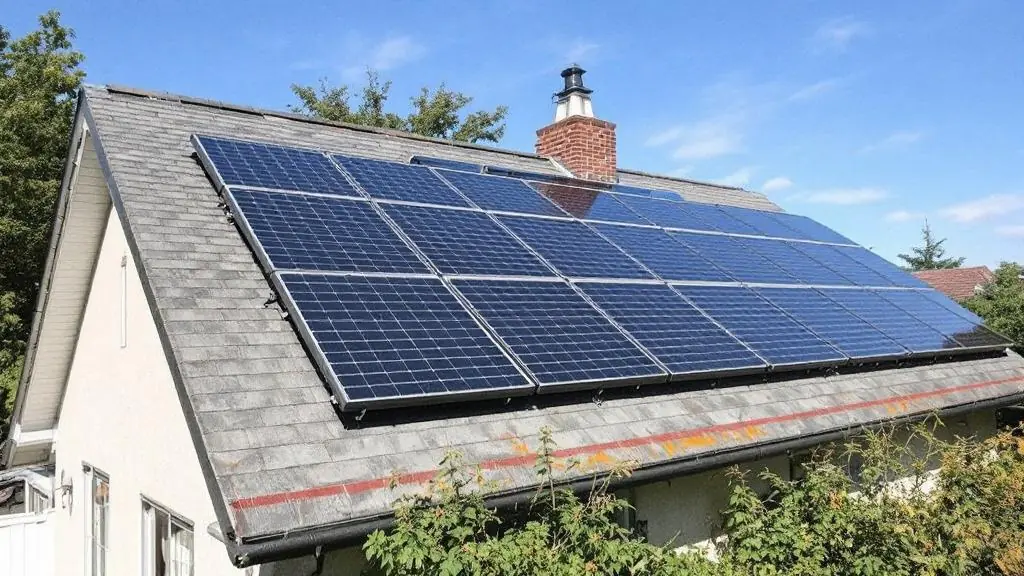
The Renogy 100W 12V Solar Panel Starter Kit is built around a single 100 watt monocrystalline solar panel, paired with a 30A Wanderer PWM charge controller, mounting hardware, and the essential cabling you need to get going. It’s designed for RVs, campers, small off-grid sheds, boats, and emergency backup power, especially if you’re new to solar and don’t want to overcomplicate your first install.
One thing I like right away is that Renogy doesn’t overload you with random extras that you’ll never use. Instead, you get the core of a solid diy solar panel kit: a high-efficiency panel, a reliable controller, adaptor cables, tray cables for your battery connection, and Z brackets so you can mount the panel securely to a roof or flat surface. It feels intentional rather than bloated.
According to Renogy, this 100 watt solar panel can generate about 500Wh per day under good sun (around 5 hours of strong direct sunlight). In real-world terms, that’s enough for small loads like LED lights, charging phones and laptops, running a fan, or trickle charging a battery bank in your RV or camper. You won’t be running a full-size air conditioner off this one kit alone, but that’s not what it’s designed for.
For anyone dipping their toes into rv solar panel kits for the first time, the biggest advantage is that you’re not guessing. The panel, controller, and wiring are meant to work together. And if you find you like the setup, the included controller can support expansion up to 400W, so you can add more 100 watt solar panel units over time instead of replacing everything.
If you want to check current pricing or reviews, you can see the kit here: Renogy 100W Starter Kit on Amazon.
Pros & Cons of This Renogy Kit
Major Advantages
First, the monocrystalline solar panels Renogy uses here are genuinely efficient for this price range. Renogy rates the cell efficiency at about 22.5%, which is slightly higher than a lot of budget panels that hover in the low 20% or high teens. In practice, that means you squeeze more power out of limited roof space, which really matters on a small RV or camper roof where every inch counts.
Another clear advantage is that everything is packaged for beginners. The included Wanderer 30A PWM charge controller comes pre-configured to work with 12V systems and supports multiple battery chemistries, including AGM, Gel, Flooded, and Lithium. If you’ve ever tried piecing together a diy solar panel kit from scratch, you already know how frustrating it can be when the controller doesn’t play nicely with your battery type or connectors.
I also appreciate the build quality and testing process. Each panel goes through 100% EL (electroluminescence) testing, which is a fancy way of saying they look for hidden microcracks and defects before it leaves the factory. Combine that with the strong wind and snow load ratings, and you get something you can bolt onto an RV roof or cabin and reasonably expect it to survive bad weather.
Finally, Renogy’s long-term coverage is a real plus: 10 years on material and workmanship for the panel itself, a 2-year plan on the charge controller, and a 25-year service plan for power output. That kind of backing doesn’t guarantee nothing will ever go wrong, but it does make it easier to justify the investment, especially if you plan to use the kit regularly.
Potential Drawbacks
No kit is perfect, and there are a few limitations worth noting. The most obvious one is power capacity. A single 100 watt solar panel is a great introduction, but for serious off-grid living or heavy RV usage (think big fridges, microwaves, or long-term boondocking), you will almost certainly want to expand beyond this starter kit or step up to a larger array from the beginning.
The controller included here is PWM, not MPPT. PWM controllers are simpler and cheaper, but they aren’t as efficient at extracting power in low light or in colder conditions as a good MPPT controller. If you’re trying to maximize every watt or live in an area with more cloudy days than clear ones, you may eventually want to upgrade the controller while keeping the same panels.
Installation is beginner-friendly overall, but you still need a basic comfort level with running cables, drilling for brackets, sealing roof penetrations, and wiring to your battery bank. This isn’t a plug-into-the-wall kind of appliance. If you aren’t handy or you’re nervous about working with 12V DC power, you may want a friend or professional to help with the first install.
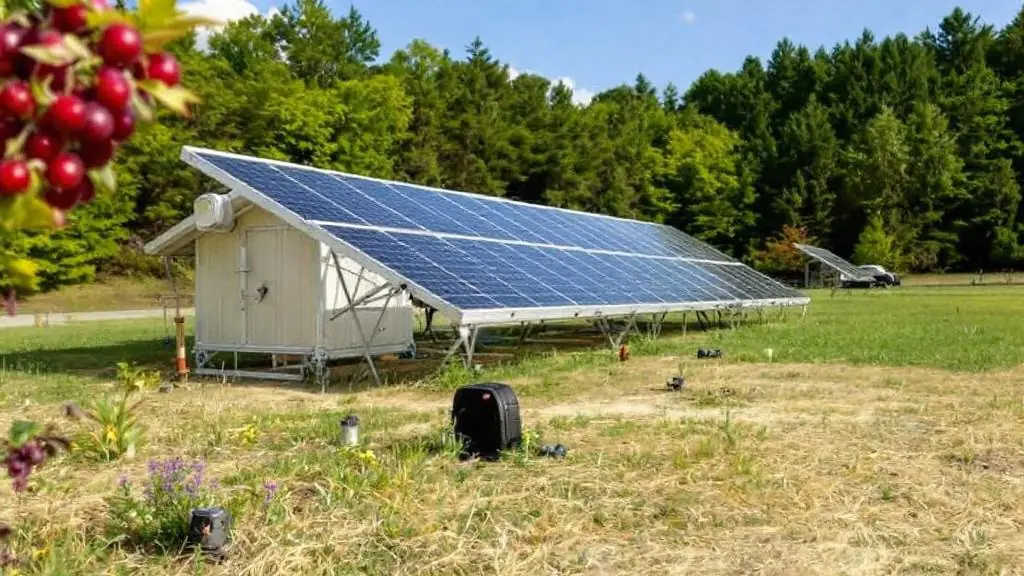
Lastly, while the kit includes Z brackets, they’re designed primarily for flat or slightly curved surfaces like RV roofs. If you’re mounting this on a ground rack or a more complex structure, you might want to supplement or swap in different mounting hardware. That’s not a dealbreaker, but it’s worth planning for so you’re not stuck mid-install.
- 【Efficient Performance】This Starter Kit can generate an average of 500Wh of electricity per day (varies with sunlight). …
- 【Market-Leading Service Plan】Enjoy worry-free usage with our market-leading service plan, providing 10 years of coverage…
- 【Exceptional Safety】Certified by UL 61730, CSA C22.2#61730, IEC 61730/IEC 61215, our solar panel withstands 2400Pa wind …
Description & Real-World Performance
Energy Output and Everyday Use
On paper, Renogy says this 100 watt solar panel starter kit produces about 500Wh per day under 5 hours of solid sun. In real life, that number will go up or down depending on your latitude, weather, panel angle, and shading. In good summer conditions with a clear sky, it’s absolutely realistic to see around that ballpark, and sometimes more if you’re farther south and tilt the panel optimally.
What can 500Wh actually do? Think of it as running a 50W load for 10 hours or a 100W load for 5 hours. For many RV or camper setups, this is enough to keep a small 12V fridge cycling, charge phones and tablets, power LED lights in the evening, and maybe run a vent fan for a while. As long as you’re mindful and not running high-draw appliances nonstop, it’s surprisingly capable for such a compact kit.
Where it really shines is as a baseline charging system. For example, on a weekend camping trip, the panel can replenish what you used the day before, so your battery doesn’t slowly sag over a few days. If you pair this with a decent deep-cycle battery or small lithium bank, your whole setup starts to feel much more self-sustaining and less dependent on hookups.
Durability and Build Quality
Renogy has built a reputation for sturdy, mid-range gear that doesn’t feel flimsy, and this kit follows that pattern. The panel frame feels solid, and the glass isn’t paper-thin. Renogy rates the panel for 2400Pa wind and 5400Pa snow loads, which is similar to what you see in many residential-grade panels. In plain English: it can handle strong winds on the highway and a heavy snow dump on a cabin roof.
The junction box has an IP65 rating, and the solar connectors are IP67 rated. This means it’s protected against dust and powerful water jets, and the connectors can even withstand temporary immersion. For RV and off-grid use, that’s exactly what you want driving rain on the highway and constant outdoor exposure shouldn’t be a problem when everything is properly installed.
The fact that each monocrystalline solar panel goes through complete EL testing before shipping matters more than most people realize. Microcracks and hidden cell defects can slash output over time. By screening them in the factory, Renogy helps ensure that what shows up at your door will perform close to spec from day one.
Controller Features and Monitoring
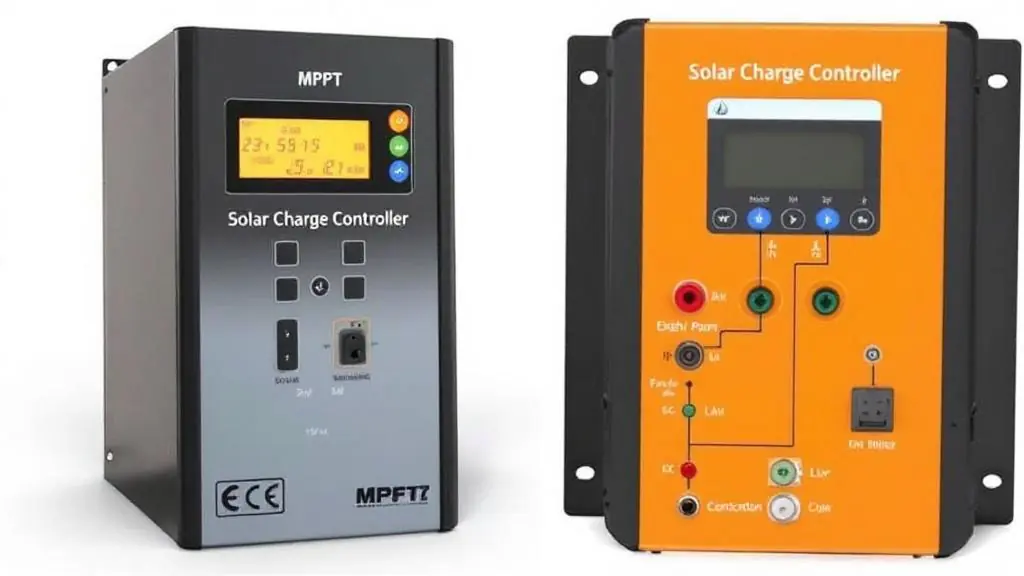
The included Wanderer 30A PWM charge controller is simple but well thought out for a starter kit. It supports 12V systems and can be configured for different battery types, including lithium, which is becoming more common in RV solar panel kits. You get basic protections like over-voltage, over-discharge, and short-circuit safety, which is important if you’re not an electrical engineer.
One modern touch I really like is the RS232 port that lets you add a Bluetooth module (Renogy’s BT-1). With that small add-on, you can monitor your system from the Renogy DC Home app, tracking voltage, current, and alerts. It’s not mandatory, but for people who like to keep an eye on their system from inside the camper or cabin, this remote monitoring adds peace of mind and makes troubleshooting easier.
Specs & Technical Details
Core Kit Components
The heart of this setup is the 100W 12V monocrystalline panel. You get high-efficiency cells in a compact footprint suitable for RV, van, or small roof applications. It’s wired through standard solar connectors, which makes expansion or replacement straightforward if you decide to add more panels later.
The 30A Wanderer PWM charge controller is sized with future growth in mind. Even though the kit includes a single 100W panel, the controller can support up to 400W on a 12V system. That means you could run up to four 100W panels, as long as they’re wired and fused correctly, without needing to replace the controller.
Also included are adaptor cables from the panel to the controller, tray cables from the controller to the battery, and Z brackets plus hardware. In other words, the weird little pieces that often trip people up in a diy solar panel kit are already bundled and matched for you.
Electrical and Environmental Ratings
The panel offers a rated cell efficiency of 22.5%, which is respectable for this category. It has been tested and certified under UL 61730, CSA C22.2#61730, and IEC 61730/IEC 61215 standards. These certifications cover safety, performance, and durability, which becomes especially important when panels are mounted on moving vehicles like RVs or trailers.
Wind load is rated at 2400Pa and snow load at 5400Pa, meaning the physical construction can withstand strong wind gusts and heavy snow accumulation when mounted correctly. Combined with the IP65 and IP67 ratings on the junction box and connectors, the whole system is built to survive outdoors long-term.
Battery compatibility is broad: AGM, Gel, Flooded lead-acid, and Lithium are all supported by the controller. That flexibility matters if you decide to upgrade your battery bank later on; you won’t be locked into a particular chemistry just because of the kit you started with.
- 【Efficient Performance】This Starter Kit can generate an average of 500Wh of electricity per day (varies with sunlight). …
- 【Market-Leading Service Plan】Enjoy worry-free usage with our market-leading service plan, providing 10 years of coverage…
- 【Exceptional Safety】Certified by UL 61730, CSA C22.2#61730, IEC 61730/IEC 61215, our solar panel withstands 2400Pa wind …
Why We Recommend This Kit
The main reason this kit stands out is that it hits a sweet spot between simplicity, performance, and price. You’re getting a genuinely efficient monocrystalline panel, a capable controller, and all the core wiring and mounting hardware without paying for unnecessary gimmicks. For someone new to solar, this dramatically lowers the barrier to getting real, usable power from the sun.
From a practical standpoint, I like that the system is easy to grow into. You can start small with one panel, figure out how much power you actually use in your RV or camper, and then decide whether you need a second or third panel. Because the controller can handle up to 400W, you aren’t boxed in by your first decision, which is a common regret with cheaper all-in-one solar panels kits.
The long-term warranty coverage builds confidence. A 25-year service plan for power output means Renogy expects these panels to keep performing for decades under normal use. That’s a reassuring backdrop when you’re drilling holes in your roof or building a small off-grid system that you want to rely on for emergencies or weekend getaways.
I also appreciate how this kit balances beginner friendliness with enough depth for tinkerers. If you just want it to work, you can follow the included instructions and be done. If you’re more hands-on, you can integrate the kit into a larger system, add batteries, install the Bluetooth module, or expand the array over time as your needs grow.
Who This Is NOT For
This kit is not the right choice if you’re trying to power a full-time off-grid home, a large cabin, or a big rig with heavy energy demands. A single 100 watt solar panel, even with expansion up to 400W, is better suited for light to moderate loads. If you’re dreaming of running air conditioning, full-size refrigerators, power tools, and an array of kitchen appliances daily, you’ll want a much larger system from the start.
It’s also not ideal if you absolutely must squeeze every possible watt out of limited sunlight. In that case, investing in a high-end MPPT controller right away would be smarter, possibly paired with higher-wattage panels. This kit’s PWM controller is perfectly adequate for most casual users, but performance purists may find it lacking in marginal conditions.
If you’re uncomfortable with basic DIY tasks like sealing roof mounts, crimping connectors if needed, or routing cables through tight spaces this may not be plug-and-play enough. You can still use the kit, but factor in either a friend with some experience or a professional installer to help you do it safely and neatly.
Finally, if your primary goal is a pack-and-go portable solution you can set up and tear down daily, you might be better off with a folding, suitcase-style panel with integrated controller. This Renogy kit is designed more for semi-permanent installs on vans, RVs, campers, and small structures, not constant relocation.
Complementing Ideas & Related Resources
If you’re just starting your solar journey, it can help to see how a starter kit fits into a broader setup. For a practical look at pairing this system with a compact battery bank and inverter, check out our guide on building a beginner-friendly off-grid power box (internal link example): beginner off-grid power box. It walks through how to connect a kit like this to batteries and basic AC outlets.
For RV and camper owners, we also break down how to size your system and decide when to add extra panels or batteries in our RV solar planning resource: RV and camper solar sizing. Using the Renogy 100W kit as a baseline example, we show what changes when you move from weekend trips to longer boondocking adventures.
If you’re curious how this type of kit compares to pure portable power stations, the U.S. Department of Energy has a helpful overview of small-scale solar and efficiency best practices: EnergySaver solar resources. It’s a good way to understand the bigger picture before you commit to a more complex system.
And if you decide you’d rather skip piecing things together and go for a more integrated solution, there are also power stations that pair nicely with portable panels. You can still use a dedicated kit like this Renogy option to keep those stations topped up, essentially giving yourself multiple layers of backup.
Ultimately, whether you’re planning an rv solar panel kit, a small cabin system, or a simple emergency backup for outages, this Renogy 100W starter kit provides a solid, reliable foundation to build from without overwhelming you on day one. It’s a practical first step into renewable power that you can actually understand and maintain yourself.
- 【Efficient Performance】This Starter Kit can generate an average of 500Wh of electricity per day (varies with sunlight). …
- 【Market-Leading Service Plan】Enjoy worry-free usage with our market-leading service plan, providing 10 years of coverage…
- 【Exceptional Safety】Certified by UL 61730, CSA C22.2#61730, IEC 61730/IEC 61215, our solar panel withstands 2400Pa wind …
Your Questions, Answered
How much power can the Renogy 100W starter kit realistically produce in a day?
Under good conditions about 5 hours of strong, direct sunlight the Renogy 100W 12V Solar Panel Starter Kit can produce roughly 400–500Wh per day. That’s enough to run small loads like LED lights, charge phones and laptops, keep a vent fan going for a while, or help maintain a compact 12V fridge in an efficient RV setup. In cloudy weather or during winter, output will drop, while in bright summer conditions with good panel tilt you may occasionally see a bit more than the rated average.
Can I expand this kit beyond a single 100 watt solar panel?
Yes. The included 30A Wanderer PWM charge controller can support up to 400W on a 12V system, so you can add additional panels as your needs grow. Many users start with one 100 watt solar panel to learn the basics and then add one or more matching panels later. Just be sure to use proper fusing, follow Renogy’s wiring recommendations, and verify that your mounting surface and cabling are appropriate for the increased current.
Is this Renogy kit suitable as an rv solar panel kit for boondocking?
This kit works very well as an entry-level rv solar panel kit for light to moderate boondocking. It’s ideal for weekend trips or shorter stays where you primarily need to keep batteries topped up, run LED lights, charge devices, and use a modest 12V fridge or fan. For extended off-grid living or heavy appliance use, you’ll likely want to expand beyond 100W either by adding more panels to this kit (up to 400W total) or combining it with a larger battery bank and possibly a higher-end MPPT controller.
What type of batteries are compatible with the included charge controller?
The 30A Wanderer PWM charge controller supports several common battery chemistries: AGM, Gel, Flooded lead-acid, and Lithium. That gives you flexibility both now and in the future. You can start with an affordable deep-cycle AGM battery, for example, and upgrade to a lithium bank later without needing to swap out the controller. Just be sure to select the correct battery type setting in the controller menu so charging profiles match your specific battery.
Is this a good option for a diy solar panel kit on a shed or small cabin?
Yes, the Renogy 100W kit is a strong candidate for a diy solar panel kit on sheds, tiny cabins, or similar structures with light electrical needs. It gives you a clear starting point: one 100W monocrystalline panel, a reliable charge controller, cables, and Z brackets for mounting. For a simple setup lights, charging tools, maybe a fan it’s often enough by itself. If you later want to run more loads, you can expand the array up to 400W and add additional batteries or an inverter to power small AC devices.

We are a collective of off-grid enthusiasts, solar technicians, and sustainable living advocates dedicated to making energy independence accessible. From blackout-proofing suburban homes to engineering mobile power for the road, we rigorously test every kit and component we review. Our mission is to help you cut the cord and power your life on your own terms.