


If you’ve ever watched your batteries drop just because a tree branch or the neighbor’s RV cast a shadow on your panels, you know how frustrating real-world solar can be. Specs on paper always look great, but shady campsites, boat masts, and rooftop clutter tend to ruin the party.
That’s exactly the gap the Renogy 200W ShadowFlux N-Type Solar Panel tries to fill. It’s aimed at people who want serious, reliable power in less-than-perfect conditions, without turning their roof into a science project. After digging deeply into the specs, comparing it with similar 200W RV solar panels, and looking at how it behaves under shading, I can say this panel is genuinely different especially if you camp or park where shade is a fact of life.
Below, I’ll walk you through what actually makes this panel stand out, the trade-offs you should know about, and who will get the most value out of it.
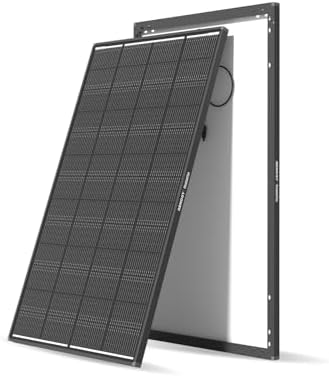
- ShadowFlux Anti-Shading Technology – Renogy shadowflux technology delivers enhanced power generation even in shaded area…
- Unmatched Cell Efficiency – Featuring advanced N-Type solar cells with 16BB technology, this high-performance panel achi…
- Compact and Lightweight Design – Renogy shadowflux 200w solar panel is 7% smaller and 10% more compact than PERC solar p…
Renogy 200W ShadowFlux portable solar panels Product Showcase
The product name is a mouthful, but in plain English this is a 200 watt, high-efficiency rooftop panel designed to work on 12V or 24V systems. It’s especially appealing for RVs, vans, boats, and small off-grid setups where shade hits part of the panel at least some of the day.
Instead of being another generic 200w solar panel, the ShadowFlux line adds cell-level anti-shading tech and N-Type cells with 16 busbars. That combination aims to keep your power flowing when other modules fall flat, and to squeeze more wattage out of the same roof area. If space on your rig or cabin roof is limited, this alone is a big deal.
One thing to note up front: this is a rigid framed module, not a foldable portable solar panel suitcase. You’ll likely mount it on a roof rack, rail system, or fixed frame. If you want the same brand’s foldable option, Renogy has a dedicated portable solar panel kit in a separate product line. The ShadowFlux is the “install it and forget it” workhorse.
In day-to-day use, the core promise is simple: more power, less drama under real-world shadows. If you routinely camp under trees or park in cramped RV sites, that promise alone might justify choosing this over budget options.
Pros & Cons
Where the ShadowFlux Panel Really Shines
The standout advantage is clearly the anti-shading technology. Traditional modules can lose most of their output when even a small section is shaded. Here, the ShadowFlux design is tuned to localize that impact so you still get usable power if part of the panel is in the dark. In practice, that can be the difference between actually charging your batteries or just treading water all afternoon.
The 25% cell efficiency from N-Type cells and 16-busbar layout is another real perk. That means stronger performance per square foot, making it ideal where roof space is tight, like compact RVs or boat decks. It’s also slightly smaller and more compact than many PERC panels in the same class, which translates to easier layout planning.
Durability is also a plus here. With an IP67 rating, this module is built for heavy rain, snow, and even small hail. Combined with a long-term output warranty, you’re not just buying watts today; you’re buying a stable power source for years. For long-term off-grid use, that reliability often matters more than chasing the absolute lowest cost per watt.
Trade-Offs and Limitations
On the flip side, you will likely spend more for this panel than for basic diy solar panels you might grab on sale. The anti-shading tech and premium cells cost money, so this isn’t the “rock-bottom budget” pick. If you always camp in open desert sun, the extra price might not feel worth it.
Another consideration is that Renogy strongly recommends pairing this panel with an MPPT charge controller, not a cheap PWM unit. That’s not a flaw; it’s just how high-voltage, high-efficiency modules get their best performance. But it does mean factoring in a quality controller if you’re building a system from scratch.
Finally, this is a rigid framed panel. If your mental picture of portable solar panels is a briefcase-style folding setup you can stash in a closet, this isn’t that. You can absolutely integrate it into a mobile rig, but expect a semi-permanent roof or rack mount rather than a quick plug-and-play suitcase.
- ShadowFlux Anti-Shading Technology – Renogy shadowflux technology delivers enhanced power generation even in shaded area…
- Unmatched Cell Efficiency – Featuring advanced N-Type solar cells with 16BB technology, this high-performance panel achi…
- Compact and Lightweight Design – Renogy shadowflux 200w solar panel is 7% smaller and 10% more compact than PERC solar p…
Description: Real-World Performance & Design Details
ShadowFlux Anti-Shading Technology in Everyday Use
Most spec sheets talk about STC numbers the perfect-lab conditions you’ll almost never see. Where the ShadowFlux really earns its keep is on those days when shadows creep in from tree branches, AC units, antennas, or boat rigging. Traditional panels can drop dramatically with just one shaded cell. The ShadowFlux design minimizes that cascading loss.
In practice, that means if one portion of the module is hit by a small shadow leaves, bird droppings, a vent, or even a guy wire the whole panel doesn’t shut down. You still get a meaningful amount of power, instead of watching your controller report a sad trickle. For RV solar panels mounted around roof clutter, this is a huge advantage, because perfect sun alignment is rare.
The panel is optimized so that as long as more than half of the surface is in direct sunlight, you’ll typically see solid usable output. You’re not magically immune to shade no panel is but the hit to your production is far less brutal than with conventional wiring and bypass-diode layouts.
N-Type Cells with 16 Busbars: Why That Matters
A lot of marketing copy throws around “high efficiency” without explaining it. Here, N-Type cells with 16 busbars actually mean something concrete. N-Type cells tend to resist certain types of degradation better than traditional P-Type, which helps your power output stay closer to its original rating over years of use.
The 16-busbar structure spreads current more evenly and shortens the path electricity has to travel inside each cell. The result is less resistance loss and better tolerance for micro-cracks or minor damage that might develop over time. This doesn’t make the panel invincible, but it does mean you’re less likely to watch output fall off a cliff after a few seasons of vibration and weather.
With up to 25% cell efficiency and about 20.7% module efficiency, you’re simply getting more wattage out of a similar footprint than many standard modules. For people trying to max out every inch of roof space, that’s a big deal when you’re deciding between one more 200w solar panel or leaving room for a vent or fan.
Build Quality, Weather Resistance, and Longevity
The IP67 protection rating tells you this panel is sealed well against dust and can handle immersion in shallow water briefly. More practically, it means heavy rain, snow, and blowing grit shouldn’t be a problem. The encapsulation layers are designed to limit water vapor intrusion, which is one of the slow killers of cheaper modules.
Operating temperature is rated from -40°F to 185°F (-40℃ to 85℃). That’s a broad enough range for most climates, whether you’re winter camping or parking a van on a hot southern highway. Heat always reduces real-time solar output, but panels that are designed to tolerate high temps tend to last longer on hot rooftops.
Backing this up, Renogy offers a 5-year material and workmanship warranty and a 25-year output warranty to 80%. That doesn’t mean the panel will magically last exactly 25 years, but it does give you a reasonable expectation that the module won’t be junk after a decade of regular use.
Specs
Electrical Ratings
- Maximum Power (Pmax): 200W
- Open Circuit Voltage (Voc): 36.5V
- Short Circuit Current (Isc): 6.86A
- Optimum Operating Voltage (Vmp): 31.3V
- Optimum Operating Current (Imp): 6.38A
- Maximum System Voltage: 1000V DC
- Maximum Series Fuse Rating: 15A
- Module Efficiency: 20.7%
Because of the relatively high Voc, this panel works very well with MPPT controllers in both 12V and 24V systems. Just be sure your controller can accept at least 50V input and over 10A charging current, especially if you’re planning to series-wire multiple modules.
- ShadowFlux Anti-Shading Technology – Renogy shadowflux technology delivers enhanced power generation even in shaded area…
- Unmatched Cell Efficiency – Featuring advanced N-Type solar cells with 16BB technology, this high-performance panel achi…
- Compact and Lightweight Design – Renogy shadowflux 200w solar panel is 7% smaller and 10% more compact than PERC solar p…
Physical Characteristics
- Dimensions: 49.69 x 30.08 x 1.18 inches (1262 x 764 x 30 mm)
- Weight: 23.83 lb (10.81 kg)
- Cell Type: N-Type with 16 busbars
- Protection Rating: IP67
The footprint is pretty standard for a 200W class module, but Renogy notes it’s about 7% smaller and 10% more compact than comparable PERC designs. That little size advantage can matter when you’re playing “panel Tetris” around vents, fans, and roof AC units.
Why We Recommend This Panel
The main reason to recommend this unit is simple: it’s optimized for how people actually use solar, not just for pretty spec sheets. If you park on forested public lands, in cramped urban streets, or at RV parks with inconsistent sun, shade happens. Building a system around hardware that expects perfection is a recipe for disappointment.
ShadowFlux anti-shading tech doesn’t make shading a non-issue, but it narrows the gap between ideal and real-world performance. That means more of your investment turns into usable amp-hours, especially late in the day or in partially shaded sites. You’ll feel that in how quickly your batteries recharge and how often you need to lean on a generator.
There’s also a strong case here for value over time. Between N-Type cells, a robust frame, and long-term warranties, you’re investing in years of service. For anyone building a serious off-grid or mobile system, the slightly higher up-front cost can easily be justified by fewer replacements and more reliable output over the long haul.
Finally, Renogy as a brand has become a go-to for many DIYers because their ecosystem is broad and reasonably well supported. Matching this panel with a Renogy MPPT controller, cabling, and even a starter kit can make the build process smoother, especially if it’s your first time piecing together an off-grid array.
If you want to check current pricing, you can see it on this 200W ShadowFlux product page, or compare it to their other modules like the flexible and standard N-Type panels, which are often listed side by side.
Who This Is NOT For
If you’re chasing the absolute lowest up-front cost and don’t care about long-term performance, this probably isn’t your panel. There are cheaper options that will work fine if you only use them occasionally or always camp in perfect, wide-open sun. For a budget weekend setup, a no-frills module might make more sense.
This is also not the ideal choice if you specifically want suitcase-style portable solar panels you can move around the campsite every hour. For that scenario, a folding kit with integrated legs and built-in controller can be more convenient, even if it’s less space-efficient and slightly more fragile.
Another group who might not benefit much are homeowners planning a large, roof-wide grid-tied install. Residential systems are typically built with matched panels, racking, and inverters in mind, often through a dedicated installer. The ShadowFlux is more suited to smaller off-grid arrays, RV roofs, and marine decks than large home rooftops.
Finally, if you’re locked into an older PWM controller that can’t handle higher voltages, you’ll either need to upgrade your controller or choose a panel better matched to that hardware. Trying to force this module into an under-specced system will waste its potential and may cause controller issues.
Complementing Ideas & System Add-Ons
To get the most out of this panel, you’ll want to build a well-matched system around it. That typically means a quality MPPT charge controller, appropriate cabling, and a good deep-cycle battery bank. If you’re starting from scratch, looking at a complete starter kit can make things easier, then adding ShadowFlux panels as your power needs grow.
For a practical walkthrough of system sizing and battery choices, you might find our guide on planning an off-grid setup helpful here: U.S. Department of Energy solar guide. It’s written for homeowners, but the core principles apply equally to rigs, cabins, and small off-grid systems.
If you’re comparing different panel formats or planning a mixed array, it also helps to understand how series and parallel wiring affect voltage and shading behavior. The National Renewable Energy Laboratory solar resources offer solid, unbiased technical background that pairs nicely with the more user-friendly Renogy documentation.
When you’re ready to expand or replicate this setup, you can look at adding another ShadowFlux module or mixing it with compatible Renogy options. Their product pages often group related gear together, such as N-Type fixed panels and flexible modules, which makes it easier to design a mixed system for odd-shaped roofs.
If you’re already deep into planning and want to compare this module to other options, our internal comparison of rigid vs flexible RV modules and suitcase-style portable solar panels buying guide can help you figure out which format fits your travel style best.
And if you’re looking ahead to a larger cabin or tiny home setup, our overview of RV solar panels vs small home systems walks through how to scale from a simple rig to a more permanent off-grid array without wasting the gear you already own.
- ShadowFlux Anti-Shading Technology – Renogy shadowflux technology delivers enhanced power generation even in shaded area…
- Unmatched Cell Efficiency – Featuring advanced N-Type solar cells with 16BB technology, this high-performance panel achi…
- Compact and Lightweight Design – Renogy shadowflux 200w solar panel is 7% smaller and 10% more compact than PERC solar p…
Your Questions, Answered
Can I use the Renogy 200W ShadowFlux panel in a 12V RV system?
Yes. The Renogy 200W ShadowFlux module works well in both 12V and 24V battery systems, and it’s very common to pair it with 12V RV setups. Because the panel has a relatively high open-circuit voltage, you’ll want to use a compatible MPPT charge controller rated for at least 50V input. That controller then steps the higher panel voltage down efficiently to charge your 12V batteries. This approach gives you better performance in low light and partial shade than trying to run the panel directly into a low-cost PWM controller.
Is this panel a good choice for portable solar panels I can move around my campsite?
This panel is technically portable in the sense that it’s not permanently built into a roof, but it’s designed as a rigid module, not a folding suitcase. Most people mount it to RV roofs, van racks, or cabin frames and leave it there. If you want something you can easily position on the ground and tilt throughout the day, a dedicated suitcase-style kit or folding portable solar panels with built-in legs and handle will usually be more convenient, even though they might be slightly less robust and space-efficient.
Do I really need an MPPT charge controller with the ShadowFlux panel?
You don’t absolutely have to use an MPPT controller, but it’s strongly recommended and practically mandatory if you want full performance. The panel’s voltage is optimized for MPPT use: those controllers can harvest power more efficiently in low light and partial shading, and they make much better use of the higher open-circuit voltage. Some PWM controllers simply aren’t designed for modules like this and may underperform or even fail over time. If you’re investing in high-efficiency hardware, matching it with an MPPT is the smart move.
How does this panel compare to flexible RV solar panels?
Flexible modules are great when you need to conform to curved roofs or keep weight extremely low, but they usually trade off some durability and often run hotter because they sit flush on the mounting surface. The ShadowFlux panel, being a rigid framed module, tends to run cooler with better airflow behind it, which helps efficiency and longevity. It also offers robust construction and a longer-term output warranty. If your roof can accept a rigid frame and you value long-term performance and shading resilience, the ShadowFlux is generally a stronger choice.
Can I mix this 200W ShadowFlux with other 200 watt solar panel models in my array?
You can mix different 200W modules in some situations, but there are caveats. For best results in series strings, panels should have similar voltage ratings so one module doesn’t drag the others down. In parallel, matching voltage is still important, but you have a bit more flexibility on current. Ideally, you’d build each string from similar panels and then parallel those strings into your MPPT controller. If you’re unsure, it’s often simpler and more efficient to stick with the same model across your array or consult a system designer before mixing different portable solar panels.

We are a collective of off-grid enthusiasts, solar technicians, and sustainable living advocates dedicated to making energy independence accessible. From blackout-proofing suburban homes to engineering mobile power for the road, we rigorously test every kit and component we review. Our mission is to help you cut the cord and power your life on your own terms.