


- Product Showcase: 200 watt solar panel for serious off-grid use
- Pros & Cons of the Renogy 200W Solar Panel
- Description: How this 200W panel behaves in real life
- Specs: Key technical details that matter
- Why We Recommend This Panel
- Who This Is NOT For
- Complementing Ideas & Helpful Resources
- Your Questions, Answered
If you’ve been wanting a simple, reliable way to power life off the grid whether that’s in a van, RV, cabin, boat, or backyard shed the Renogy 200W panel is one of those pieces of gear that quietly does its job day after day. It’s not flashy, but in real-world off-grid use, that’s exactly what you want.
In this review, I’ll walk through how this panel actually behaves in everyday use, what stands out compared to cheaper options, and a few trade-offs to be aware of before you bolt it to your roof. I’ll also share who this panel is not right for, so you don’t overspend or end up disappointed.
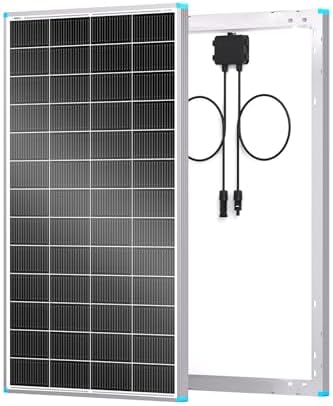
- 【Perfect Size for Class B Vans】This 200W N-Type solar panel is 7.5% smaller and 11.7% lighter than previous models—deliv…
- 【High 25% Cell Efficiency】Engineered with advanced 16BB N-Type cells, this 200W solar panel achieves an impressive 25% e…
- 【Enhanced Efficiency & Versatility】Operating at 24V, this panel minimizes current loss and maximizes system efficiency, …
Product Showcase: 200 watt solar panel for serious off-grid use
The star of the show here is the Renogy 200 Watt 24 Volt monocrystalline panel, built around high-efficiency 16BB N-Type cells. In plain English: it’s a compact, tough, and surprisingly powerful panel that’s clearly designed with vanlife, RVs, and long-term off grid solar power systems in mind.
Renogy has been a go-to brand for DIY solar panels for off grid living for years, and this model fits right into that reputation. It’s specifically optimized for Class B vans and other tight-roof setups, where every inch of space matters. Despite its smaller footprint and lighter weight, it still delivers the full 200W rating under ideal conditions.
If you’d like to check the latest price or specs, you can see the panel on Amazon here: Renogy 200W Panel on Amazon.
For people building solar power off the grid systems from scratch, this panel makes a very solid building block. You can run a single 200w solar panel with a decent charge controller and battery for a minimalist setup, or wire multiple panels together for a more robust system that can handle fridges, laptops, fans, and more.
Pros & Cons of the Renogy 200W Solar Panel
What this panel does really well
First, the efficiency is genuinely impressive. Renogy is using 16BB N-Type cells rated up to 25% efficiency, which is on the high end for consumer panels. In practice, that means more usable energy from the same limited roof space, especially important for RVs and vans. The slightly smaller footprint and lighter weight also make mounting easier for solo installers.
Second, this panel is clearly built with harsh conditions in mind. It’s rated to handle strong wind and heavy snow loads, and the low temperature coefficient keeps output from collapsing in hot climates. For van dwellers parked in the desert or cabins in full summer sun, that translates to noticeably more stable production across the day.
Third, the 24V design is a big plus for larger off-grid systems. Higher operating voltage means lower current for the same power, which reduces line losses and lets you run longer cable runs without wasting energy as heat. It’s also compatible with both 12V and 24V battery banks (with the right charge controller), which gives you room to expand later without replacing panels.
Trade-offs and potential downsides
No panel is perfect, and there are a few things to keep in mind. One, the upfront price is higher than basic budget panels. You’re paying for higher efficiency and a stronger warranty, so it’s more of a long-term investment than a bargain-bin purchase. For a tiny weekend-only system, that might be overkill.
Two, the 24V operating design is a strength, but if you’re trying to throw together a super basic 12V-only setup without a proper MPPT charge controller, it can be less plug-and-play than a cheap 12V 100W panel. This isn’t a flaw, just something to be aware of as you design your system.
Three, like any rigid panel, it requires a suitable mounting surface and some planning for brackets, sealing roof penetrations, and cable runs. If your priority is ultra-lightweight, flexible solar panels for rv campers that can be curved or temporarily deployed, this isn’t that product.
- 【Perfect Size for Class B Vans】This 200W N-Type solar panel is 7.5% smaller and 11.7% lighter than previous models—deliv…
- 【High 25% Cell Efficiency】Engineered with advanced 16BB N-Type cells, this 200W solar panel achieves an impressive 25% e…
- 【Enhanced Efficiency & Versatility】Operating at 24V, this panel minimizes current loss and maximizes system efficiency, …
Description: How this 200W panel behaves in real life
Compact size that actually helps in tight roof layouts
One of the underrated perks of this panel is its physical size. Renogy trimmed about 7.5% off the footprint and 11.7% off the weight compared to earlier 200W models. That sounds minor on paper, but on a short van roof or small trailer, those inches can be the difference between fitting two panels instead of one.
In practical terms, it makes layout planning easier. You can tuck a panel between roof vents, fans, and AC units more easily. The lighter weight also means less stress on mounting points and less worry about adding too much load to thin RV roofs or fiberglass tops.
If you’re optimizing every square inch of your roof for solar, being able to do more with less space is a real advantage, especially when your goal is a reliable 200 watt solar panel setup that doesn’t dominate your entire roofline.
High-efficiency cells that keep producing in the heat
The 16BB N-Type cell tech isn’t just marketing jargon. N-Type cells are known for better performance at higher temperatures and slower long-term degradation. On hot summer days, many cheaper panels see output fall off a cliff; this one is designed to maintain stronger performance thanks to a low temperature coefficient.
That becomes obvious when you’re parked on a scorching asphalt lot or out in a desert boondocking spot. Instead of seeing your output drop dramatically at midday, you get a steadier curve across the peak sun hours. Over months and years of off grid solar power use, that difference adds up to more real energy into your batteries.
Add in the lower risk of microcracks thanks to the 16-busbar design and you’re looking at a panel that’s built for years of vibration, wind, and thermal expansion without rapidly losing capacity.
Versatile 24V operation and battery compatibility
This panel operates at 24V, which is very attractive for anyone planning a medium to large system. With an MPPT charge controller, you can pair it with both 12V and 24V batteries, whether you’re running lead-acid, AGM, or lithium. That flexibility is ideal if you’re starting small today but want to upgrade batteries later.
For example, you might begin with a single 200w solar panel feeding a 12V AGM battery bank in your RV. Later, you can swap to a 24V lithium setup and simply reconfigure your controller, keeping the panel as-is. That saves you from having to rip everything off the roof just because your storage needs changed.
Renogy also makes compatible solar accessories and controllers, which helps simplify the wiring side. Their connectors are standard MC4-style, which makes it easy to combine this panel with others in series or parallel as your system grows.
Built to last with slow degradation and strong warranty
Longevity is where this panel quietly shines. Renogy rates degradation at ≤1% in the first year and ≤0.4% annually after that, with a 25-year performance guarantee at 80% output. You also get a 10-year material and workmanship warranty, which is reassuring when the panel is bolted somewhere hard to reach.
In off-grid life, reliability isn’t a nice-to-have it’s the difference between cold food and spoiled groceries, or charged devices and dead phones. Knowing your main energy source is designed to hold up for decades makes planning and budgeting much easier.
If you’re the kind of person who would rather buy once and not think about it every season, this long-term reliability is a key reason to lean toward this model over cheaper, no-name alternatives.
Specs: Key technical details that matter
Electrical performance
- Rated power: 200W (monocrystalline)
- System voltage: 24V operation (with compatibility for 12V and 24V battery banks via controller)
- Cell type: High-efficiency 16BB N-Type cells (up to 25% efficiency)
- Temperature coefficient: Optimized for hot-climate performance
- Connector leads: Pre-attached, compatible with Renogy adaptor kits and standard MC4-style connectors
In real-world terms, you can expect a respectable daily harvest in good sun enough for lights, charging devices, a fan, and in some setups, even a small fridge when paired with adequate battery capacity.
Physical design and durability
- Form factor: Approximately 7.5% smaller and 11.7% lighter than Renogy’s previous 200W design
- Frame: Rigid, weather-resistant construction suitable for rooftops, marine use, and exposed mounting
- Weather ratings: Built to handle strong wind and heavy snow loads
- Intended use: RV rooftops, vans, boats, cabins, farms, and other off-grid applications
This combination makes it especially attractive if you’re mounting on a van or trailer that sees constant vibration and movement; the panel is engineered to survive that abuse rather than sitting on a fixed home roof.
Warranty and long-term performance
- Material & workmanship warranty: 10 years
- Performance guarantee: 25 years at 80% output
- Degradation rate: ≤1% in year one, ≤0.4% per year thereafter
These warranties align with what you’d expect from a serious, long-term off-grid investment rather than a temporary or throwaway panel.
- 【Perfect Size for Class B Vans】This 200W N-Type solar panel is 7.5% smaller and 11.7% lighter than previous models—deliv…
- 【High 25% Cell Efficiency】Engineered with advanced 16BB N-Type cells, this 200W solar panel achieves an impressive 25% e…
- 【Enhanced Efficiency & Versatility】Operating at 24V, this panel minimizes current loss and maximizes system efficiency, …
Why We Recommend This Panel
The main reason this panel stands out is balance. It hits that sweet spot between efficiency, size, durability, and long-term value in a way that feels tailored to real off-grid living rather than just lab specs. When you’re relying on solar as your primary power source, that balance matters far more than headline wattage alone.
Space-saving design is a big part of the story. On a van or small RV, you usually can’t just “add more panels” without compromise you’re fighting for roof real estate with vents, racks, and skylights. Getting a true 200W from a smaller, lighter module lets you build a usable system in places where older or bulkier panels simply wouldn’t fit cleanly.
We also like that Renogy is clearly designing this panel with expansion in mind. Whether you’re early in your solar journey or upgrading from a starter kit, you can drop this into a flexible system architecture and grow over time. Start with one or two panels, then scale as your off grid solar power needs increase.
Finally, the longevity metrics and warranty give this panel a strong value proposition. If you spread the cost out over 10–20 years of service, a higher-quality panel often ends up cheaper per kilowatt-hour than bargain options that degrade quickly or fail early. For people serious about solar panels for off grid living, that math is hard to ignore.
If you’re ready to design a long-term system around a premium panel, this Renogy model is worth a closer look: check current pricing and availability.
Who This Is NOT For
Despite its strengths, this panel isn’t the right choice for everyone. If you’re just experimenting with solar for the first time on a very tight budget maybe powering a few lights and a phone charger on weekend camping trips you might be better served by a smaller, cheaper starter kit or a portable briefcase-style panel.
It’s also not ideal if you need ultra-portable, pack-away solar. Rigid modules like this are meant to live where you mount them. If your vision of solar is something you can lean against a tree at camp and stash in a closet at home, flexible or folding panels make more sense than a permanent roof-mounted 200W unit.
Finally, if your system is locked into a very simple 12V-only configuration with a basic PWM controller and no plans to upgrade, you may not fully benefit from the 24V optimization and higher-end cell technology. In that scenario, a straightforward 12V panel might be more cost-effective.
Complementing Ideas & Helpful Resources
Building a reliable off-grid setup is about more than just the panel. You’ll want a good charge controller, properly sized wiring, fuses, and a battery bank matched to your energy needs. If you’re assembling a full solar power off the grid system, it’s worth taking time to plan the whole layout rather than buying parts piecemeal.
For broader guidance on sizing systems and understanding how many watts you actually need, resources like the U.S. Department of Energy’s solar basics page are helpful starting points: solar energy basics. It’s also smart to cross-check safety practices with reputable technical references, such as the National Renewable Energy Laboratory: NREL solar information.
If you’re comparing this panel to other options or planning a larger setup for a cabin or RV, you may also want to explore additional off-grid gear and ideas on our site, such as detailed breakdowns of battery sizing and inverter choices in our internal guides and reviews. For more RV-focused system planning, be sure to read our in-depth RV solar setup walkthrough, which pairs well with fixed panels like this one.
When you’re ready to move forward, you can circle back to the product page here to review user photos, install examples, and updated pricing: Renogy 200W Panel listing.
And if you’re pairing this with a broader RV build, we also cover complementary gear like mounting hardware, cable management, and battery protection solutions in related posts on our site, including ideas for weatherproof battery enclosures and clean wiring routes for mobile rigs.
- 【Perfect Size for Class B Vans】This 200W N-Type solar panel is 7.5% smaller and 11.7% lighter than previous models—deliv…
- 【High 25% Cell Efficiency】Engineered with advanced 16BB N-Type cells, this 200W solar panel achieves an impressive 25% e…
- 【Enhanced Efficiency & Versatility】Operating at 24V, this panel minimizes current loss and maximizes system efficiency, …
Your Questions, Answered
How much power can this 200W panel realistically produce per day?
Under ideal summer conditions with full sun and a good MPPT charge controller, a 200W panel can often harvest between 600 and 900 watt-hours (0.6–0.9 kWh) per day. Real-world output depends heavily on your location, tilt angle, shading, and weather. In cloudy or winter conditions, production can drop to a fraction of that. For planning purposes, it’s wise to assume 3–4 peak sun hours per day and size your battery bank and loads accordingly, rather than counting on perfect lab conditions.
Can I use this panel with a 12V battery system?
Yes. Even though the panel is optimized as a 24V module, you can absolutely use it with a 12V battery bank when paired with a compatible MPPT charge controller. The controller steps down the higher panel voltage to your battery voltage while maximizing energy harvest. This setup is common in RVs and vans, where the battery system is 12V but higher-voltage panels are chosen to reduce current and cable losses.
Is this panel suitable for marine or coastal environments?
The Renogy 200W rigid panel is built with outdoor durability in mind and is used frequently on boats and in coastal locations. Its frame and glass are designed to handle wind, spray, and UV exposure. That said, any marine install should include stainless hardware, proper sealing of penetrations, and periodic inspection for corrosion. Rinsing panels with fresh water when possible can also help reduce long-term salt buildup.
How many of these panels do I need for full-time off-grid living?
It depends entirely on your daily energy use. A minimal full-time off-grid setup might run happily on 400–600W of solar, while more power-hungry homes or RVs with large fridges, induction cooktops, or heavy electronics can require 800–1200W or more. Start by estimating your daily watt-hour consumption (sum of device watts × hours used), then divide by your expected daily solar harvest per panel to determine how many 200W modules you’ll need, adding a safety buffer for cloudy days.
Do I need a special mounting kit for this panel on an RV or van?
You don’t necessarily need a proprietary kit, but you do need a secure mounting solution appropriate for your roof type. Many users pair panels like this with aluminum Z-brackets, tilt mounts, or low-profile roof racks. The key is to ensure solid mechanical attachment, proper spacing for ventilation under the panel, and careful sealing of any holes to prevent leaks. Renogy and other manufacturers sell compatible mounting hardware, or you can adapt existing roof racks with the correct bolts, clamps, and sealants.

We are a collective of off-grid enthusiasts, solar technicians, and sustainable living advocates dedicated to making energy independence accessible. From blackout-proofing suburban homes to engineering mobile power for the road, we rigorously test every kit and component we review. Our mission is to help you cut the cord and power your life on your own terms.