

If you’ve spent any time tinkering with off-grid power, you already know the weak link is almost never the solar panels it’s what happens between the panels and your batteries. That’s where a solid solar charge controller can make or break your system, especially if you rely on it for RV trips, cabins, boats, or a small backup setup at home.
I’ve been hands-on with several controllers over the years, from basic PWM units to more advanced MPPT devices. The Renogy Rover 40A sits right in that sweet spot of price, performance, and real-world reliability. It’s not the flashiest gadget, but it quietly does its job and that’s exactly what you want when it’s managing expensive batteries and sensitive electronics.
Below, I’ll walk through what stands out about this controller, where it falls short, and who will appreciate it the most. I’ll also point out some alternative ideas and helpful resources if you’re still planning your full solar setup.

- Superior MPPT Technology: Renogy MPPT Solar Charge Controller achieves a 98% conversion rate&99% tracking efficiency, en…
- All-Weather Solar Charge Controller: Renogy charge controller operates from-40°F to 149°F, with built‑in low‑temp protec…
- Full Protection Solar Controller: with rust/corrosion‑resistant build and complete electrical safeguards–reverse polarit…
Renogy Rover 40A solar charge controller Product Showcase
The Renogy Rover 40A MPPT is designed for 12V and 24V systems and is aimed squarely at people who want to squeeze more usable power out of their panels without getting into super-complex DIY electronics. It’s a 40-amp MPPT unit, which means it can handle a respectable amount of solar input while staying compact enough to fit in an RV cabinet or tiny home power wall.
In everyday use, the Rover feels like a “set it and forget it” device once you’ve gone through the initial setup. It automatically detects whether you’re running a 12V or 24V system, and you can pair it with a wide range of battery chemistries, including AGM, gel, flooded lead-acid, and lithium (including LiFePO4). If you’ve ever worried about frying a battery bank with the wrong charge profile, that flexibility is a big relief.
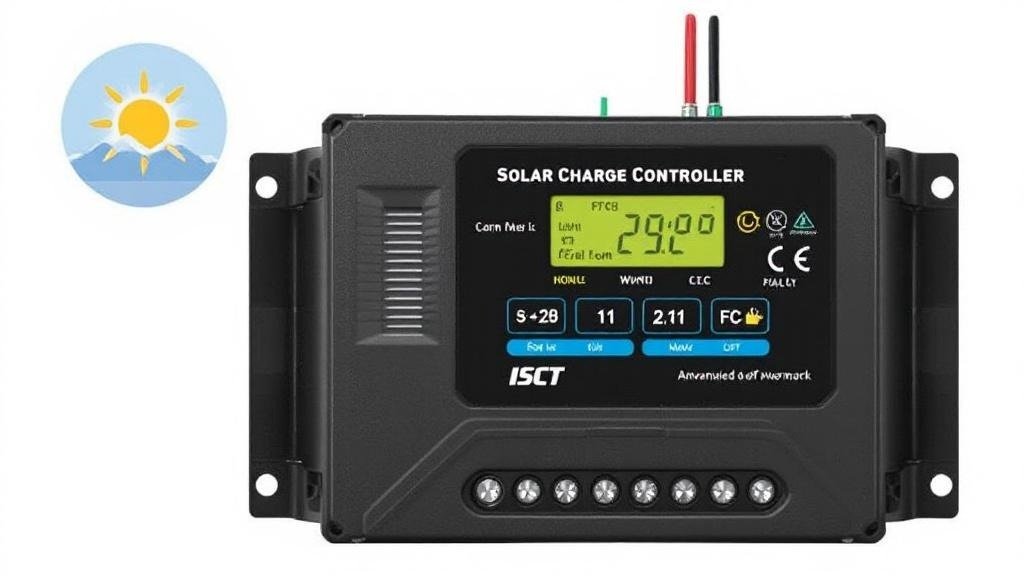
One perk that stands out: the built-in LCD. Unlike cheap solar panel charge controllers with cryptic blinking LEDs, the Rover’s display gives you real-time numbers voltages, currents, and error codes so you can quickly tell if your system is doing what it should. For folks who like to geek out about their data, the Modbus support and optional Bluetooth add-ons are a nice bonus.
If you want to check pricing or user reviews, you can see the current offer on Amazon here: Renogy Rover 40A MPPT. I’ll break down whether it’s truly worth it for your specific situation below.
Pros & Cons
What This Controller Does Really Well
First, the efficiency. The Rover uses MPPT technology with a multi-peak tracking algorithm that handles partial shading and cloud cover surprisingly well. In practice, that just means you get more actual amp-hours into your batteries compared with a budget PWM unit, especially on days when the sun isn’t perfect. Renogy claims very high tracking efficiency, and real-world feedback lines up with that.
Another big advantage is protection and build quality. The casing feels solid, with an IP32 rating and a design that helps resist rust, dust, and minor splashes. Internally, you get protections for reverse polarity, overload, short circuit, and over-temperature. If you’ve ever accidentally wired something backwards during a late-night install (guilty), those safety nets matter.
I also appreciate its versatility with different battery types. It supports multiple chemistries out of the box and includes a 4-stage charging profile (Bulk, Absorption, Float, and Equalization where appropriate). There’s even a lithium recovery feature meant to revive certain “sleeping” lithium batteries, which is a niche but potentially very useful capability if you’ve pushed a pack too low.
Lastly, the data features stand out in this price range. The backlit display, 365-day logging, and Modbus support mean you can integrate it into more advanced monitoring setups. Add a Renogy BT module and you can track system performance from your phone handy if your power center is tucked away in a cabinet or compartment.
Where the Rover Falls Short
It’s not perfect. The first trade-off is the IP32 rating. This is fine for indoor or protected installations (inside an RV, van, shed, or cabin), but it’s not ideal for fully exposed outdoor mounting. If you’re planning an open-air install, you’ll want a weatherproof enclosure or a different model with a higher IP rating.
The user interface is functional but not exactly beginner-friendly at first glance. The menus and icons take a bit of getting used to, and if you’re brand new to solar, there may be a learning curve as you figure out what all the numbers and settings mean. Once you’ve gone through it once or twice it becomes routine, but this isn’t a plug-and-play “black box” like some ultra-basic units.
Another limitation is that 40A, while solid for most small-to-medium systems, won’t be enough if you’re planning a large home-scale array or very big battery bank. If you foresee significantly expanding beyond a few hundred watts of panels, you may eventually need multiple controllers or a higher-amp unit.
Finally, some users may want built-in Bluetooth or Wi-Fi without buying additional accessories. The Rover supports this via optional BT-1 or BT-2 modules, but they’re sold separately, which adds to the overall cost if remote monitoring is a must-have for you.
- Superior MPPT Technology: Renogy MPPT Solar Charge Controller achieves a 98% conversion rate&99% tracking efficiency, en…
- All-Weather Solar Charge Controller: Renogy charge controller operates from-40°F to 149°F, with built‑in low‑temp protec…
- Full Protection Solar Controller: with rust/corrosion‑resistant build and complete electrical safeguards–reverse polarit…
Description & Real-World Performance
MPPT Tracking and Power Delivery
Under the hood, the Rover’s MPPT engine is built for dynamic conditions. Instead of locking into a static voltage, it constantly adjusts to find the maximum power point of your array. That sounds like marketing jargon, but the result is concrete: compared to a basic PWM solar power charge controller, you’ll usually see significantly higher charging current when the sun is less than ideal or when panel temperature fluctuates.
In practical terms, Renogy says it can fully charge a 12V 100Ah battery in around 2.4 hours under strong sun, which assumes ideal conditions. In the real world, you won’t always hit that, but the point is that the controller is built to extract as much usable energy as possible from whatever light you’re getting. For RV users who may only park in full sun for part of the day, that extra efficiency can be the difference between ending the day at 90% or stuck at 70% state of charge.
The controller also handles capacitive surges, meaning it can cope with sudden changes in load or input without tripping out. If you’re running DC loads like pumps or fans directly from its load terminals, that stability can prevent nuisance shutoffs and error codes that plague cheaper units.
Thermal Management and Durability
Heat is the silent killer of electronics, especially something that lives near batteries and inverters. The Rover uses a combination of good internal layout and efficient cooling design to shed heat quickly. Even in hotter environments, users report it staying within a safe temperature range, only throttling if things get truly extreme.
The rated working temperature range runs from well below freezing up into triple digits Fahrenheit, which covers most real-world installations, including winter camping and summer boondocking in hotter climates. Combined with surge protection and transient voltage suppression for lightning events, it’s clearly designed with harsh conditions in mind.
The outer casing, reinforced by a sealing strip, helps keep out dust and light moisture. While I wouldn’t mount it on a pole in the rain, it feels more robust than the thin plastic you see on many budget solar panel charge controllers. Proper mounting and ventilation are still essential, but with reasonable care, this is the kind of unit you install once and then mostly forget about.
Battery Charging Intelligence
The four-stage charging profile is tuned to maximize battery lifespan rather than just slamming in amps. Bulk mode gets your bank up quickly, Absorption tops things off without overdoing it, Float maintains the charge, and Equalization (for supported lead-acid types) helps avoid sulfation when used responsibly. The built-in temperature compensation helps maintain safer voltages in very hot or cold conditions.
For lithium users, the recovery feature can be a lifesaver if you’ve tripped a BMS and the pack won’t wake up under normal charging. Not every solar charger controller offers this, and while it’s not a guarantee in every situation, it’s a valuable tool to have before you assume a pack is totally dead.
If you’re running a mixed system with both DC loads and an inverter, the Rover’s stable charging behavior helps keep voltage swings under control. That can reduce nuisance cutoffs from your inverter and extend the usable window of your stored energy, especially in partial-shade or variable-weather situations.
Specs
Core Electrical Specifications
The Renogy Rover 40A is designed for nominal 12V and 24V battery systems and automatically detects which one you’re running during setup. At 40 amps of charge current, it comfortably supports common panel arrays used in RVs, vans, small cabins, and similar off-grid applications.
It’s built around MPPT (maximum power point tracking) technology with multi-peak tracking, which means it can adapt when part of your array is shaded or when panel conditions change rapidly. Protection includes reverse polarity, short circuit, overload, and over-temperature shutdown to prevent damage to your wiring, batteries, or the controller itself.
The working temperature range covers approximately -31°F to 113°F, with smart compensation to adjust charging behavior as conditions change. That wide operating window makes it suitable for year-round systems in many climates, so long as the controller is mounted in a reasonably protected location.
Battery Compatibility and Monitoring
Battery support is broad: AGM, gel, flooded lead-acid, and lithium types are all compatible, including LiFePO4. The charging stages and voltage points can be adjusted to match manufacturer recommendations, which is important if you’ve invested in a high-quality battery bank and want to protect that investment.
The backlit LCD screen displays voltage, current, state of charge estimates, and error codes. Internal data logging can store up to a year of history, letting you review performance and spot trends like chronic undercharging or unexpected loads. Communication is via Modbus protocol, enabling integration with certain smart home or custom monitoring systems.
Dimensions are compact enough to fit standard power cabinets, while the IP32 rating emphasizes indoor or semi-protected use. For those who prefer mobile or remote status checks, optional Bluetooth modules (sold separately) add app-based monitoring without rewiring the rest of your setup.
- Superior MPPT Technology: Renogy MPPT Solar Charge Controller achieves a 98% conversion rate&99% tracking efficiency, en…
- All-Weather Solar Charge Controller: Renogy charge controller operates from-40°F to 149°F, with built‑in low‑temp protec…
- Full Protection Solar Controller: with rust/corrosion‑resistant build and complete electrical safeguards–reverse polarit…
Why We Recommend the Renogy Rover 40A
There’s no shortage of options when you’re shopping for a charge controller for solar panel setups, so why zero in on this one? It comes down to a blend of efficiency, protection, and price that feels balanced rather than compromised. The Rover doesn’t chase gimmicks it focuses on reliably moving energy from point A to point B while keeping your batteries safe.
For most small to mid-sized off-grid systems, 40 amps is that practical “sweet spot.” It’s enough to handle a typical RV or cabin array without forcing you into oversized wiring or overly complex layouts. At the same time, the controller’s MPPT tracking and lithium support mean you’re not outgrowing it the first time you upgrade your panels or swap to a different battery chemistry.
I also like that Renogy has clearly thought about long-term use. Features like heat dissipation, lightning and surge protection, and broad temperature tolerance aren’t flashy, but they’re exactly what you appreciate after a few seasons of real-world abuse. If you’ve ever dealt with a bargain controller that mysteriously dies mid-trip, you’ll understand the value in spending a bit more for something resilient.
Lastly, the ecosystem around this unit is a real advantage. Renogy offers compatible panels, inverters, and batteries, which can simplify planning if you prefer to stick with one brand. You can see how this Rover pairs with a full kit in resources like Renogy’s own learning center at Renogy or more general solar sizing guides on Energy.gov. That kind of support and documentation often matters more in the long run than one or two minor spec differences on paper.
Who This Is NOT For
While the Rover 40A will be an excellent fit for many people, there are some situations where you should probably look elsewhere. If you’re designing a large residential system with multiple kilowatts of panels and a substantial battery bank, you’ll outgrow a single 40A MPPT pretty quickly. In that case, higher-capacity controllers or multiple units working in parallel will be a better match.
This isn’t ideal for fully outdoor, unprotected installations either. The IP32 rating is fine for interior compartments, sheds, or enclosed power closets, but if your only mounting option is an exposed wall that sees wind-driven rain, snow, or hose spray, you’ll need either a weatherproof enclosure or a controller built for harsher environments.
Absolute beginners who want zero setup and minimal interaction might also find it a bit much. The Rover expects you to understand at least the basics of battery types, voltage, and proper wiring. If you’re looking for a rugged “plug-and-play” device with no options or menus, a simpler PWM controller may actually suit you better for very small, casual systems.
Finally, if integrated wireless monitoring is non-negotiable and you don’t want to buy separate modules, you might prefer a premium controller that includes built-in Wi-Fi or Bluetooth from day one. The Rover supports this via add-ons, but the total budget can climb if you’re also buying high-end batteries and inverters at the same time.
Complementing Ideas & Related Resources
To get the most out of a controller like this, it’s worth thinking in terms of a whole system. A well-matched panel array, appropriately sized battery bank, and properly installed wiring will do far more for your daily experience than chasing tiny efficiency gains. If you’re still learning the basics of system design, you may find our general guide on off-grid setup planning helpful here: off-grid solar planning guide (internal link placeholder).
For a deeper dive into small backup and preparedness systems, including how to integrate a reliable solar panel charge controller with inverters and storage, you can also check our companion article on building a compact power station: portable solar power station ideas (internal link placeholder). It walks through real-world scenarios like keeping a fridge cold during an outage or staying powered on the road.
If you’re ready to move forward with this particular model, here are some quick reference links for components that pair well with the Rover 40A and form a solid small-to-medium system:
- Renogy Rover 40A MPPT charge controller
- Renogy 400W solar panel kit
- Renogy 12V LiFePO4 lithium battery
- Renogy pure sine wave inverter
- Renogy BT-1 Bluetooth module for app monitoring
Whether you’re building out an RV, a small cabin, or a backup power nook in your garage, a dependable controller is the quiet hero of the system. The Rover 40A isn’t perfect for every scenario, but for many real-world off-grid builds, it’s a smart, capable middle ground between budget gear and high-end professional hardware.
- Superior MPPT Technology: Renogy MPPT Solar Charge Controller achieves a 98% conversion rate&99% tracking efficiency, en…
- All-Weather Solar Charge Controller: Renogy charge controller operates from-40°F to 149°F, with built‑in low‑temp protec…
- Full Protection Solar Controller: with rust/corrosion‑resistant build and complete electrical safeguards–reverse polarit…
Your Questions, Answered
Is the Renogy Rover 40A MPPT a good solar charge controller for RVs and vans?
Yes, the Renogy Rover 40A is very well suited for RVs, vans, and small off-grid rigs. It supports 12V and 24V systems, works with common battery types (AGM, gel, flooded, and lithium), and offers MPPT tracking to squeeze more power from limited roof space. The built-in LCD makes it easier to see what your system is doing at a glance, and the 40A rating matches typical RV panel arrays nicely. Just be sure to mount it in a protected, ventilated space rather than fully exposed outdoors.
Can the Rover 40A handle lithium (LiFePO4) batteries safely?
The Rover 40A is designed with lithium compatibility in mind, including LiFePO4 batteries. It provides an appropriate charging profile and includes a lithium recovery feature to help wake some packs that have entered a low-voltage protection state. You should still verify and fine-tune voltage settings against your battery manufacturer’s recommendations, but as a solar panel charge controller for lithium, it offers strong support right out of the box.
How much solar can I connect to a 40A MPPT controller like this?
A 40A MPPT controller on a 12V system typically supports up to around 520–600W of panels, depending on voltage and configuration, and roughly double that on a 24V system, as long as you stay within the controller’s input limits. It’s important to follow Renogy’s specific recommendations for maximum PV voltage and wattage, and to wire strings so that both current and voltage remain within the safe range the controller is designed to handle.
Do I need Bluetooth or a monitoring app with this charge controller?
You don’t need Bluetooth for the controller to work properly the Rover operates just fine on its own but many users find app-based monitoring convenient. The display already shows key data, but the optional BT-1 or BT-2 modules add remote monitoring, data history, and alerts on your phone. If your power center is tucked away or you like tracking performance trends over time, those accessories can be a worthwhile upgrade.
What’s the difference between this MPPT unit and a cheaper PWM solar charger controller?
A PWM controller is simpler and cheaper, but it effectively pulls panel voltage down to battery voltage, wasting potential power especially if your panels run at higher voltages. An MPPT solar charge controller like the Rover converts that extra panel voltage into usable current, significantly improving charging efficiency in many conditions. If you have limited panel space, variable weather, or run higher-voltage arrays, MPPT usually delivers more energy to your batteries over the course of a day.

We are a collective of off-grid enthusiasts, solar technicians, and sustainable living advocates dedicated to making energy independence accessible. From blackout-proofing suburban homes to engineering mobile power for the road, we rigorously test every kit and component we review. Our mission is to help you cut the cord and power your life on your own terms.