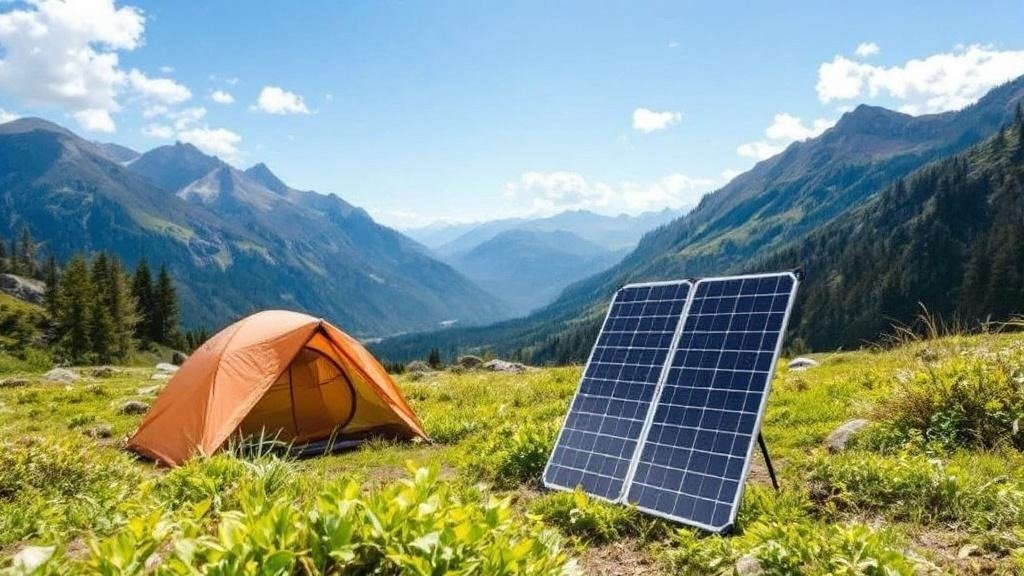


If you’ve been thinking about getting into off-grid power but don’t want the hassle of a full rooftop install, a good set of portable solar panels can be a game changer. I’ve been slowly building out a small off-grid kit for camping, road trips, and emergency backup, and this Renogy 100W folding panel kept popping up in conversations and reviews.
After spending time digging into the specs, reading owner feedback, and comparing it with other options, this one stood out as a smart middle ground between ultra-budget panels and premium, heavy suitcase kits. Below is a deep dive into how it actually stacks up in the real world, and who it’s best suited for.

- [Industry-Leading Efficiency 25%] Upgraded with 16BB N-Type cell technology, Renogy solar panels for camping achieve 25%…
- [Lightweight & Magnetic Handle Design] Weighing only 7.28 lbs, renogy portable solar panel is the lightest in its class….
- [Versatile Off-Grid Power] Charge 3 devices simultaneously with 1 USB-C PD (45W max) and 2 USB-A ports (18W & 15W), perf…
Renogy 100W Portable Solar Panels Product Showcase
Renogy is one of those brands that tends to come up a lot whenever people talk about upgrading from basic small solar panels to something more serious. This 100W N-Type folding panel is designed for people who want real output but still need something that fits behind a car seat or in an RV storage bay.
The first thing that stands out is the efficiency. Renogy is using N-Type cells rated up to 25% efficiency, which is higher than what you’ll find on most entry-level camping solar panels. In practice, that means you get more watt-hours out of the same amount of daylight, especially helpful if you camp in places with partial shade or shorter winter sun windows.
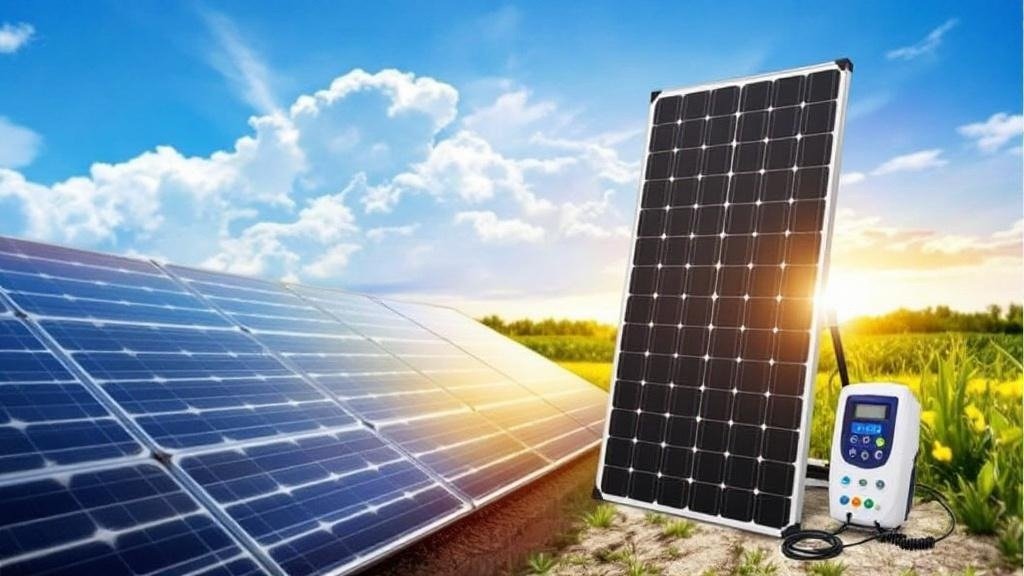
What I also like is that this isn’t just a dumb panel with two MC4 leads. It doubles as a compact power hub: there’s a USB‑C PD port up to 45W and two USB‑A ports for phones, tablets, and cameras. That means you can run it straight into your power station or battery, while also topping off smaller devices at the same time without extra adapters.
Despite the higher output and extra ports, the panel only weighs about 7.3 pounds and folds down to roughly 23 x 23 inches. If you’ve ever lugged around a traditional glass 100 watt solar panel, you’ll immediately notice the difference. This one feels much more like a portable piece of gear than a permanent fixture you’re trying to repurpose.
If you want to check current pricing or user photos, you can see it on Amazon here: Renogy 100W Folding Panel.
Pros & Cons of This 100W Portable Panel
Where This Panel Really Shines
The biggest strength here is efficiency versus size. At 100W with up to 25% cell efficiency, you’re getting performance that nudges into the territory of some of the most efficient solar panels designed for mobile setups, but in a compact, quad-fold format. For van dwellers or SUV campers with limited space, that’s a major plus.
I also appreciate that Renogy didn’t just slap USB ports on as an afterthought. The USB‑C PD port can push up to 45W, which is enough for many modern laptops, and the two USB‑A ports cover phones, headlamps, battery banks, and other small gear. Being able to charge a power station via MC4 while running a laptop straight from the panel is surprisingly practical on sunny days.
The kickstand setup is another highlight. You get four kickstands with three angle options (40°, 50°, 60°), so you can tilt the panel roughly toward the sun instead of just laying it flat. That makes a noticeable difference in harvest, especially in winter or mornings and late afternoons.
Finally, the panel is IP65‑rated. That doesn’t mean you can leave it in a hurricane, but it does handle dust and splashing water. For real-world camping, that’s exactly what you need: something that won’t freak out if a quick shower rolls through before you can pack it away.
Trade-Offs and Limitations
There are a few things to keep in mind so expectations stay realistic. First, it’s still a 100 watt solar panel. That’s perfect for charging small power stations, 12V batteries, and daily devices, but it’s not going to power an entire RV air conditioner or big electric cooktop on its own. Think of it as a strong backbone for a light to moderate power setup, not a whole-home solution.
Second, this is a foldable panel using a flexible-style construction rather than a framed glass module. That’s what keeps the weight low, but it also means you don’t want to treat it like a rigid board. Folding, unfolding, and storing it with some care will go a long way toward long-term durability.
Third, while the built-in ports are incredibly handy, you’ll still want a decent power station or a properly fused charge controller and battery if you’re planning a more permanent system. The USB ports are great for camping trips and road travel, but they’re not a full replacement for a complete off-grid setup.
Finally, with Renogy you’re paying a bit more than the very cheapest portable solar panel kits on the market. In return, you’re getting better efficiency, a known brand, and a more polished design. If your budget is razor thin, there are cheaper options, but they generally don’t compete on performance per square foot.
- [Industry-Leading Efficiency 25%] Upgraded with 16BB N-Type cell technology, Renogy solar panels for camping achieve 25%…
- [Lightweight & Magnetic Handle Design] Weighing only 7.28 lbs, renogy portable solar panel is the lightest in its class….
- [Versatile Off-Grid Power] Charge 3 devices simultaneously with 1 USB-C PD (45W max) and 2 USB-A ports (18W & 15W), perf…
Description and Real-World Use
Design, Form Factor, and Portability
Folded up, the Renogy panel looks more like a slim black briefcase than a typical solar product. The footprint is about 23 by 23 inches with a thickness of 1.57 inches, which makes it easy to slide along the side of a trunk, under an RV dinette, or behind a van seat. At just 7.28 pounds, it’s light enough that most people can move it around one-handed.
One subtle but very welcome touch is the magnetic handle and closure design. Instead of fiddling with snaps or loud Velcro strips, the panel folds up cleanly and clicks shut with magnets. On a day when you’re setting up and packing down multiple times say, on a road trip where you move campsites daily that small design detail feels surprisingly premium.
The outer material feels rugged enough to handle normal outdoor use without being overly stiff or plasticky. You’ll still want to avoid dragging it across sharp rocks or dropping it on sharp edges, but for normal camping, tailgating, and driveway use, it feels well thought out.
Power Output and Charging Experience
On paper, the numbers look solid: 21.6V open-circuit voltage, 18.8V operating voltage, and roughly 5.3A operating current. In good sun with proper tilt, you can reasonably expect real-world output that gets close to the panel’s rating at midday, which is about what you want from portable solar panels in this class.
Where the design shines is versatility. With MC4 connectors, you can plug the panel straight into many popular power stations using the right adapter cable, or into a solar charge controller connected to a 12V battery system AGM, LiFePO4, or traditional deep cycle. That makes it a good “bridge” product if you’re transitioning from casual weekend camping to a more built-out off-grid kit.
The integrated USB ports turn this into a compact charging station. The USB‑C PD output supports 5V, 9V, 12V, and 15V up to 45W, and the USB‑A ports deliver 18W and 15W respectively. In real terms, that means you can charge a laptop, two phones, and still send most of the panel’s power to a battery on a sunny day.
Setup, Kickstands, and Wind Stability
Setup is straightforward: unfold the panel, flip out the four kickstands, angle it toward the sun, and plug in your cables. The 3-position adjustment on the kickstands is handy if you pay attention to sun angle. At higher latitudes or in winter, having the ability to tilt more aggressively can easily bump your harvest.
Wind is often the Achilles’ heel of light portable gear, but Renogy tries to address that with small “ear” extensions and optional ground studs for staking it down. You also get reinforced grommets along the edges, so you can hang or strap the panel to an RV side, awning, or even the side of a tent if needed.
It’s not completely immune to strong gusts you’re still dealing with a broad, flat surface but with stakes or tie-downs, it’s much more manageable than panels that rely on flimsy stands or nothing at all.
Durability and Weather Resistance
The IP65 rating covers dust ingress and water jets from any direction, which in practice means rain, splashes, and dusty trails won’t be a problem. You still don’t want to submerge it or leave the ports open in a downpour, but occasional bad weather shouldn’t damage the panel.
Renogy backs the product with a 2‑year material and workmanship warranty, which is fairly typical for higher-quality portable gear. It’s not as long as the 10–25 year warranties attached to rigid rooftop modules, but those are very different products designed to sit in one place for decades.
Specs and Technical Details
Electrical Performance
- Maximum Power: 100W
- Cell Type: N‑Type monocrystalline
- Cell Efficiency: Up to 25%
- Open-Circuit Voltage (VOC): 21.6V
- Optimum Operating Voltage (Vmp): 18.8V
- Short-Circuit Current (Isc): 5.66A
- Optimum Operating Current (Imp): 5.34A
These numbers are right in the sweet spot for pairing with many 12V battery charge controllers and compact power stations. If you decide to scale up, you can wire multiple panels in series or parallel as long as your controller or station supports the combined voltage and current.
- [Industry-Leading Efficiency 25%] Upgraded with 16BB N-Type cell technology, Renogy solar panels for camping achieve 25%…
- [Lightweight & Magnetic Handle Design] Weighing only 7.28 lbs, renogy portable solar panel is the lightest in its class….
- [Versatile Off-Grid Power] Charge 3 devices simultaneously with 1 USB-C PD (45W max) and 2 USB-A ports (18W & 15W), perf…
USB and Charging Outputs
- USB‑C PD: up to 45W (5V/3A, 9V/3A, 12V/3A, 15V/3A)
- USB‑A (orange): up to 18W (5V/3A, 9V/2A, 12V/1.5A)
- USB‑A (black): up to 15W (5V/3A)
- Standard MC4 output for solar controllers and power stations
This mix of outputs covers most typical devices used on trips: phones, tablets, cameras, drones, Bluetooth speakers, headlamps, and many thin‑and‑light laptops. If your laptop needs more than 45W, you’ll still want a power station in between, but for many users, direct charging will work fine.
Size, Weight, and Operating Conditions
- Folded Size: 22.99 x 22.54 x 1.57 in (584 x 572.5 x 40 mm)
- Unfolded Size: 45.08 x 22.99 x 0.12 in (1145 x 584 x 3 mm)
- Weight: 7.28 lbs (3.3 kg)
- Operating Temperature: 14°F to 149°F (-10°C to +65°C)
- Certifications: CE, RoHS, FCC, CA65, PSE; manufactured in an ISO 9001 facility
In other words, it’s light enough for frequent setup and breakdown, compact enough for small vehicles, and rated for the kind of temperatures you’d realistically encounter on most road and camping trips.
Why We Recommend This Panel
What pushes this panel into the “easy to recommend” category is how well it balances performance, portability, and ease of use. Many people start out with very basic small solar panels and quickly hit the ceiling of what those can do. This Renogy panel feels like the natural next step enough power to matter, without demanding a permanent install.
The combination of high‑efficiency N‑Type cells, solid electrical specs, and real attention to usability details (magnetic closure, adjustable kickstands, integrated ports) makes it friendlier for beginners than a lot of bare-bones gear. At the same time, because it uses standard MC4 connectors, it slots nicely into more advanced systems if you eventually add a bigger battery bank or more modules.
I also like that this is a genuinely portable solution that doesn’t ask you to baby it. You can toss it in the car, lean it against a camp chair, stake it down outside your tent, or hang it off an RV with the grommets. It’s obviously not indestructible, but it’s built to be used, not just admired on a spec sheet.
If your plan is to slowly build an off-grid kit, this panel makes a lot of sense as a first real workhorse. Later, you can add a second one in parallel, or keep this as a “grab-and-go” option while your main rig stays mounted on a roof. That flexibility is worth paying a bit extra for compared to one-purpose setups.
If you’ve already settled on this size and want to move ahead, you can find the current offer here: see Renogy’s 100W N‑Type panel.
Who This Is NOT For (Target Audience Clarity)
As much as this panel fits a lot of use cases, it’s not right for everyone. If you’re trying to run large AC loads for long stretches things like full-size air conditioners, electric heaters, or big induction cooktops you’ll quickly outrun what a 100W portable panel can reasonably support, even in perfect sun.
It’s also not the best choice if you’re planning a permanent rooftop install and never intend to move your system. In that case, a set of rigid modules or even high-output flexible solar panels purpose‑built for mounting will usually give you a better cost per watt over the long term.
If you regularly camp in deep forest, heavily shaded areas, or narrow city streets where you simply can’t get much direct sunlight, no mobile panel will work wonders. Portable gear like this performs best when you can chase the sun a little moving it around a campsite or driveway as the day goes on.
Lastly, if you just want a cheap trickle charger to keep a single 12V battery topped off and never plan to run laptops, fridges, or power stations, this may actually be more panel than you need. A smaller, budget 50W setup might make more financial sense in that scenario.
Complementing Ideas and Related Gear
To get the most out of a 100W panel like this, it pairs extremely well with a compact power station or a quality 12V battery and charge controller. That combo lets you store energy during the day and use it at night without babysitting devices. If you’re exploring how to build out that kind of system, we have a beginner-friendly guide on choosing and sizing components here: beginner’s guide to going solar.
If you’re leaning more toward extremely low‑profile installs like on curved van roofs or teardrop trailers then dedicated flexible solar panel options might also be worth comparing. They usually don’t fold up like this Renogy panel, but they can hug surfaces in ways rigid modules can’t, which matters on certain builds.
For anyone simply wanting a strong, portable core to build around, this Renogy unit is an easy first step. If you decide later you want more capacity, you can stack it with additional modules, or keep it strictly as your “grab‑and‑go” panel for tailgates, beach days, or outages at home.
If you’re ready to add it to your kit, you can grab it here: Renogy 100W N‑Type Folding Panel.
And if you want to compare it against a different style of kit like full suitcase panels or starter systems with controllers included this listing is a helpful benchmark: compare Renogy’s 100W option.
- [Industry-Leading Efficiency 25%] Upgraded with 16BB N-Type cell technology, Renogy solar panels for camping achieve 25%…
- [Lightweight & Magnetic Handle Design] Weighing only 7.28 lbs, renogy portable solar panel is the lightest in its class….
- [Versatile Off-Grid Power] Charge 3 devices simultaneously with 1 USB-C PD (45W max) and 2 USB-A ports (18W & 15W), perf…
Your Questions, Answered
Can this 100W panel run a portable fridge and charge a power station at the same time?
Yes, in many cases it can. A typical 12V portable fridge might draw 40–60 watts while the compressor is running but not 24/7. In good sun, this 100W Renogy panel can send most of its power into your power station or 12V battery through the MC4 connection, while the fridge draws from that stored energy. Realistically, you’ll want a decent battery or power station in the mix to smooth out clouds and nighttime use, but for weekend camping, this setup works well as long as you get several solid hours of sun each day.
How does this compare to cheaper 100W rigid rooftop panels?
Rigid 100W modules are often cheaper per watt, but they’re heavier, bulkier, and really meant for permanent installation. This folding Renogy panel trades a bit of cost efficiency for portability, lighter weight, integrated USB ports, and kickstands. If you just want to mount panels on a roof and never move them, rigid modules win. If you need a panel that can move from car to campsite to backyard, the portable design is much more practical.
Is this a good option for beginners who have never used solar before?
It’s actually one of the better entry points for beginners. You can start very simply: plug devices into the USB ports and run the MC4 leads into a compatible power station with the right cable. As you get more comfortable, you can add a solar charge controller and a 12V battery bank without replacing the panel. The combination of clear labeling, multiple output options, and manageable size makes it less intimidating than many DIY-only kits.
Can I leave the panel outside all the time on my RV or balcony?
It is built for outdoor use and is IP65‑rated, so it can handle normal rain and dust. However, it’s still a portable product with fabric and hinged sections, not a permanently mounted glass module. For full‑time outdoor exposure year‑round, a rigid rooftop panel is usually a better long-term choice. With this Renogy foldable, it’s best to deploy it when you need it, then fold and store it when you’re done or if severe weather is coming.
What size power station pairs well with this 100W folding panel?
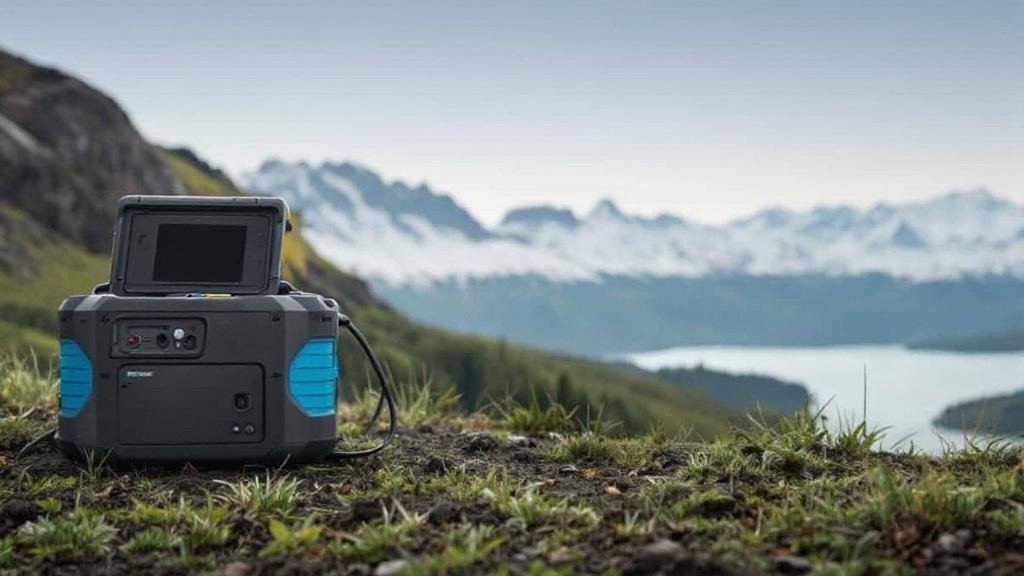
A power station in the 300–700Wh range is a very natural fit. With several hours of good sunlight, this panel can meaningfully recharge that capacity during the day while you run lights, charge electronics, and maybe a small fridge. Larger power stations will still benefit, but you’ll need more panels or longer sun hours to fully refill them. Always check the power station’s solar input specs (voltage and current limits) and use the proper MC4 adapter cable.

We are a collective of off-grid enthusiasts, solar technicians, and sustainable living advocates dedicated to making energy independence accessible. From blackout-proofing suburban homes to engineering mobile power for the road, we rigorously test every kit and component we review. Our mission is to help you cut the cord and power your life on your own terms.