


- Product Showcase: ECO-WORTHY rv solar panels 400W Kit Overview
- Pros & Cons of the ECO-WORTHY 400W Solar Panels
- Description & Real-World Use
- Specs & Technical Details
- Why We Recommend This ECO-WORTHY 400W Kit
- Who This Is NOT For (Target Audience Clarity)
- Complementing Ideas & Helpful Next Steps
- Your Questions, Answered
If you’ve been flirting with the idea of finally adding dependable rv solar panels to your rig, this ECO-WORTHY 400W setup is one of those kits that keeps popping up in real-world conversations. It’s priced for normal people, sized for realistic boondocking, and designed in a way that doesn’t punish you if you’re not an expert electrician. After spending time digging through the details and user experiences, this is a very solid contender for anyone who wants to run an RV, small cabin, or shed off the sun without turning it into a full-time hobby.
What stood out immediately is how this kit tries to balance efficiency, simplicity, and flexibility. You’re not just buying random panels; you’re getting a foundation you can actually build on later. If you’ve ever tried piecing together diy solar panels from scratch, you’ll appreciate that a lot of the painful guesswork is already handled here. Let’s walk through what you’re really getting, what it does well, and where it might not be the perfect fit.
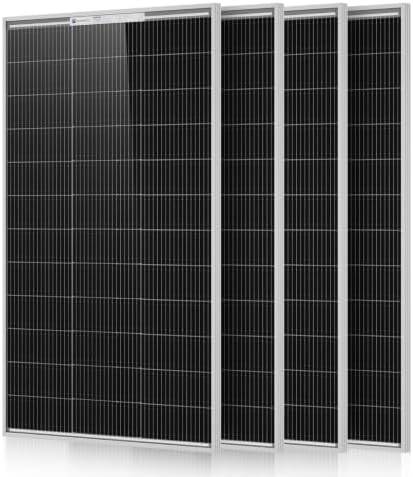
- [25% Efficiency] ECO-WORTHY 100W N-Type Bifacial Solar Panel is built with advanced N-type solar cells and 16BB busbar t…
- [Outstanding Low-Light Performance] Each panel comes with 35-inch cables. Bypass diodes are pre-installed in a waterproo…
- [The Best DIY Partner for 12V/24V System] Basic generator component for 12V/24V battery charging for on-grid, off-grid a…
Product Showcase: ECO-WORTHY rv solar panels 400W Kit Overview
The ECO-WORTHY 400W Solar Panel Kit is built around four 100 watt monocrystalline solar panels, each rated at 18V. Combined, you’re looking at 400 watts of potential power generation, which is a great sweet spot for many weekend warriors and full-timers who are power-conscious. In decent sun, ECO-WORTHY rates the system at up to 1600Wh per day, assuming around four hours of strong sunlight.
This kit is designed for 12V and 24V systems, meaning you can pair it with common deep-cycle batteries, LiFePO4 packs, or an existing house battery bank in your RV. It can work on-grid, off-grid, or as part of a hybrid setup if you’re supplementing shore power or a generator. The panels themselves are framed rigid modules, not flexible solar panels, so they’re meant to be mounted solidly to a roof, rack, frame, or ground stand.
ECO-WORTHY leans heavily into ease-of-use here: pre-drilled mounting holes, MC4-style plug-and-play connectors, and junction boxes that come pre-wired with bypass diodes. That last bit means the panels are better able to cope with partial shading and low-light conditions, something that can make or break your experience if you camp near trees or park at odd angles.
The kit is shipped in two boxes (two panels per box), which sounds like a small detail, but it actually matters: it helps cut down on shipping damage and makes handling easier if you’re doing a solo install. You’re not wrestling with one giant, awkward, heavy package to get started.
If you want to look at the full product details and current pricing, you can check it out here: ECO-WORTHY 400W Solar Panel Kit.
Pros & Cons of the ECO-WORTHY 400W Solar Panels
Key Advantages
First, the efficiency rating is genuinely impressive for this price bracket. ECO-WORTHY claims up to 23% efficiency thanks to PERC cell technology, which basically means the cells do a better job of grabbing and using the sunlight that hits them. In practice, that translates to more usable power in less-than-perfect conditions and better performance when skies aren’t postcard-blue.
Second, these panels are surprisingly beginner-friendly. The included connectors, pre-drilled mounting holes, and clear polarity markings make it much easier to build a basic array. If you’re transitioning from a single portable solar panel suitcase to a more permanent system, this kit is a logical next step. Many users report that a basic roof install can be done in an afternoon with standard tools.
Third, the physical design is thoughtful. At about 1.38 inches thick, the frames allow for faster heat dissipation, which can help maintain output on hot days when panels typically lose efficiency. The build itself feels geared toward RV roofs, cabins, sheds, and similar projects rather than just theoretical “lab” specs. The toughened glass and aluminum frames are built to stand up to real-world weather and road vibration.
Finally, the system is versatile. You can start with just these four panels on a 12V battery bank, then later rewire for 24V or expand into a larger off-grid system if your needs grow. It’s a legitimate “starter backbone” instead of a dead-end kit.
Potential Drawbacks
There are a few things to keep in mind before pulling the trigger. The biggest one for some people is that this is a rigid panel setup, not flexible solar panels. If you have an RV roof with lots of curves, minimal mounting options, or strict weight concerns, you may prefer thin, bendable modules instead though you’ll usually pay more per watt for that convenience.
Next, while the kit is very beginner-friendly in terms of hardware, you still need a compatible charge controller, proper cabling, fuses, and a plan for how everything ties into your battery bank and DC/AC systems. ECO-WORTHY markets it as a great diy solar panels partner, which is true, but it assumes you’re comfortable with at least basic wiring safety or willing to learn.
Another consideration is that output claims (like the 1600Wh/day figure) are based on good conditions: strong sun, correct tilt, efficient batteries, and well-placed panels. If you usually camp in forests, the Pacific Northwest, or during winter, don’t expect those textbook numbers. This is true of every set of solar panels for rv setups, but it’s worth repeating so expectations line up with reality.
Lastly, because the system ships as multiple boxes, they may arrive on different days. That’s not a deal-breaker, but if you’re on a tight installation schedule, you’ll want to wait until everything is on-site before planning a big install day.
- [25% Efficiency] ECO-WORTHY 100W N-Type Bifacial Solar Panel is built with advanced N-type solar cells and 16BB busbar t…
- [Outstanding Low-Light Performance] Each panel comes with 35-inch cables. Bypass diodes are pre-installed in a waterproo…
- [The Best DIY Partner for 12V/24V System] Basic generator component for 12V/24V battery charging for on-grid, off-grid a…
Description & Real-World Use
Performance and Efficiency in Everyday Conditions
The headline feature here is the 23% efficiency rating. That’s not just marketing fluff; PERC cell technology has become a go-to for squeezing more power from the same footprint. In real-life camping or homestead use, that means you’re likely to see more reliable charging in hazy or late-afternoon sun compared to older or cheaper panels.
The bypass diodes inside the junction boxes play a big role in low-light performance. When part of a panel gets shaded say from a vent, AC unit, or nearby tree branch traditional panels can suffer a major drop in output. Bypass diodes help each section of the panel operate more independently, minimizing the hit from partial shading. It doesn’t eliminate shading issues, but it can be the difference between “barely charging” and “still trickling in a meaningful amount.”
The 35-inch pre-attached cables are long enough for typical series or parallel wiring without forcing messy extensions right at the panel. For RV roof layouts where you might be spanning across vents or roof features, having cables that are not absurdly short is a real convenience. You still may choose to run junction boxes or combiner boxes, but you’re not starting from zero.
On a decently sunny day, a 400W array like this can realistically keep up with a moderate RV lifestyle: lights, water pump, fans, phone and laptop charging, and even a 12V fridge if you’re careful. High-draw devices like microwaves, AC units, and electric heaters still require either shore power or a beefy inverter with plenty of battery capacity behind it.
Build Quality and Durability
ECO-WORTHY has clearly aimed these panels at a life spent outdoors, not just occasional use. The frames are aluminum, which keeps weight reasonable while resisting rust. Paired with toughened glass and an IP65-rated junction box, you’re safe against rain, road spray, and dust exactly the elements your gear will meet on long trips.
The 1.38-inch thickness isn’t just cosmetic. Solar panels heat up under use, and hot panels are less efficient. More physical depth allows better air circulation behind the panel, helping heat dissipate and maintaining a more stable operating temperature. Over the long term, running cooler can also contribute to longer panel life.
The hardware design supports DIY mounting with commonly available brackets. ECO-WORTHY even showcases suitable roof and ground mount options, including Z brackets and tilt mounts, so it’s easy to choose the right style for a flat RV roof, a shed roof, or a ground rack near a cabin. The pre-drilled mounting points match the most widely-used bracket systems.
If you’re nervous about long-term reliability, it’s worth looking at general solar panel longevity data from trusted sources like Energy.gov, which helps put typical lifespan and degradation rates into perspective for modern modules.
Installation Experience
For most people, the install process will be straightforward but not “instant.” The panels themselves are easy: line them up, mark your mounting points, drill, and secure them using the appropriate brackets for your roof or rack. Then it’s a matter of running the cables to your charge controller, making sure you’ve sized your wiring and fuses correctly.
Having plug-and-play connectors pre-installed removes a lot of room for mistakes at the panel level. You’ll still want to double-check polarity, layout (series vs. parallel), and overall system voltage. If you aren’t comfortable with that, it’s worth spending an hour reading a beginner solar guide or watching a reputable tutorial. The installation is well within the abilities of a reasonably handy RV owner.
Once wired in, you’ll want to monitor performance for the first few days. Check that your batteries are coming up to proper voltage, that your controller isn’t throwing any error codes, and that your wiring stays cool under load. After that, the system should be “set it and forget it,” aside from occasional cleaning of dust, pollen, or bird droppings on the glass.
If you’d like a general reference on wiring basics and safety, the information at NREL can be a useful companion to hands-on guides and manuals.
Specs & Technical Details
Core Panel Specifications
Each of the four included panels is a 100 watt monocrystalline module, rated at 18V. That voltage rating is ideal for feeding into 12V battery systems via a charge controller, or for wiring combinations that serve a 24V bank. Monocrystalline solar panels like these have become the standard for people who want good efficiency, stable performance, and a practical footprint on an RV roof or small building.
The panels use PERC (Passivated Emitter and Rear Cell) technology to push efficiency up to a claimed 23%. In technical terms, PERC adds a reflective layer that allows more of the unused light to be bounced back into the cell, increasing the total energy captured from the same amount of sun. It’s a mature technology now, so you’re not betting on an unproven gimmick.
Each panel includes a waterproof IP65-rated junction box, pre-wired with bypass diodes to help with partial shading and reduce power loss. The included MC4-style connectors and 35-inch leads are compatible with a wide range of charge controllers and extension cables, making it easy to integrate these panels into an existing system.
System Compatibility and Use Cases
This 400W kit is designed to play nicely with 12V or 24V systems. That gives you a lot of flexibility: you can start with a simple 12V deep-cycle battery setup in a small camper, or go straight to a 24V bank for more efficient power transfer in a cabin or larger RV. The panels can be wired in series, parallel, or series-parallel combinations depending on your controller and battery layout.
Ideal use cases include RVs, travel trailers, fifth wheels, van conversions, boats, off-grid cabins, backyard sheds, and small farm or garden outbuildings. You can pair them with inverters to run AC devices or keep it DC-only for things like pumps, lights, and 12V fridges. The kit is also suitable as an expansion to an existing array, provided you match voltage and controller limits correctly.
Because this is a panel-only package, you’ll need to add your own charge controller (MPPT preferred for best results), batteries, and connection hardware. Many buyers use it as an upgrade path from a single 100 watt solar panel starter kit they keep their existing controller and battery, then build out a more capable array step by step.
Whether you’re full-time on the road or weekend camping, that flexibility makes the ECO-WORTHY setup more future-proof than a locked-in, all-in-one package that can’t grow with you.
- [25% Efficiency] ECO-WORTHY 100W N-Type Bifacial Solar Panel is built with advanced N-type solar cells and 16BB busbar t…
- [Outstanding Low-Light Performance] Each panel comes with 35-inch cables. Bypass diodes are pre-installed in a waterproo…
- [The Best DIY Partner for 12V/24V System] Basic generator component for 12V/24V battery charging for on-grid, off-grid a…
Why We Recommend This ECO-WORTHY 400W Kit
The short version: this kit hits a very practical balance between cost, quality, and ease-of-use for people who are serious about adding rv solar panels but don’t want to overcomplicate their lives. It’s not the cheapest set of panels on the market, and it’s not the most “premium” either but that’s exactly why it makes sense for a lot of RV owners and off-grid tinkerers.
What we really like is how thoughtfully the kit lines up with real-world use instead of just lab specs. The 400W capacity gives you enough headroom to do more than just trickle charge a battery; you can realistically support a careful, power-aware lifestyle. Lights, USB charging, fans, and a 12V fridge are very much in reach. If you pair the system with a decent battery bank and an MPPT controller, you’re suddenly far less dependent on hookups or idling a generator.
Another reason we recommend it is the simplicity of scaling. You’re not locked into some proprietary connector or weird voltage. You can wire these panels into your current setup, then expand later with additional panels or batteries as budget and needs evolve. For DIY-minded owners, that’s gold you can start with a foundation that doesn’t force a complete do-over when your goals change.
We also appreciate that ECO-WORTHY has clearly considered less-than-ideal conditions: low-light performance, partial shading, heat buildup, and weather exposure. Those things matter far more over the life of your system than a perfect-sun, mid-day wattage number. Knowing that the panels have bypass diodes, a solid frame, and good heat dissipation makes us more comfortable recommending them as a long-term investment.
Finally, there’s the human factor. If you’re the type who likes to understand your system, tinker a bit, and take pride in using diy solar panels that you installed yourself, this kit is extremely satisfying. It’s approachable without being “toy-like,” powerful without being intimidating, and it lives comfortably in that middle ground where most real-world RVers and off-grid owners actually are.
If you’re ready to explore pricing or current bundles, you can view the product listing here: ECO-WORTHY 400W Rigid Solar Panels.
Who This Is NOT For (Target Audience Clarity)
As good as this kit is, it’s not the perfect fit for everyone. If your rig has a highly curved or delicate roof where rigid modules are tricky or risky to mount, you may be better off with lightweight flexible solar panels that can conform to unique surfaces and save every ounce of weight. That convenience comes at a price, but in some builds it’s worth it.
It’s also not ideal for “plug it in and never think about it” buyers who want a fully pre-wired, all-in-one suitcase-style portable solar panel with a built-in controller. Here, you’ll need to plan the wiring, choose a controller, and connect everything to your battery. It’s not difficult, but it does require some involvement and a basic comfort with tools.
If your power needs are minimal say you only camp a few weekends a year, run almost nothing off-grid, and mostly stay in campgrounds with hookups this level of capacity might be overkill. In that case, a single 100 watt solar panel or a smaller kit could cover your needs with less upfront cost and complexity.
On the other end of the spectrum, if you want to power large air conditioners, electric heaters, induction cooktops, or a full residential fridge entirely off solar, 400W is only a starting point. You’d be looking at a much larger array, substantial battery storage, and a carefully engineered electrical system. This ECO-WORTHY kit can be part of that journey, but it’s not a magic bullet for heavy, all-electric lifestyles.
Lastly, if you strongly prefer plug-and-play over learning, and you don’t enjoy the DIY side at all, hiring a professional installer with a custom-designed system may be the better path, even if it costs more upfront.
Complementing Ideas & Helpful Next Steps
Once you’ve decided to go with a kit like this, the next step is making sure the rest of your system is ready to support it. That includes choosing a reliable charge controller, sizing your battery bank appropriately, and planning your wiring runs with safety in mind. If you want a step-by-step walkthrough for building out an off-grid power setup, our guide on planning an RV solar system from scratch breaks the process down into manageable pieces.
It’s also worth thinking about how your new panels will physically mount to your rig or structure. ECO-WORTHY showcases several bracket styles that work well with this kit, but your roof layout and travel style may push you toward tilt mounts, low-profile Z brackets, or even a ground rack near a cabin or shed. For ideas and installation examples, you can browse our comparison of popular RV solar mounting options to see what has worked for other owners.
If mobility and quick setup matter to you say you move campsites constantly or store your rig under cover you might even combine these roof-mounted panels with a separate portable solar panel suitcase that you can position in the sun while your RV rests in the shade. Used together, they give you flexibility in sketchy campsites and shoulder seasons.
However you build it out, the ECO-WORTHY 400W kit is a strong backbone. Treat it as the heart of your system, then layer in the batteries, controller, and accessories that match your travel style and comfort level with DIY work. The result can be a quiet, reliable, fuel-free power setup that feels tailor-made for the way you actually camp.
If you want to check availability or read more buyer feedback, you can find the product listing here: ECO-WORTHY 400W Solar Panels for RVs and Cabins, and consider pairing it with a portable kit like this one: compact ECO-WORTHY 100W panel or expanding later with an additional set: matching ECO-WORTHY 2x100W bundle.
- [25% Efficiency] ECO-WORTHY 100W N-Type Bifacial Solar Panel is built with advanced N-type solar cells and 16BB busbar t…
- [Outstanding Low-Light Performance] Each panel comes with 35-inch cables. Bypass diodes are pre-installed in a waterproo…
- [The Best DIY Partner for 12V/24V System] Basic generator component for 12V/24V battery charging for on-grid, off-grid a…
Your Questions, Answered
Are these ECO-WORTHY panels a good fit as rv solar panels for full-time travel?
For many full-time RVers with moderate power needs, this 400W ECO-WORTHY kit is a very solid starting point. It can comfortably handle essentials like lights, fans, device charging, and a 12V fridge when paired with a properly sized battery bank and a good MPPT charge controller. Heavy loads such as air conditioning, electric heaters, or high-wattage kitchen appliances still require either shore power or a generator, but for day-to-day living off-grid, these panels provide a stable backbone. Many full-timers start with a similar 400W array and later expand by adding more panels or batteries as their lifestyle evolves.
Can I install this 400W ECO-WORTHY kit myself, or do I need a professional?
Most reasonably handy RV and cabin owners can install this kit on their own, provided they’re comfortable with basic tools and follow wiring safety practices. The panels come with pre-drilled mounting holes and plug-and-play connectors, which simplify the process significantly. That said, you still need to plan your array layout, wire routing, fusing, and connection to a charge controller and battery bank. If any of that feels overwhelming, you can still purchase the kit and have a professional handle the final wiring and connections while you do the physical mounting and cable runs to keep costs down.
How does this ECO-WORTHY 400W setup compare to flexible solar panels for RVs?
Rigid monocrystalline panels like these ECO-WORTHY modules typically offer better value per watt, stronger frames, and longer lifespans than most flexible solar panels. They also dissipate heat more effectively thanks to their rigid frames and air gap underneath. Flexible modules shine when you have curved or weight-sensitive roofs, or when a low-profile look is critical. However, they can be more prone to wear if not installed carefully. If your roof is relatively flat and you’re not extremely weight-limited, rigid panels are usually the more durable and cost-effective choice over the long term.
What size battery bank should I pair with a 400W solar array like this?
A common rule of thumb for a 400W array is to start with roughly 200–400Ah of usable battery capacity at 12V, depending on your energy usage and whether you’re using lead-acid or lithium batteries. For example, two 100Ah LiFePO4 batteries (about 200Ah usable) can work very well with this kit for moderate off-grid usage. If you run a compressor fridge, fans, and electronics daily, leaning toward the higher end of that range gives you more buffer for cloudy days. Ultimately, it’s best to calculate your daily watt-hour consumption and size the bank so you can comfortably ride through at least a day or two of poor sun.
Can I expand beyond 400W later if my power needs increase?
Yes, one of the strengths of this ECO-WORTHY kit is that it uses standard voltages and MC4-style connectors, making expansion relatively straightforward. As long as your charge controller and mounting space allow, you can add more 100W panels in series, parallel, or a mixed configuration to increase your array size. When planning your system, it’s smart to choose a controller with headroom for future expansion and to route cabling and combiner boxes in a way that doesn’t paint you into a corner. That way, you can start with 400W and grow your system as your needs or budget evolve.

We are a collective of off-grid enthusiasts, solar technicians, and sustainable living advocates dedicated to making energy independence accessible. From blackout-proofing suburban homes to engineering mobile power for the road, we rigorously test every kit and component we review. Our mission is to help you cut the cord and power your life on your own terms.