

- Renogy Rover 60A MPPT solar charger controller Overview
- Pros & Cons of the Renogy Rover 60A
- Description: How This Controller Fits Into a Real-World System
- Specs: What the Numbers Mean for Your System
- Why We Recommend the Rover 60A for Serious Solar Users
- Who This Is NOT For
- Complementing Ideas: Building a Balanced System Around It
- Your Questions, Answered
If you’ve ever watched your batteries creep dangerously low on a cold night in the RV, or in an off-grid cabin after a cloudy week, you already know the heart of any solar setup isn’t just the panels or the batteries. It’s the solar charger controller quietly deciding how much power goes where, and when. The model we’re looking at here is the Renogy Rover 60A MPPT a serious piece of gear aimed at people who actually lean on their solar system, not just dabble in it.
I’ve spent a lot of time around DIY solar setups on vans, cabins, and small off-grid systems, and there are two patterns I’ve seen over and over: people either buy a tiny, bargain controller and regret it, or they size up and never think about it again. This Renogy unit clearly aims to land in that second category. It’s built to handle high current, multiple system voltages, and tough conditions, without you babysitting it all the time.
In this review, I’ll walk through what it’s like to live with a controller like this: how it handles real-world shading, storms, battery protection, and expansion. I’ll also share who it’s best for, and just as importantly, who should probably look at something smaller and simpler. If you’re planning to grow your solar setup over time, this is the kind of controller that can grow with you instead of becoming the limiting factor.

- Dual-Peak 60A MPPT Solar Charge Control: Renogy Rover Charge Controller Master partial shading and cloudy conditions wit…
- Storm-Ready RV Solar Charge Controller: Ultimate 48v LiFePO4 charge controller with smart -40°F to 149°F temp compensati…
- Renogy MPPT With 4-Stage Charging &Lithium Recovery:Rover 60A controller delivers precision Bulk/Absorption/ Float/Equal…
Renogy Rover 60A MPPT solar charger controller Overview
The product name is a mouthful, but at the core you’re getting a 60-amp MPPT solar charger controller that works with 12V, 24V, 36V, and 48V battery banks. That flexibility alone makes it attractive if you’re building a system that might change over time like starting with 12V in a van and eventually stepping up to 24V or 48V in a cabin or shop.
This controller is part of the well-known Renogy ecosystem, so if you’re already running Renogy solar panels or batteries, it fits right in. It supports gel, sealed, flooded, and lithium chemistries, and has a dedicated lithium activation feature to help bring deeply discharged LiFePO4 batteries back from the brink. That alone can save you from an expensive mistake.
Most importantly, this isn’t a basic PWM box. It’s a true MPPT unit with dual-peak tracking and high conversion efficiency, which simply means it can squeeze more usable energy out of your panels especially in partial shade, cloudy conditions, or with older/damaged modules. For RVers, boaters, and off-grid cabins dealing with trees and shifting sun angles, that’s a real-world advantage, not just a marketing claim.
If you’re ready to dig into the details or grab it for your system, you can check current pricing and specs on Amazon here: Renogy Rover 60A on Amazon.
Pros & Cons of the Renogy Rover 60A
What Stands Out in Daily Use
There are a few things about this controller that jump out once you stop just reading the spec sheet and start thinking about real-world use. The first is the dual-peak MPPT tracking. On paper, “99.9% multi-peak tracking efficiency” sounds like overkill, but in practice it helps when your panels are partially shaded by trees, vents, or roof racks. Instead of getting stuck on a bad operating point, it keeps hunting for the sweet spot.
The second stand-out is how temperature-aware it is. With a wide operating range and temperature compensation, it’s designed for people who actually see extreme weather desert summer days, frosty winter mornings, or both in the same trip. That’s key for battery longevity. Add in lithium recovery and you’re looking at a controller that’s trying to protect your investment, not just move amps around.
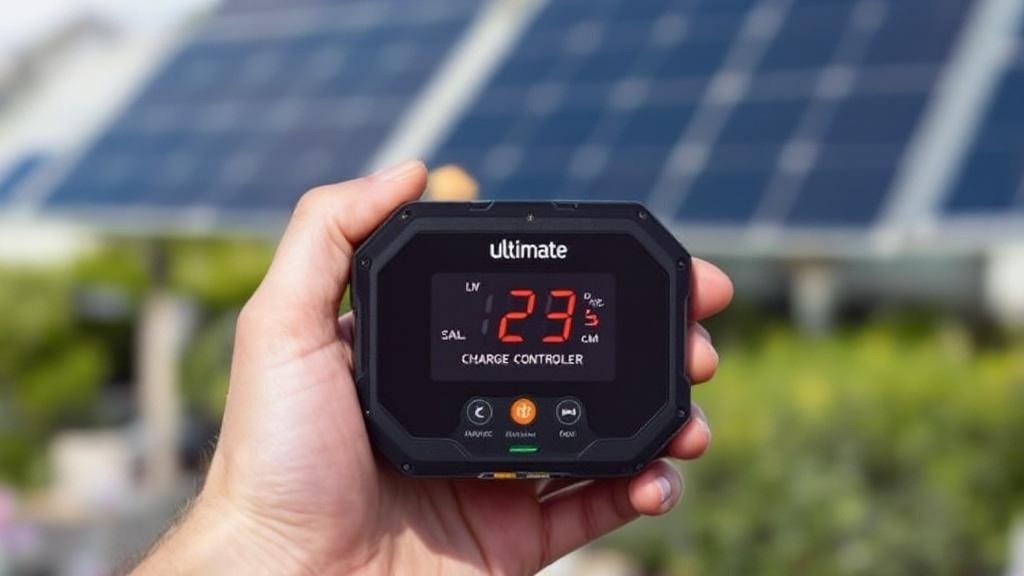
Then there’s the data side: a backlit LCD that gives you real-time numbers and error codes, plus 365 days of logged performance. Pair it with a Bluetooth module and the Renogy DC Home app, and you can keep an eye on your system from the comfort of your rig or cabin without opening a single panel.
Key Advantages
- 60A MPPT design with high tracking and conversion efficiency for better energy harvest.
- Supports 12V/24V/36V/48V systems and multiple battery chemistries including LiFePO4.
- Smart temperature compensation and protection against overvoltage, reverse polarity, and surges.
- Integrated load control to power DC appliances directly with timer scheduling.
- Bluetooth compatibility for app monitoring and long-term data logging.
For those who want to pair it with compatible gear, the broader Renogy solar ecosystem offers panels, batteries, and accessories that work cleanly with this controller, making system design more straightforward.
Potential Drawbacks
No product is perfect, and it’s better to know the trade-offs up front. First, this unit is physically larger and heavier than a basic PWM controller. In a compact van build with limited wall space, you’ll need to plan your layout carefully. At around 7.9 lbs and a substantial footprint, it feels more like a permanent fixture than a small gadget.
Second, while the interface is better than a lot of budget controllers, there’s still a learning curve if you’re new to solar. You’ll want to read the manual, understand your battery type, and double-check your settings. It’s not complicated, but it’s not “plug and forget” either. The upside is far more control and protection.
Finally, cost: compared to smaller Renogy charge controllers, this one sits at the higher end of the price spectrum. If you have a very small system (say, a single 100W panel and a tiny battery), this is overkill. But if you’re already pushing or planning for more wattage, the price makes sense as a long-term investment.
- Dual-Peak 60A MPPT Solar Charge Control: Renogy Rover Charge Controller Master partial shading and cloudy conditions wit…
- Storm-Ready RV Solar Charge Controller: Ultimate 48v LiFePO4 charge controller with smart -40°F to 149°F temp compensati…
- Renogy MPPT With 4-Stage Charging &Lithium Recovery:Rover 60A controller delivers precision Bulk/Absorption/ Float/Equal…
Description: How This Controller Fits Into a Real-World System
MPPT Performance and Partial Shading
The real value of an MPPT solar charger controller like the Rover 60A shows up when conditions aren’t ideal which, frankly, is most of the time. Roof angles shift, trees cast shadows, and panels get dirty or mismatched over time. The dual-peak tracking design is built for that messy reality. Instead of locking onto a single power point and staying there all day, it constantly evaluates multiple peaks to find where your panels are actually producing best.
Renogy rates the conversion efficiency at up to 98%. In practice, you’re not staring at the number as much as you’re noticing that your batteries are full earlier in the day, or that you’re able to run more loads without dipping into your reserve. If you’re upgrading from an older PWM controller, the difference in harvest on the same array can be surprisingly noticeable, especially in shoulder seasons or variable weather.
Battery Protection and Chemistry Support
Battery chemistry is where a lot of cheaper solar panel charge controllers cut corners. This unit, by contrast, is clearly designed to be battery-agnostic. It supports gel, sealed, flooded lead-acid, and lithium, with separate charging profiles to suit each type. That matters because the wrong voltages or charge stages can quietly shorten battery life.
The four-stage charging Bulk, Absorption, Float, and Equalization (for appropriate lead-acid setups) is there to maximize longevity, not just fill the bank as fast as possible. The standout feature, though, is lithium activation. If you’ve ever accidentally run a LiFePO4 bank down to where the BMS shuts it off, you know the panic. This controller’s ability to safely bring a deeply discharged lithium pack back to life is genuinely useful.
Load Control and Direct DC Power
Another thoughtful feature is the integrated load terminals. Instead of wiring every DC light or fan directly to the battery, you can run some of them through the controller and take advantage of its load control. That means you can schedule when certain loads turn on or off, protect against over-discharge, and let the controller handle capacitive surges from devices like pumps or motors.
For RVs and off-grid cabins, that opens up some smart possibilities: you can schedule outdoor lights, power a small fan during peak solar hours, or give lower-priority devices a “soft” power path that automatically cuts out before your battery bank gets too low. It’s a simple feature, but when used well, it adds a lot of finesse to a system.
Monitoring, Data Logging, and Remote Access
The front LCD is more than just a token display. It gives you voltage, current, system status, and error codes in a format that’s readable even in lower light thanks to the backlight. For many users, that alone is enough you walk up, tap a button, check your numbers, and move on with your day.
Where it really gets interesting is the 365-day data logging and the optional Bluetooth module. With the Renogy BT-1 or BT-2 and the DC Home app, you can see historical performance, track trends, and receive alerts. If you’re the kind of person who likes to optimize panel tilt, spot declining panel performance, or just keep an eye on your system health remotely, that data is gold.
Specs: What the Numbers Mean for Your System
Power Handling and System Voltage
The Rover 60A is rated for the following maximum PV input power: 800W at 12V, 1600W at 24V, 2400W at 36V, and 3200W at 48V. That’s a lot of headroom compared to the average small RV or cabin system, and it gives you plenty of room to expand. The maximum PV input voltage is 140V, which allows for higher-voltage panel strings that keep wire runs more efficient and manageable.
On the battery side, it auto-recognizes 12V, 24V, 36V, or 48V systems for non-lithium chemistries. That means if you reconfigure down the line say moving from a 12V RV setup to a 48V cabin bank you’re not immediately shopping for another controller. The rated charge current is 60A, and the load output is 20A, which is more than enough for a typical suite of DC devices.
Physical Build and Environmental Ratings
In terms of build, the unit measures about 11.22 x 8.07 x 4.00 inches and weighs roughly 7.9 lbs. It uses 25mm² (4 AWG) terminals, which matches the kind of heavy-gauge wiring you’d expect in a higher-current system. The enclosure is rated IP32, so it’s protected against objects and limited dripping water, but it’s not designed to live out in the rain. Think interior mounting in a ventilated, reasonably protected space.
The operating temperature range is wide: from about -31°F to 113°F (-35°C to 45°C). Combined with its temperature compensation setting (defaulting to -3mV/°C/2V), that helps it adjust charging behavior in both cold and hot environments to preserve battery health. Self-consumption runs between 0.7W and 1.2W, which is low enough that it won’t significantly eat into your stored power.
Protection, Safety, and Connectivity
Under the hood, the controller incorporates TVS surge protection capable of blocking significant transient voltage spikes, including those associated with lightning activity in storm-prone regions. It also includes standard protections you’d expect: reverse polarity, overload, and various over/under-voltage safeguards that step in before things go sideways.
For connectivity, it supports Renogy’s BT-1 and BT-2 Bluetooth modules, which plug directly into the unit. That, plus Modbus protocol support, gives you options: simple app-based monitoring for everyday users, and the potential for integration into more advanced or custom smart-home style monitoring setups for tinkerers and professionals.
- Dual-Peak 60A MPPT Solar Charge Control: Renogy Rover Charge Controller Master partial shading and cloudy conditions wit…
- Storm-Ready RV Solar Charge Controller: Ultimate 48v LiFePO4 charge controller with smart -40°F to 149°F temp compensati…
- Renogy MPPT With 4-Stage Charging &Lithium Recovery:Rover 60A controller delivers precision Bulk/Absorption/ Float/Equal…
Why We Recommend the Rover 60A for Serious Solar Users
The main reason this controller stands out is that it respects the fact that your batteries and panels are long-term investments. Instead of just “working” on sunny days, it’s built to keep working across years of heat, cold, shading, and the occasional mistake. When you’re off-grid or on the road, that kind of reliability isn’t just convenient it’s peace of mind.
Performance-wise, the combination of high-efficiency MPPT tracking and generous PV input capacity means you can actually grow your array without hitting a controller ceiling too quickly. That’s especially helpful if you’re starting with a modest system and planning to add more panels as budget and time allow. You won’t be forced into a controller upgrade just because you went from a 400W to a 1,000W array.
We also like how it balances control with usability. You get features like four-stage charging, lithium activation, load scheduling, and long-term data logging all without needing a degree in electrical engineering. The learning curve is there, but once you’ve set your battery type and a few preferences, it settles into a rhythm and just does its job.
Finally, there’s the ecosystem factor. If you’re already in the Renogy world maybe you started with a small kit and are now building toward a more serious setup this controller slots right in. It works cleanly with other components, from panels to DC-DC chargers and Bluetooth modules, and it’s backed by a brand that actually focuses on off-grid and mobile applications rather than treating them as an afterthought.
Who This Is NOT For
Despite everything to like about this controller, there are a few situations where it’s simply more than you need. If you’re running a very small system for example, a single panel charging a small battery for weekend camping lights a big 60A MPPT unit is overkill. You’d be paying for power capacity and features you’ll never come close to using.
It’s also not ideal if you’re looking for a “set it in the corner and forget it forever” solution with zero configuration. While it’s user-friendly as far as advanced controllers go, you still need to engage with the settings and understand your battery chemistry. If you’re absolutely allergic to menus and manuals, a very basic plug-and-play unit might be a better match.
Lastly, space and budget matter. In ultra-compact builds where every inch of wall space is precious, the physical size and needed clearances may be a dealbreaker. And if your budget is extremely tight, you might decide to start with a smaller, less capable controller and accept the limitations, then upgrade later.
Complementing Ideas: Building a Balanced System Around It
A high-quality solar charger controller like this one really shines when it’s part of a well-thought-out system. Pairing it with appropriately sized battery storage, good cabling, and a realistic understanding of your daily energy needs makes all the difference. If you’re at the planning stage, it can help to read more about designing small off-grid power setups and component matching.
For a closer look at how different components work together in practical builds, you might find our guide to RV and cabin-friendly gear helpful here: RV & Cabin Solar Upgrade Guide. And if you’re comparing this controller with lower-amp options for smaller setups, check out our overview of compact controllers: best small controllers for lightweight solar kits.
Whichever path you choose, the key is to think a step or two ahead. If you know you’ll eventually want more power extra panels, a larger battery bank, or a move from weekend trips to longer off-grid stays investing in a controller that can grow with you often ends up being the more affordable and less frustrating option in the long run.
- Dual-Peak 60A MPPT Solar Charge Control: Renogy Rover Charge Controller Master partial shading and cloudy conditions wit…
- Storm-Ready RV Solar Charge Controller: Ultimate 48v LiFePO4 charge controller with smart -40°F to 149°F temp compensati…
- Renogy MPPT With 4-Stage Charging &Lithium Recovery:Rover 60A controller delivers precision Bulk/Absorption/ Float/Equal…
Your Questions, Answered
What does a solar charger controller actually do in my system?
A solar charger controller sits between your solar panels and your battery bank, regulating how much power flows into the batteries. Its main jobs are to prevent overcharging, manage different charging stages, and protect against conditions like reverse polarity or over-voltage. With an MPPT-based solar charger controller, you also gain higher efficiency, since it constantly searches for the optimal operating point of your panels to convert more of the available sunlight into usable charging power.
Is the Renogy Rover 60A MPPT too powerful for a small RV or van setup?
It can be, depending on your system size. If you only have a single small panel and a modest battery, a 60A MPPT unit is more capacity than you’ll ever tap into. However, if you plan to grow your array to several hundred watts or more, or you think you may eventually shift to a 24V or 48V bank, choosing this controller early lets you expand without replacing it later. For very small, budget-focused builds, a lower-amp controller is usually more appropriate.
Can I use this controller with lithium batteries like LiFePO4?
Yes. The Rover 60A supports multiple battery chemistries, including LiFePO4 lithium batteries. It provides charging profiles tuned to lithium, and it includes a lithium activation feature that can help recover deeply discharged packs whose internal BMS has shut them down. As always, you’ll want to confirm voltage settings against your battery manufacturer’s recommendations, but the hardware itself is fully capable of managing modern lithium banks.
Do I really need MPPT, or is a PWM controller good enough?
PWM controllers can work for basic systems, especially if your array is small and you’re not concerned with squeezing out every bit of performance. MPPT controllers like the Rover 60A, however, are significantly more efficient, especially when panel voltage is higher than battery voltage, or when conditions are less than ideal clouds, partial shade, temperature swings, or uneven panel strings. Over a full season, the extra harvested energy can be substantial, which is why MPPT is usually recommended for serious off-grid or full-time setups.
How difficult is it to install and configure this controller?
Installation is straightforward if you’re comfortable working with DC wiring and follow basic safety practices. You’ll mount the unit in a ventilated location, run appropriately sized cables from the panels and batteries, and torque connections to spec. Configuration mainly involves selecting your battery type, confirming voltage limits, and optionally setting up load control and timers. The built-in LCD helps guide you through the menus. Many DIYers handle the install themselves, but if you’re unsure about wire sizing or protection devices, consulting an electrician or experienced solar installer is a smart move.

We are a collective of off-grid enthusiasts, solar technicians, and sustainable living advocates dedicated to making energy independence accessible. From blackout-proofing suburban homes to engineering mobile power for the road, we rigorously test every kit and component we review. Our mission is to help you cut the cord and power your life on your own terms.