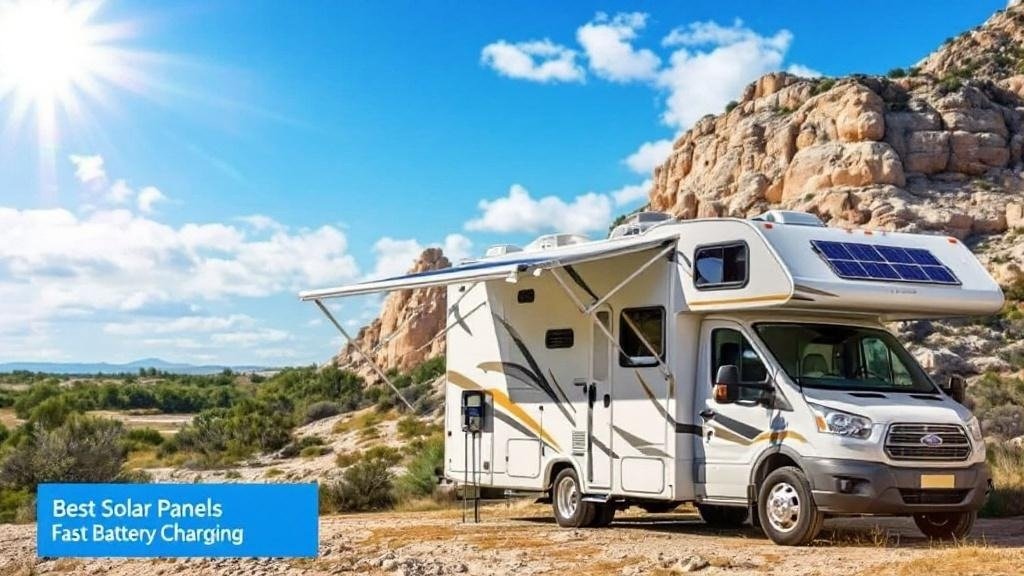


If you’ve been thinking about adding rv solar panels to your rig, you’ve probably run into an overwhelming number of options. Wattages, cell types, charge controllers, wiring… it gets confusing fast. I’ve been down that rabbit hole, and the Renogy 100W N-Type panel with mounting Z brackets is one of the more practical, real-world friendly options I’ve tested and seen on friends’ rigs.
This review walks through how it actually performs on an RV roof, what stands out about its design, and where it fits compared to other small solar panels you might be considering for weekend trips or off-grid living. I’ll also call out the trade-offs so you can decide if it’s the right building block for your setup, or if you should be looking at a larger 200 watt solar panel or full starter kit instead.
RV solar panels: Renogy 100W N-Type Panel Overview
- 25% High-Efficiency – Renogy 100w 12V n-type solar panel features A+ grade cells, achieving an impressive conversion eff…
- 16BB Technology for Improved Efficiency and Durability – Incorporating cutting-edge 16BB cell technology, this 100 watt …
- Optimized Performance in High Heat – This solar panel features a low temperature coefficient of -0.29%/℃, significantly …
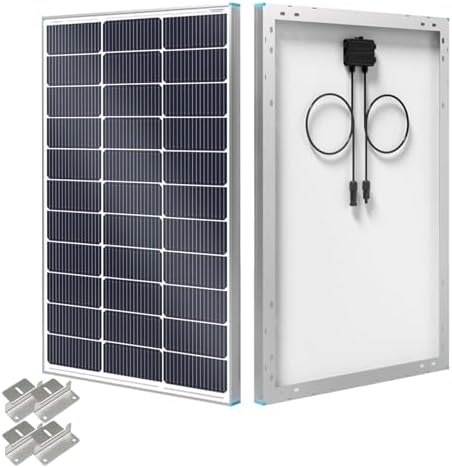
The product we’re looking at is the Renogy 100 Watt 12 Volt N-type monocrystalline panel that ships with basic Z brackets for mounting. In plain English, this is a compact, rigid glass-and-aluminum 100 watt solar panel designed primarily for RVs, vans, boats, and small off-grid installations like sheds or tiny cabins.
In daily use, this panel is meant to be a “building block.” One on its own can keep a modest battery topped up for light loads, while two, three, or four panels wired together begin to support more serious off-grid living with careful power management. Renogy has built a name in solar panels for rv users because their gear tends to hit that sweet spot between price, performance, and realistic durability.
The standout spec on this model is its 25% cell efficiency using N-type cells and 16 busbar (16BB) technology. That’s a mouthful, but what it really means is more power squeezed out of the same footprint, especially compared to older 100 watt solar panel designs you’ll still see all over the place.
If you’re trying to maximize limited roof space on a Class B van or a smaller trailer, that extra efficiency can be the difference between “almost enough” and “comfortably enough” power on a sunny day.
Pros & Cons
Before getting into the nitty-gritty, it helps to zoom out and look at where this panel shines and where it doesn’t. No single piece of gear is perfect, and knowing the trade-offs will save you from buying something that doesn’t actually fit your travel style.
Pros
- High efficiency for its size: The A+ grade N-type cells with 16BB design give noticeably better output than many older 100W panels, especially in hot conditions.
- Compact and lighter: It’s about 8% lighter and 11% smaller than a typical p-type 100W panel, which really matters on cramped or weight-sensitive roofs.
- Durable build: Low-iron tempered glass, IP65 weather rating, and a thicker-than-average aluminum frame (over 1.1mm) help it survive years of highway vibration, wind, snow, and rain.
- Controller friendly: With an open circuit voltage under 25V, it plays nicely with most common MPPT and PWM charge controllers without weird compatibility issues.
- Long-term warranty: 10-year materials and workmanship coverage plus a 25-year performance warranty (80% output) gives some peace of mind for long-term RV or off-grid setups.
Cons
- Not a full kit: You get the panel and mounting Z brackets, but no charge controller, cables, or fuses. Beginners may prefer an all-in-one kit.
- Fixed, not portable: Once it’s bolted to your roof, you can’t easily chase the sun like you can with a folding portable panel.
- 100W is a starting point: For serious off grid living or heavy loads (AC, big fridges, etc.), you’ll likely want to expand to several panels.
- Requires roof penetrations or adhesive mounts: Some RV owners are understandably nervous about drilling into their roof; careful installation is a must.
- Price versus budget panels: Cheaper 100W panels exist, but they often don’t match the efficiency and build quality you’re getting here.
Description & Real-World Performance
- 25% High-Efficiency – Renogy 100w 12V n-type solar panel features A+ grade cells, achieving an impressive conversion eff…
- 16BB Technology for Improved Efficiency and Durability – Incorporating cutting-edge 16BB cell technology, this 100 watt …
- Optimized Performance in High Heat – This solar panel features a low temperature coefficient of -0.29%/℃, significantly …
On paper, rv solar panels can start to sound like a math exercise: voltages, currents, coefficients. What I care about is what this thing does on a roof in real sunlight, and that’s where the N-type and 16BB tech start to matter. Compared to older 100 watt monocrystalline panels I’ve used, the Renogy N-type produces a bit more power in the same conditions and tends to “hold onto” that output better as the day heats up.
High-Efficiency N-Type Cells
The 25% cell efficiency is one of the headline numbers here. Renogy notes that this translates into about 20W more power than a similarly sized p-PERC 100W panel. In practice, you won’t always see a clean 20W difference (clouds, angle, wiring losses all play a role), but the general trend is that this panel’s output curve sits a little higher than budget panels in similar conditions.
N-type cells also age more gracefully than traditional p-type cells. They’re less prone to certain degradation effects (like LID), which means your solar investment keeps doing its job for more years. That pairs nicely with the 25-year performance warranty, because you’re not just chasing a number on paper you actually get a panel that’s designed to keep working close to its original performance for a long time.
16BB Technology and Durability
The “16BB” part means each cell uses 16 thin busbars those silver lines you see running across the cell. More, thinner busbars help collect current more efficiently while spreading out mechanical stress. The practical upside is twofold: a slight bump in output and a lower chance of microcracks turning into dead spots over time.
On a bouncing RV or trailer, that extra resilience matters. Constant vibration, flex, and thermal expansion can slowly damage cheaper panels. Here, the 16BB layout and thicker aluminum frame combine to make the module feel solid in your hands, not flimsy. When you’re cruising down a washboard forest road, that’s exactly what you want.
Better Behavior in Heat
One of the things most people underestimate with solar panels for off grid living is how much performance drops as temperatures rise. This Renogy panel lists a temperature coefficient of -0.29%/°C. Translated: for every degree Celsius above the test condition, you lose 0.29% of your power. That’s better than a lot of panels in this size class.
If you camp in the desert or spend summers in the southern states, your roof can get brutally hot. A lower temp coefficient means you keep more of your rated power during those scorching afternoon hours. It won’t magically erase all heat losses, but it does help, and it’s one area where you can actually see the benefit over generic small solar panels.
Compact, Lightweight Form Factor
Physically, the panel measures about 34.1 x 22.8 x 1.2 inches and weighs just 13 pounds. That size works nicely between roof vents and AC units on many Class B and C RVs and makes it easier to build a tiled layout of two or three panels without weird gaps. Being 8% lighter than a standard PERC panel is a bonus if you’re trying to keep weight under control.
For van conversions where you might be working around MaxxAir fans, cargo racks, and antennas, that slightly smaller footprint is more important than it looks on a spec sheet. It can literally be the difference between one panel or two on a short wheelbase van.
What’s in the Box (and What’s Not)
Renogy includes the rigid panel and a set of Z mounting brackets, which are the basic, tried-and-true way to secure solar to a flat or slightly curved roof. The panel uses standard MC4-style connectors, so it will plug right into most solar wiring harnesses or extension cables you may already have.
What you don’t get are the accessories many beginners expect from “kits”: no charge controller, no inline fuse, no branch connectors, and no cables long enough to run into your RV. If you’re starting from scratch, you’ll want to budget for a compatible controller (Renogy’s own options work smoothly) and the wiring to connect it all. That’s not a deal-breaker, but it’s something to be aware of if you were hoping to unbox-and-go.
Specs & Technical Details
If you’re piecing together a DIY system, the numbers below help you size your wiring, controller, and expansion plans. This is where the Renogy 100W panel lines up nicely with common 12V RV setups.
Electrical Specifications
- Maximum Power (Pmax): 100W (N-type monocrystalline)
- Open Circuit Voltage (Voc): 22.79V
- Short Circuit Current (Isc): 5.31A
- Optimum Operating Voltage (Vmp): 19.97V
- Optimum Operating Current (Imp): 5.01A
- Cell Efficiency: 25%
- Module Efficiency: 20%
- Max System Voltage: 600V DC
- Maximum Series Fuse Rating: 15A
For a 12V battery bank, that Vmp around 20V is right where you want it, leaving enough overhead for a PWM controller to work, while an MPPT controller can squeeze a bit more power out and handle multiple panels in series if you upgrade later.
Mechanical & Environmental Ratings
- Dimensions: 34.1 x 22.8 x 1.2 in (865 x 578 x 30 mm)
- Weight: 13.0 lbs (5.9 kg)
- Frame: Aluminum alloy >1.1 mm thick
- Front: Low-iron tempered glass
- Weather Protection: IP65 rated (suitable for rain, snow, and typical road spray)
- Operating Temperature: -40°F to 194°F (-40℃ to 90℃)
The wide temperature range and IP65 protection make it perfectly suitable for four-season RV use, including winter storage outside. As always, your wiring and roof penetrations need to be sealed correctly, but the panel itself is built to handle the elements.
Why We Recommend This Panel
- 25% High-Efficiency – Renogy 100w 12V n-type solar panel features A+ grade cells, achieving an impressive conversion eff…
- 16BB Technology for Improved Efficiency and Durability – Incorporating cutting-edge 16BB cell technology, this 100 watt …
- Optimized Performance in High Heat – This solar panel features a low temperature coefficient of -0.29%/℃, significantly …
The reason this panel keeps coming up in conversations about rv solar panels is that it balances performance and practicality in a way that actually fits how most people camp. Not everyone is building a huge, roof-filling array with lithium batteries and inverters that rival a small house. Many RVers just want reliable power for lights, fans, a fridge, and some devices, without babying a generator.
As a starter or expansion panel, the Renogy 100W N-type is easy to recommend because it doesn’t lock you into a single path. You can start with one panel feeding a small PWM controller and a basic lead-acid battery, then later upgrade to multiple panels on an MPPT controller with LiFePO4 batteries as your needs grow. The panel itself is “future-proof” enough to live through those upgrades.
Another factor is trust. Renogy isn’t some random white-label brand that disappears in a year. They’ve been around long enough, and you can see their gear installed on countless rigs, from budget builds to polished professional van conversions. That matters when you’re counting on a 10-year workmanship warranty and a 25-year performance guarantee.
From a value standpoint, this panel costs more than the absolute cheapest 100W modules you can dig up online, but the combination of higher efficiency, better heat performance, and more robust construction closes that gap over time. When you’re out boondocking and your panels are putting out real power instead of just looking good on a spec sheet, those details pay off.
If you want to check current pricing or pick one up, you can find it here: Renogy 100W N-Type Solar Panel with Z Brackets.
For RVers who want to go slowly adding one or two panels now and potentially more later this model is a very solid foundation. It’s efficient enough to justify its roof space, sturdy enough for long-term travel, and versatile enough to fit a variety of system designs as your comfort level with 12V power grows.
Who This Is NOT For
Even though this Renogy 100W panel is a great option in many cases, it’s not ideal for every scenario. If you only camp occasionally in full-hookup RV parks and rarely boondock, any investment in roof-mounted solar may not pay off. A simple plug-in charger at the campground pedestal might be all you ever need.
It’s also not the best match if you’re aiming to run large, continuous AC loads (air conditioning, electric heaters, full-size residential appliances) strictly from solar. For that kind of demand, you’d be looking at a much larger array often multiple 200 watt solar panel modules or more and a higher-end battery bank. This single 100W panel is more of a supporting player in that sort of setup.
If you hate the idea of drilling into your roof or dealing with sealant, a portable folding panel with built-in stand might be a better answer. Those can be set on the ground, pointed at the sun, and stored away when not in use great if you park under trees or frequently change campsites.
Finally, if your goal is an absolutely rock-bottom budget build and you don’t care much about efficiency or long-term warranties, there are cheaper, no-name small solar panels out there. They won’t deliver the same level of performance or durability, but if you’re just experimenting, you might accept that trade-off.
Complementing Ideas & Helpful Resources
Once you’ve settled on a panel like this, the next questions are usually about system design, battery sizing, and whether to run a mixed array (for example, pairing a 100 watt solar panel with a 200W module). If you’re mapping out a full boondocking setup, it can help to look at complete system examples rather than just individual components in isolation.
For broader planning tips on sizing solar panels for rv travel, battery capacity, and typical daily loads, a practical starting point is this overview: U.S. Department of Energy – Solar Energy Basics. It’s not RV-specific, but it does a good job explaining core concepts like watts, watt-hours, and tilt angles in plain language.
If you’re interested in going deeper into off grid living with multiple panels, inverters, and higher-capacity batteries, you may also find it useful to compare example systems and wiring diagrams from trusted sources like NREL’s solar research resources. While they focus on residential and commercial setups, many of the same principles carry over to mobile rigs.
And if you’re building a more complete system, it often makes sense to match your panels with compatible components from the same brand. Renogy, for example, offers charge controllers, inverters, and batteries that pair well with this module, and many RVers appreciate having tech support for the whole system rather than a mix of unrelated parts.
As you refine your plan, consider how this 100W panel fits into your long-term layout: will it be one of several small solar panels scattered between vents, or the first step toward a more robust roof array? Answering that upfront will help you choose the right controller, wiring gauge, and expansion path from day one.
- 25% High-Efficiency – Renogy 100w 12V n-type solar panel features A+ grade cells, achieving an impressive conversion eff…
- 16BB Technology for Improved Efficiency and Durability – Incorporating cutting-edge 16BB cell technology, this 100 watt …
- Optimized Performance in High Heat – This solar panel features a low temperature coefficient of -0.29%/℃, significantly …
Your Questions, Answered
Is one 100W panel enough to power an RV off-grid?
A single 100W panel is usually not enough to power an entire RV off-grid by itself, but it’s a good starting point. In ideal sun, a 100W panel might generate roughly 300–500 watt-hours per day, depending on location and season. That’s typically enough for lights, charging phones and laptops, running a vent fan, and maybe a small 12V fridge if you’re careful. For heavier loads or more comfortable boondocking, most people eventually move to several rv solar panels totaling 200–400W or more, paired with an appropriately sized battery bank.
Do I need an MPPT controller for this Renogy 100W N-type panel?
You don’t strictly need an MPPT controller this panel will work with a properly sized PWM controller as well. However, an MPPT controller can often harvest 10–30% more energy, particularly in cold or variable conditions and when you add more panels later. If your budget allows and you’re planning to expand beyond a single panel, MPPT is usually worth the investment because it optimizes the panel’s higher operating voltage to charge your 12V battery more efficiently.
Can I combine this 100W panel with other wattages like 200W on the same system?
Yes, you can combine different wattage panels such as 100W and 200W in the same system, but you need to do it carefully. Panels in series should have similar current ratings, and panels in parallel should have similar voltages to avoid one holding the other back. The easiest path is to keep panels of the same model in a string and, if you mix sizes, give them their own charge controller. That way, each array is optimized without compromising overall performance.
How do I mount this panel on my RV roof without leaks?
To mount this panel safely, use the included Z brackets or compatible roof mounts and pair them with appropriate sealants and backing plates where needed. You’ll typically pre-drill pilot holes into roof framing or backing, secure the brackets with stainless hardware, then seal thoroughly around each penetration using a self-leveling lap sealant rated for your roof material. Many RVers also add an extra layer of sealant over the bracket bases for peace of mind. Taking your time on this step is key to avoiding leaks long term.
How does this Renogy panel compare to cheaper, generic 100W panels?
The big differences are efficiency, heat performance, and build quality. This Renogy model uses N-type cells with 16BB technology and a lower temperature coefficient, so it holds closer to its rated output in real conditions, especially in hot weather. The frame is thicker, the glass is tempered and low-iron, and the weather rating is solid for mobile use. Cheaper generic panels may work initially, but they often degrade faster, have weaker frames, or lack meaningful warranty support important considerations when your panels live on a moving RV roof.

We are a collective of off-grid enthusiasts, solar technicians, and sustainable living advocates dedicated to making energy independence accessible. From blackout-proofing suburban homes to engineering mobile power for the road, we rigorously test every kit and component we review. Our mission is to help you cut the cord and power your life on your own terms.