


If you’ve been hunting for portable solar panels that actually feel practical to travel with, the Renogy 200W foldable setup is one of those products that makes you rethink what’s possible off-grid. It’s genuinely light, folds down smaller than most camp chairs, and still cranks out enough power to keep a power station, your phone, and a laptop happy at the same time.
What stood out to me most wasn’t just the wattage on the box, but how thoughtfully it’s been designed for real-world use: quick setup, solid build, smart port layout, and a size that doesn’t turn every campsite or RV stop into a game of solar-panel Tetris. If you’ve ever wrestled with heavy glass panels or clunky suitcase kits, this will feel like a breath of fresh air.
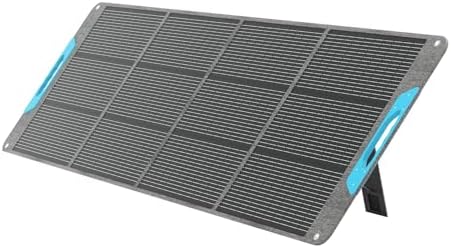
- [Industry-Leading Efficiency 25%] Upgraded with 16BB N-Type cell technology, Renogy solar panels for camping achieve 25%…
- [Lightweight & Magnetic Handle Design] Weighing only 13.89 lbs, renogy portable solar panel is the lightest in its class…
- [Versatile Off-Grid Power] Charge 3 devices simultaneously with 1 USB-C PD (45W max) and 2 USB-A ports (18W & 15W), perf…
Renogy 200W Portable Solar Panel – Product Showcase
Renogy has been in the off-grid space for a while, and this 200W portable panel feels like a refined version of everything they’ve learned. It’s built around high-efficiency N-Type cells, but in a format that’s clearly tailored to campers, RVers, vanlifers, and anyone who wants mobile power without bolting hardware permanently to a roof.
Folded, it’s roughly a large, slim backpack in size: 23.72 x 22.99 x 1.97 inches, with a magnetic handle that makes it feel more like carrying a portfolio than a piece of gear. At just 13.89 lbs, it’s dramatically lighter than a lot of 200W suitcase-style kits, which matters when you’re lifting it in and out of a trunk or moving it around to chase the sun.
One thing I appreciate is that it’s genuinely a standalone solution. Renogy added USB-C PD and two USB-A ports directly on the panel, plus MC4 output, so you can charge a portable power station, 12V battery system, and your smaller devices all at once. That makes it a nice bridge between a casual solar charger and a more serious modular setup.
If you’re already shopping around, you’ll likely see it compared with heavier suitcase kits or flexible blankets. This one lands in the sweet spot: more durable and efficient than fabric blankets, much lighter and slimmer than rigid framed panels you’d normally mount or carry in a big case.
For current pricing and user reviews, you can check it out directly on Amazon here: Renogy 200W Portable Solar Panel.
Pros & Cons
Key Advantages
The headline advantage is efficiency. Renogy is using N-Type cells with up to 25% efficiency, which is noticeably higher than a lot of budget portable solar panels. In practice, that means you can get more power out of the same footprint, or maintain decent output on hazy days when lesser panels fall flat. If you’re running a compact setup or limited on campsite space, that matters.
Portability is another standout. At under 14 lbs and with that quadfold, backpack-sized layout, it’s genuinely easy to live with. The magnetic handle is a small detail, but it makes packing and unpacking much smoother than snap or Velcro closures. For people sliding gear into SUVs, truck beds, or van cupboards, this kind of low-friction design is a real quality-of-life upgrade.
I also like the built-in versatility. Between the USB-C PD (up to 45W), two USB-A ports, and the standard MC4 output, you’re well covered whether you’re topping up a power bank, running a laptop, or feeding a portable power station. For many weekend campers, you can skip bringing a separate wall adapter and just plug into the panel directly when the sun is out.
Trade-Offs and Limitations
No product is perfect, and it’s worth being honest about a few trade-offs. First, while it’s lightweight for a 200W panel, it’s still a sizeable piece of gear when fully unfolded: almost 88 inches long. That’s not a flaw, just physics, but if you only ever need a trickle to charge a phone, it may feel like overkill compared with a smaller 60–100W panel.
Second, as with any high-output panel, performance depends heavily on placement and conditions. The three-angle kickstand setup helps a lot, but you’ll still need to pay attention to shadows from trees, awnings, and other rigs. If you’re the sort who prefers to set something once and forget it, you may want to temper expectations of always hitting maximum output.
Finally, the price puts it above ultra-budget options. You’re clearly paying for better cell efficiency, a more polished design, and certifications like UL 61730. If you’re equipping a serious off-grid kit or pairing it with the best portable power station you can afford, that premium makes sense. If your needs are very casual, there are cheaper ways to dip your toes into solar.
- [Industry-Leading Efficiency 25%] Upgraded with 16BB N-Type cell technology, Renogy solar panels for camping achieve 25%…
- [Lightweight & Magnetic Handle Design] Weighing only 13.89 lbs, renogy portable solar panel is the lightest in its class…
- [Versatile Off-Grid Power] Charge 3 devices simultaneously with 1 USB-C PD (45W max) and 2 USB-A ports (18W & 15W), perf…
Description of the Renogy 200W Panel
Design, Build, and Portability
The first thing you notice when you pick up this panel is how deliberately “travelable” it feels. The quadfold layout means it doesn’t turn into a long, unwieldy plank; instead, it compresses into a fairly square package that stows nicely behind a truck seat or in a van cabinet. The magnetic handle closure is one of those details you don’t think you need until you’ve fought with stiff snaps or gritty Velcro in the dust.
At 13.89 lbs, it sits in an easy-carry zone. It’s light enough for one-handed carrying from the rig to the sunny spot but still has enough heft to feel solid in wind when paired with the kickstands and ground studs. The integrated accessory pouch keeps the cables and adapters from wandering off, which is especially handy if you’re constantly on the move.
The outer material and panel surface feel tuned for outdoor abuse tough enough for repeated unfolding on gravel or dry grass, yet not so stiff that folding becomes a fight. You can tell it’s meant to be deployed often, not just once a season. For anyone living the RV, van, or overlanding lifestyle, that day-in, day-out usability is a big plus.
Charging Performance and Ports
Performance-wise, the panel’s 200W rating is backed up by those 25% efficiency N-Type cells. Under good sun and proper angling, expecting strong real-world wattage isn’t unreasonable, especially compared to cheaper, lower-efficiency panels that look similar on paper. It’s the kind of setup you can match with a mid-sized solar battery charger or power station for genuinely practical off-grid use.
The port layout is nicely thought through. You get:
- 1 x USB-C PD (up to 45W max) – great for laptops, tablets, modern phones.
- 1 x USB-A (orange) up to 18W – ideal for faster phone or accessory charging.
- 1 x USB-A (black) up to 15W – for lower-draw devices.
- MC4 output – to connect into a power station or 12V battery/charge controller.
Being able to charge three devices at once means you can plug in a phone, a camera battery, and a tablet while also feeding your portable station through MC4. For camping, that flexibility feels very natural; nobody wants to babysit charging queues when you’re trying to relax.
- [Industry-Leading Efficiency 25%] Upgraded with 16BB N-Type cell technology, Renogy solar panels for camping achieve 25%…
- [Lightweight & Magnetic Handle Design] Weighing only 13.89 lbs, renogy portable solar panel is the lightest in its class…
- [Versatile Off-Grid Power] Charge 3 devices simultaneously with 1 USB-C PD (45W max) and 2 USB-A ports (18W & 15W), perf…
Setup, Kickstands, and Mounting Options
Setup is straightforward. Unfold the panel, flip out the four kickstands, choose one of the three preset angles (40°, 50°, or 60°), and aim it at the sun. Those multiple angle options are surprisingly useful as you move through seasons and camping latitudes; you’re not stuck with a single “sort-of-okay” tilt.
The “small ear” design and optional ground studs give the panel more stability in wind than a lot of floppy, blanket-style setups. If you’ve ever watched a solar blanket trying to become a kite, this will feel reassuring. On top of that, the reinforced grommets let you hang or lash it to an RV, trailer, or even a sturdy tent when ground space is limited.
Overall, it strikes a nice balance between being beginner-friendly and satisfying more experienced users who like to fine-tune panel position. You can deploy it in under a minute, but you also have enough adjustability to chase every bit of sun when needed.
Durability, Weather Resistance, and Safety
With an IP65 rating, the panel is well protected against dust and water splashes. That doesn’t mean you should leave it submerged or ignore proper care, but it does mean you don’t have to panic over light rain, road dust, or unexpected spray at a lakeside campsite. For real-world camping and RV use, that’s about the level of protection you truly need.
On the safety side, Renogy backs this model with UL 61730 certification and additional testing like CE, RoHS, FCC, and CA65. In the solar world, those certifications do matter especially when you’re running gear close to your vehicle, family, and other electronics. It’s reassuring to know they’ve put the panel through rigorous electrical, chemical, and environmental checks.
Add in the 2-year material and workmanship warranty, and it feels less like a disposable gadget and more like a component you’ll keep through several evolutions of your off-grid setup. You might upgrade your battery or power station later, but the panel itself should remain a solid core piece.
Specs
Electrical Specifications
Here’s a quick rundown of the core electrical specs in plain language:
- Max Power (Pmax): 200W – solid output for camping, RVs, and small off-grid systems.
- Cell Type: N-Type – higher efficiency and better performance over time vs many standard cells.
- Cell Efficiency: Up to 25% – above average compared to many 200W portables.
- Open-Circuit Voltage (Voc): 21.6V – useful for matching with various charge controllers.
- Optimum Operating Voltage (Vmp): 18.8V – where it’s happiest under load.
- Short-Circuit Current (Isc): 11.3A.
- Optimum Operating Current (Imp): 10.6A.
This profile makes it a good partner for many 12V battery systems and compatible power stations that accept solar input via MC4. It sits in a versatile range for both RV-style systems and portable setups.
- [Industry-Leading Efficiency 25%] Upgraded with 16BB N-Type cell technology, Renogy solar panels for camping achieve 25%…
- [Lightweight & Magnetic Handle Design] Weighing only 13.89 lbs, renogy portable solar panel is the lightest in its class…
- [Versatile Off-Grid Power] Charge 3 devices simultaneously with 1 USB-C PD (45W max) and 2 USB-A ports (18W & 15W), perf…
Physical Specs and Operating Conditions
Physically, the panel is tuned for travel and varied climates:
- Folded size: 23.72 x 22.99 x 1.97 in (602.5 x 584 x 50 mm).
- Unfolded size: 87.80 x 22.99 x 0.12 in (2230 x 584 x 3 mm).
- Weight: 13.89 lbs.
- Operating temperature: 14°F to 149°F (-10℃ to +65℃).
That temperature range covers everything from chilly mountain mornings to scorching desert afternoons, which is exactly where a lot of outdoor users find themselves. And again, the combination of slim unfolded thickness and manageable folded footprint makes it realistic to use regularly, not just on rare trips.
Compatibility and Use Cases
The panel is designed to play nicely with a wide range of systems. Through MC4, you can feed a compatible solar charge controller and 12V battery bank (AGM, LiFePO4, or deep-cycle), or plug into the solar input of many modern power stations. For smaller needs, the USB-C and USB-A ports let you use it almost like a supercharged solar charger, without any extra hardware.
In terms of real-world scenarios, it’s well suited for RVs, towable trailers, vans, pickup truck campers, boats, overlanding rigs, and emergency home backup. Whether you’re topping up a fridge and lights or just keeping devices charged on a weekend camping trip, it fills that middle ground between tiny gadget panels and full roof-mounted arrays.
Why We Recommend This Panel
There are plenty of portable solar panels out there, but this Renogy 200W model hits a particularly nice balance of power, portability, and polish. It’s not just a slab of cells with cables; it’s clearly been designed for the way people actually move and camp. If you’ve ever skipped bringing a panel because it was too heavy or awkward, you’ll immediately feel the difference here.
The high-efficiency N-Type cells are more than marketing fluff. Being able to get more wattage from the same footprint and keep output more consistent when conditions are less than perfect directly affects how relaxed you feel off-grid. Instead of constantly checking your battery percentage, you can trust that a sunny afternoon really will catch you back up.
Another reason we like it is how gracefully it scales. Pair it with a compact power station and you’ve got a tidy, grab-and-go system for road trips. Step up to a larger station or a 12V battery bank, and it becomes the backbone of a much more capable off-grid kit. You’re not locked into one style of use.
We also can’t ignore the value of solid certifications and a thoughtful mechanical design. Between UL 61730 certification, IP65 weather resistance, proper grommets, kickstands, and ground studs, this is clearly intended to be used hard, not babied. You feel like you’re buying into a reliable component of your setup, not a gamble.
If you want to dig into user reviews, you can see how other folks are putting it to work on Amazon: see more details and reviews. The general theme is that it punches above its weight in both power and practicality.
- [Industry-Leading Efficiency 25%] Upgraded with 16BB N-Type cell technology, Renogy solar panels for camping achieve 25%…
- [Lightweight & Magnetic Handle Design] Weighing only 13.89 lbs, renogy portable solar panel is the lightest in its class…
- [Versatile Off-Grid Power] Charge 3 devices simultaneously with 1 USB-C PD (45W max) and 2 USB-A ports (18W & 15W), perf…
Who This Is NOT For
As capable as this panel is, it’s not the perfect fit for everyone. If your only goal is to occasionally top up a phone or a small power bank on short day hikes, a 200W panel is simply more than you need. A smaller, lighter unit will be easier to carry and cheaper, even if it doesn’t double as a serious off-grid tool.
It’s also not ideal for anyone who never wants to think about panel placement. To get the most from 200W on the go, you’ll want to adjust the angle now and then, and avoid shade from trees or nearby rigs. If your dream setup is something permanently roof-mounted that you never touch again, fixed panels may make more sense than a foldable design.
Budget-wise, if you’re trying to spend the absolute minimum and don’t mind lower efficiency, there are cheaper 100–150W options out there. They won’t offer the same output, portability, or build quality, but they can be a gentler entry point into solar. This Renogy panel is better viewed as an investment in a reliable, long-term piece of gear.
Finally, if you live in an apartment with no access to good outdoor sun, or you rarely camp, it’s worth being realistic: a panel like this shines when it’s given long, regular sessions in direct sunlight. If that’s not your reality, your money might be better spent on a larger capacity power station that you charge from the wall when you can.
Complementing Ideas & Related Gear
To get the most out of this panel, it’s worth thinking about the rest of your system. A good portable power station or 12V battery bank is what turns those watts into real-world comfort: running a fridge, charging tools, keeping lights on during a blackout. If you’re piecing together your first off-grid kit, starting with a strong, efficient panel like this and pairing it with a well-matched storage solution is a smart move.
It can also be helpful to learn the basics of sizing a solar setup for your actual needs estimating watt-hours per day, thinking about peak sun hours, and understanding how panel angle affects output. Our guide on designing an off-grid starter system walks through those fundamentals in plain language: off-grid solar starter guide.
If you’re wondering how this 200W option compares with other portable solar panels for camping in the same range, we’ve put together a detailed comparison of panel types (suitcase vs blanket vs rigid, and where each shines). You can read that here: portable solar panel comparison.
For those already running a capable power station, this panel makes an excellent upgrade path. You can see the latest pricing, specs, and compatible accessories directly on Amazon: check current price. It’s also commonly paired with mid-size power stations for a flexible, mobile setup: see compatible power solutions.
Finally, if you’re building toward a more resilient home backup arrangement, this panel can act as a modular building block alongside other components over time. Many users start with one panel and a station, then expand as they get more comfortable with solar. For more technical specifications straight from the source, Renogy’s own documentation and support materials are worth a look: Renogy official site.
- [Industry-Leading Efficiency 25%] Upgraded with 16BB N-Type cell technology, Renogy solar panels for camping achieve 25%…
- [Lightweight & Magnetic Handle Design] Weighing only 13.89 lbs, renogy portable solar panel is the lightest in its class…
- [Versatile Off-Grid Power] Charge 3 devices simultaneously with 1 USB-C PD (45W max) and 2 USB-A ports (18W & 15W), perf…
Your Questions, Answered
Can the Renogy 200W panel directly charge my phone and laptop without a power station?
Yes. The Renogy 200W portable panel includes a USB-C PD port (up to 45W) and two USB-A ports (up to 18W and 15W). That means you can plug a modern phone, tablet, or many USB-C laptops directly into the panel when it’s in the sun, without needing a separate power station or wall charger. For best results, use quality USB-C cables and aim the panel directly at the sun using the kickstands so you get stable power output.
Is this a good option for a small RV or camper van electrical system?
It’s very well suited to smaller RVs, vans, and trailers. The 200W output, efficient N-Type cells, and MC4 connectors make it easy to integrate with a 12V battery system through a compatible solar charge controller, or to plug into many portable power stations. The compact folded size and sub-14-pound weight are a big plus in tight spaces, and the ability to move the panel around camp helps when your roof is shaded or parked in a less-than-ideal spot.
How weather-resistant is the Renogy 200W portable panel?
The panel carries an IP65 rating, which means it is protected against dust and low-pressure water jets or splashes. In practical terms, it can handle dusty roads, light rain, and the usual outdoor abuse you’d expect while camping or traveling. You shouldn’t leave it submerged or deliberately expose the junction box and connectors to standing water, but normal use in variable weather is exactly what it’s built for.
Will this work with my existing portable power station?
In many cases, yes, as long as your power station accepts solar input at a voltage and wattage compatible with a 200W panel and supports MC4 or an adapter. You’ll want to check your power station’s manual for its maximum solar input wattage and voltage range, then confirm you have the right MC4-to-barrel or MC4-to-Anderson cable if needed. Renogy’s output specs (around 18.8V operating voltage) are a good match for a lot of modern mid-size stations.
What kind of user gets the most value from this panel?
The people who see the biggest benefit are those who spend regular time off-grid campers, RV and van travelers, overlanders, and homeowners who want a portable emergency backup solution. If you frequently use a power station to run a fridge, lights, or electronics, adding a 200W high-efficiency panel lets you extend your time away from shore power dramatically. Occasional day trippers who only need to top off a phone may be better served by a much smaller panel, but anyone building a versatile off-grid kit will find this a very capable core component.

We are a collective of off-grid enthusiasts, solar technicians, and sustainable living advocates dedicated to making energy independence accessible. From blackout-proofing suburban homes to engineering mobile power for the road, we rigorously test every kit and component we review. Our mission is to help you cut the cord and power your life on your own terms.