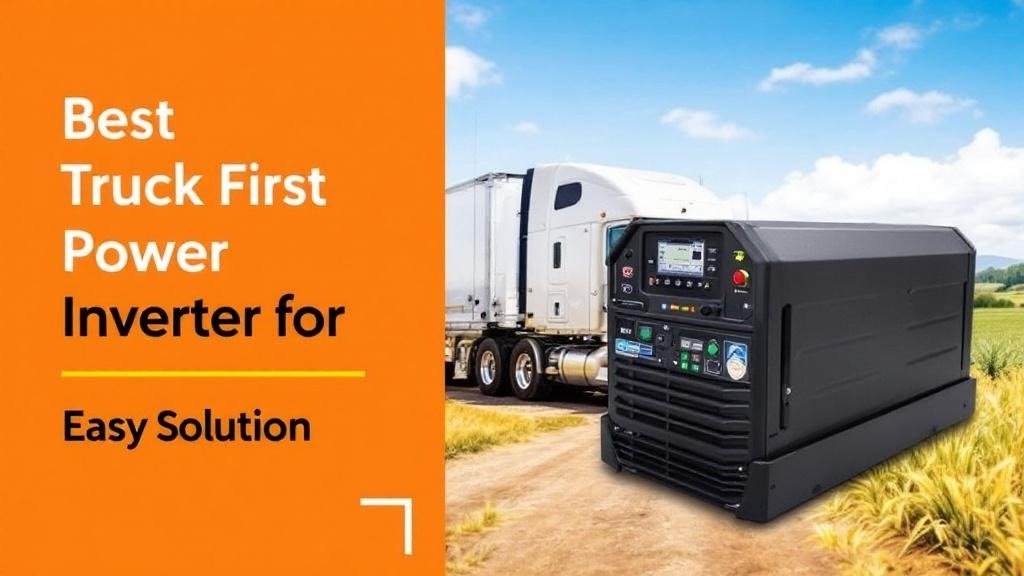


If you’ve ever lost power in your RV or truck right when you needed it most, you already know why a dependable inverter matters. The Renogy Inverter PUH 1000W aims to be that quiet, always-ready backup that just works, whether you’re parked at a campsite, rolling down the highway, or riding out a home outage.
What makes this unit stand out is how it blends several roles at once: pure sine wave output, built-in UPS transfer switch, Bluetooth monitoring, and a very usable 1000W continuous rating with 2000W surge. In plain English, it’s designed to power the things you actually care about fridges, electronics, networking gear without frying them or constantly tripping off.
Below, I’ll walk through how it performs in real-world scenarios, where it shines, and where it might not be the right fit. I’ll also compare it with common alternatives and share who I think will get the most value out of it.
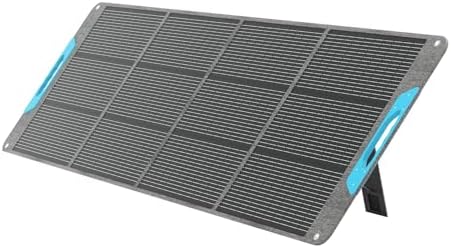
- [Industry-Leading Efficiency 25%] Upgraded with 16BB N-Type cell technology, Renogy solar panels for camping achieve 25%…
- [Lightweight & Magnetic Handle Design] Weighing only 13.89 lbs, renogy portable solar panel is the lightest in its class…
- [Versatile Off-Grid Power] Charge 3 devices simultaneously with 1 USB-C PD (45W max) and 2 USB-A ports (18W & 15W), perf…
Powerhouse inverter for RVs, trucks, and backup power
The Renogy Inverter PUH 1000W is essentially the sweet spot between compact size and serious capability. It’s a pure sine wave unit rated at 1000W continuous with 2000W surge, so it’s well suited for light to medium loads things like laptops, routers, small fridges, CPAP machines, LED TVs, and some power tools.
In day-to-day use, this feels less like a basic power inverter for truck or RV, and more like a mini smart power hub. Because it includes a UPS-style transfer switch, you can wire it so that when shore power or grid power is present, your devices run off that. If the power drops, it flips over to the battery side automatically, often so quickly that your devices never even blink.
That flexibility is what makes it compelling for mixed-use setups. You can keep it in an RV, rely on it for occasional home backup, or even use it to bridge a small solar setup with critical household loads. It doesn’t replace a full home battery system, but for targeted circuits or must-run gear, it’s surprisingly capable.
Pros & Cons
Where this inverter really shines
One of the biggest strengths here is the quality of the power output. As a pure sine wave unit, it delivers clean AC very similar to what you get from the grid. That’s crucial if you’re running sensitive electronics, networking gear, or medical devices like CPAP machines. Cheaper modified-sine units can cause buzzing, overheating, or even early failure of certain appliances, and this one is specifically designed to avoid that.
The built-in UPS transfer switch is another standout. Many 1000 watt power inverter models are just straight DC-to-AC converters with no automatic switching. Here, the inverter can quickly shift between grid input and battery input, which is ideal for things like Wi-Fi routers, modems, security cameras, or small office setups where outages are annoying but you don’t want a full-blown generator humming away outside.
The Bluetooth and app control also add genuine value. Instead of guessing what’s happening inside the unit, you can open the Renogy app and see voltage, load, and error codes in real time. For off-grid users or those with more complex solar systems, that kind of visibility can save a lot of troubleshooting time.
Trade-offs and limitations to keep in mind
There are, however, some natural limits to be aware of. At 1000W continuous, this is not trying to compete with the best inverter generator or a large 3000W RV inverter system. It will not comfortably run big air conditioners, electric water heaters, or high-draw power tools continuously. If you routinely need that kind of power, you’ll want to size up.
Installation can also be a bit more involved than a simple plug-in cigarette-lighter style inverter. Because this unit is designed to be part of a semi-permanent system tied to batteries, possibly a subpanel, and sometimes solar you’ll want to plan the wiring properly. Many users can manage a basic installation themselves, but running it as a UPS for home loads may justify hiring an electrician.
Finally, while the cooling system is described as ultra-quiet, you will still hear fans when the inverter is under load or heat builds up. It’s not obnoxiously loud, but if you’re sensitive to fan noise in a small RV interior, placement matters. Tucking it into a ventilated cabinet or storage bay usually solves that concern.
- [Industry-Leading Efficiency 25%] Upgraded with 16BB N-Type cell technology, Renogy solar panels for camping achieve 25%…
- [Lightweight & Magnetic Handle Design] Weighing only 13.89 lbs, renogy portable solar panel is the lightest in its class…
- [Versatile Off-Grid Power] Charge 3 devices simultaneously with 1 USB-C PD (45W max) and 2 USB-A ports (18W & 15W), perf…
Description & real-world performance
Pure sine wave output for sensitive devices
The core of this unit is its pure sine wave AC output. Renogy advertises compatibility with 99% of devices, and that tracks with what pure sine hardware usually delivers. Induction motors in fridges and fans tend to start smoothly; audio equipment and laptops don’t pick up strange hums; and chargers run cooler and more efficiently than they often do on cheaper inverters.
If you’ve ever tried running a microwave or CPAP on a low-end modified-sine unit, you’ve probably heard the loud buzzing or felt the unit getting hot. That’s exactly the kind of headache this model is designed to avoid. For anyone using critical gear medical, networking, or business equipment that clean waveform is arguably more important than raw wattage.
UPS transfer switch and seamless backup
What sets this apart from a lot of other rv inverters is the integrated UPS-style transfer switch. In practical terms, you can wire your loads so they’re normally powered by the grid or shore power. When the power fails, the inverter senses the loss and almost instantly flips to drawing from your battery bank.
This is especially handy for home-office setups, small server closets, or even a fridge you really don’t want cycling off during a storm. You don’t have to fumble in the dark or manually plug things into an inverter the changeover is automatic. It gives you some of the benefits of a solar edge inverter plus battery storage, but in a much smaller and more approachable package.
Bluetooth app control and remote monitoring
Built-in Bluetooth is more than just a gimmick here. With the Renogy app, you can see live data for voltage, current, and load percentage, plus any error codes the unit throws. That’s invaluable if you’re pushing the system near its limits or trying to diagnose why a particular device keeps tripping the inverter.
There’s also a physical remote controller included, which you can mount in a convenient interior spot. That way the main chassis can live closer to the batteries or in a storage compartment, while you control power and glance at status from inside your rig or house. For day-to-day use, that small quality-of-life tweak makes a big difference.
Ports, outlets, and plug-and-play usability
Renogy gives you three AC outlets, one AC terminal block, one DC port, and a 5V/2.1A USB port. This mix works well in both mobile and semi-permanent setups. You can plug a couple of everyday devices directly into the outlets, wire a small subpanel or circuit run off the terminal block, and keep low-draw devices like routers or LED strips on the DC or USB side.
The overall design leans toward practical, not flashy. It’s meant to be installed once, wired correctly, and mostly forgotten about, quietly handling loads in the background. That’s the kind of behavior you want from any toolkit-level powerhouse inverter reliable, predictable, and boring in the best possible way.
Quiet cooling and safety protections
Cooling is handled by dual aluminum heatsinks and a fan that spins up as needed. Renogy rates the noise at ≤51dB, which is more like a low background whir than a high-pitched whine. In practice, if you mount it a few feet away or in a storage bay, it quickly becomes part of the ambient noise you stop noticing.
On the safety side, the unit includes protections for over-voltage, over-current, short-circuit, and overheating, and it carries UL/CE/FCC certifications. LED indicators give you at-a-glance feedback on faults. This isn’t just marketing fluff; when you’re tying a battery system into your living space or home circuits, having those safeguards in place matters a lot.
Specs & technical details
Power output and efficiency
This inverter is rated at 1000W continuous with a 2000W surge capability. That means it can handle short bursts of higher draw like a compressor kick-starting without immediately shutting down. Renogy notes a conversion efficiency of over 92%, which is solid for this class and helps squeeze more usable energy out of your batteries.
It’s designed for 12V DC input and outputs 120V AC, which makes it a natural fit for typical RV and automotive systems as well as many small home backup battery banks. If you’re planning a bigger system or a different voltage, Renogy has higher-wattage and 24V versions, but this particular model is tuned for that very common 12V ecosystem.
Connectivity and control options
Between built-in Bluetooth and the wired remote controller, you get two convenient ways to interact with the inverter. The app lets you review statistics and adjust certain settings without crawling into a compartment, while the remote gives you one-touch on/off control from a more comfortable location.
This combination is especially helpful when the inverter is mounted near the batteries in a less accessible spot. You can tuck it away to keep cable runs short and reduce voltage drop, then manage everything from inside the vehicle or house. It’s a small but thoughtful design decision that makes the system feel more polished.
Form factor and installation considerations
Physically, the unit falls into what I’d call the “semi-permanent” category compact enough for most vans, trucks, and RVs, but definitely designed to be mounted in place rather than moved around daily. Plan on using appropriately sized cables, fuses, and, if you’re tying it into home circuits, a proper subpanel or transfer arrangement.
If you’re not comfortable wiring AC, it’s worth having a professional handle that part. On the DC side, follow standard best practices: short, thick cables, close-coupled fusing, and good ventilation. Do that, and you’ll end up with a system that runs cooler, wastes less energy, and is far more reliable over the long haul.
- [Industry-Leading Efficiency 25%] Upgraded with 16BB N-Type cell technology, Renogy solar panels for camping achieve 25%…
- [Lightweight & Magnetic Handle Design] Weighing only 13.89 lbs, renogy portable solar panel is the lightest in its class…
- [Versatile Off-Grid Power] Charge 3 devices simultaneously with 1 USB-C PD (45W max) and 2 USB-A ports (18W & 15W), perf…
Why we recommend this for everyday backup and mobile use
The main reason this inverter is worth recommending is balance. It avoids the “race for the biggest watt number” trap and instead focuses on delivering reliable, clean power with smart control. For many people, having their essential loads work flawlessly is more valuable than being able to briefly power every appliance in the house at once.
In an RV or truck, that balance shows up as a system that runs your everyday gear without constantly flirting with overload. You can keep a small fridge cold, charge laptops, power a TV, and run network equipment without feeling like you’re one switch away from tripping everything. It’s the kind of hardware that fades into the background and simply does its job.
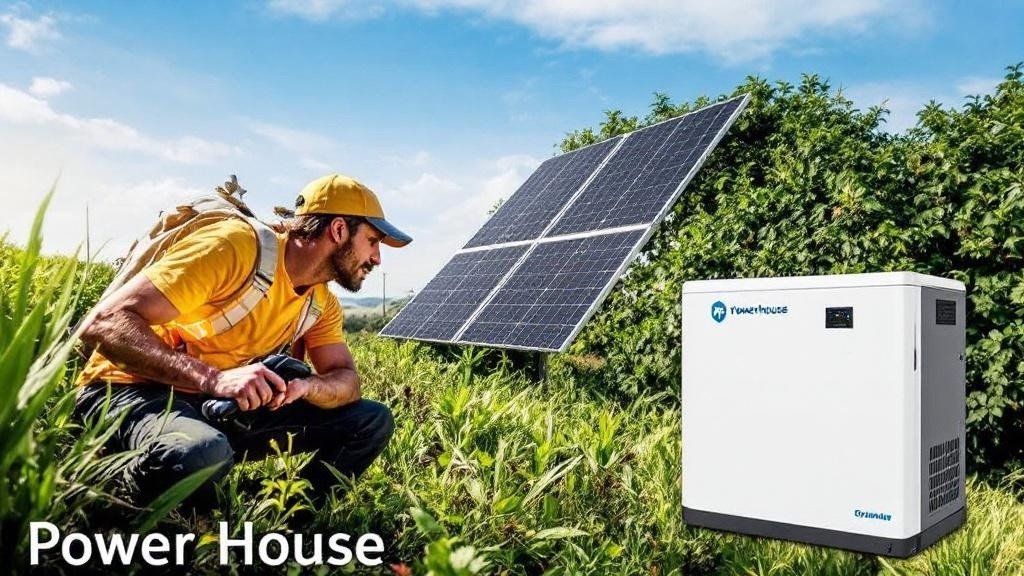
For home users, pairing this with a modest battery bank creates a very practical “quiet backup zone.” Instead of firing up a loud generator, you can keep lights, internet, and critical electronics humming through shorter outages. If you already have or plan to add solar, this can also act as a key piece of a small off-grid or hybrid system.
Renogy’s ecosystem is another plus. The brand offers matching batteries, charge controllers, and portable solar panels that are designed to work together. If you like building systems where components are meant to play nicely with each other, that ecosystem approach can simplify a lot of choices and compatibility worries.
If you want to dig into current pricing or user reviews, you can check the product page here: Renogy Inverter PUH 1000W on Amazon. It’s often bundled with batteries or solar gear, which can make starting a small backup system more affordable.
Who this is NOT for
Despite its strengths, this won’t be the right fit for everyone. If you’re trying to power a large whole-house air conditioner, multiple space heaters, or a full workshop simultaneously, you’ll outgrow a 1000W inverter quickly. In that case, either a much larger inverter or one of the best inverter generator models would serve you better.
It’s also not ideal if you’re looking for a super simple, plug-into-the-cigarette-lighter setup purely for occasional phone charging. There are cheaper, smaller units that handle that role without any real installation, and you don’t need this level of sophistication for that use case.
Likewise, if you’re expecting a fully integrated solar edge inverter style whole-home solution with advanced grid-tied capabilities, this isn’t that product. It’s more about targeted, flexible backup and mobile power than utility-scale integration. Think “smart, robust power brick” rather than “all-in-one home energy platform.”
Finally, if you aren’t comfortable with basic electrical work and don’t want to hire help, the installation may feel intimidating. The documentation is decent, but wiring batteries and AC circuits does require a bit of care and confidence. This is less of a consumer gadget and more of a component in a larger power system.
Complementing ideas & related resources
To get the most from this inverter, it’s worth thinking about your broader power strategy instead of treating it as a standalone gadget. That means considering your battery capacity, wiring quality, and how you’ll recharge whether via alternator, shore power, or solar.
If you’re leaning toward a full off-grid or hybrid setup, pairing this with a decent battery bank and a solar charge controller gives you a very capable small system. For help planning out the battery side, see our overview on RV inverter and battery sizing, which walks through matching wattage, surge capacity, and amp-hours to your actual loads.
Truck owners using this primarily as a power inverter for truck cabins often benefit from optimizing cable runs and mounting locations. We cover layout tips and cable guidelines in our truck camping power setup guide, including where to safely route wiring through the cab and bed.
If you’re still comparing options and want to see how this stacks up against other compact units, it’s worth browsing a few alternatives as well. For example, you might look at a higher-wattage Renogy model here: Renogy 2000W pure sine inverter, or consider an ultra-portable unit like compact 1000W inverter for light loads if your needs are minimal.
For those building a full solar-based backup system, pairing this inverter with a compatible charge controller and panels can be a smart route. A solid starting bundle option is something like portable solar panel and charge controller kit, which can help you keep your batteries topped up without relying solely on shore power or your vehicle alternator.
Whichever direction you go, thinking about the inverter as a core component of a broader power plan rather than an isolated gadget will pay off in reliability, safety, and overall convenience when you actually need it.
- [Industry-Leading Efficiency 25%] Upgraded with 16BB N-Type cell technology, Renogy solar panels for camping achieve 25%…
- [Lightweight & Magnetic Handle Design] Weighing only 13.89 lbs, renogy portable solar panel is the lightest in its class…
- [Versatile Off-Grid Power] Charge 3 devices simultaneously with 1 USB-C PD (45W max) and 2 USB-A ports (18W & 15W), perf…
Your Questions, Answered
Is the Renogy Inverter PUH 1000W a good powerhouse inverter for home outages?
For small, targeted backup loads, yes. The Renogy Inverter PUH 1000W works well as a powerhouse inverter for essentials like routers, modems, small fridges, LED lighting, laptops, and other electronics. Its built-in UPS transfer switch lets you wire critical circuits so they automatically switch to battery when grid power fails, often without your devices even rebooting. However, it’s not intended to power an entire home with large air conditioners or high-draw resistive loads. Think of it as a focused, efficient solution for keeping the most important devices running quietly during short to medium outages.
Can this inverter run a refrigerator or CPAP machine safely?
Yes, that’s one of its stronger use cases. Because it’s a pure sine wave inverter, the output closely matches utility power and is safe for most modern fridges, CPAP machines, and other sensitive electronics. The 2000W surge rating helps handle compressor start-up in many smaller refrigerators. For CPAP use, the clean waveform helps avoid noise, overheating, and reliability issues that cheaper modified sine units can cause. Just confirm the wattage of your specific device and make sure your total load stays within the 1000W continuous rating.
Is this a good power inverter for truck drivers or over-the-road use?
It can be an excellent power inverter for truck cabins if you’re willing to do a more permanent installation. Mount it close to your battery bank with properly sized cables and fusing, then use the AC outlets or terminal block to feed your interior loads. Drivers often use it to power a small fridge, laptop, TV, and chargers while parked. The pure sine output keeps electronics happy, and the Bluetooth app makes it easy to keep an eye on voltage and load from inside the cab.
How does this compare to buying the best inverter generator instead?
They solve related but slightly different problems. A quality inverter generator typically offers much higher wattage and can run big loads like large AC units, but it’s noisy, needs fuel, and requires outdoor placement and exhaust clearance. This Renogy unit is silent apart from fan noise and lives indoors, drawing from a battery bank that can be charged by shore power, alternator, or solar. If you mainly want quiet, automatic backup for targeted circuits and electronics, this inverter is more convenient. If you need to run large appliances for long stretches and don’t mind noise, a larger inverter generator might still make sense.
Can I integrate this inverter into a small solar system for my RV or shed?
Yes, that’s one of the most practical ways to use it. Pair the inverter with a 12V battery bank, a compatible MPPT or PWM charge controller, and enough solar panel capacity to keep the batteries charged for your expected loads. The inverter handles DC-to-AC conversion and UPS-style backup, while the solar side keeps your battery topped up. This kind of setup works well in RVs, garden sheds, off-grid offices, or tiny homes where you don’t need massive power, but you do want reliable AC for daily essentials.

We are a collective of off-grid enthusiasts, solar technicians, and sustainable living advocates dedicated to making energy independence accessible. From blackout-proofing suburban homes to engineering mobile power for the road, we rigorously test every kit and component we review. Our mission is to help you cut the cord and power your life on your own terms.