

- Portable solar panels review: Renogy 100W Solar Suitcase Overview
- Pros & Cons of the Renogy 100W Portable Solar Suitcase
- Description: How the Renogy 100W Solar Suitcase Performs in Real Use
- Specs: Technical Details That Actually Matter
- Why We Recommend the Renogy 100W Solar Suitcase
- Who This Is NOT For
- Complementing Ideas and Helpful Resources
- Your Questions, Answered
If you spend a lot of time camping, boondocking in your RV, or just like the idea of quiet off-grid power without running a generator all day, a compact solar suitcase can be a game changer. I’ve been testing different portable setups over the last few seasons, and the Renogy 100W folding suitcase has quietly become one of those “grab it every trip” pieces of gear.
Instead of messing with permanently mounted roof panels or dealing with a tangle of DIY parts, this kit aims to make things simple: unfold, tilt, plug in, and you’re making power. In this review, I’ll walk through how it actually performs, what I like (and don’t), and who I think will get the most value out of it.
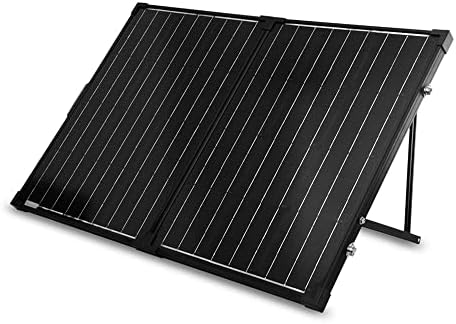
- Highly portable design-foldable solar suticase small in size, provide more flexibility for outdoor and off-grid use, eas…
- Remarkable efficiency- Renogy solar panels using grade A plus monocrystalline solar cells, providing ideal output: 500 W…
- Reailable quality- coming with a premium rugged canvas protective case, heavy-duty handle, and latches for longevity.
Portable solar panels review: Renogy 100W Solar Suitcase Overview
The product we’re looking at here is the Renogy 100 Watt 12 Volt Portable Solar Panel Suitcase. In practical terms, it’s a briefcase-style folding panel made of two 50W monocrystalline panels, joined with hinges, packed inside a rugged canvas case with a sturdy handle.
When folded, it measures about 19.9 x 27.2 x 2.8 inches and weighs 26.5 lbs. It’s not ultralight by backpacking standards, but for RVers, van lifers, and car campers, it’s very manageable. You grab it like a suitcase, carry it from your storage bay or trunk, and you’re ready to set up in under a minute.
One important detail: this particular version does not come with a built-in charge controller. That’s by design. It’s aimed at people who either already have a charge controller in their system or want to pair it with a separate Renogy Voyager controller or a portable power station that accepts a 21.6V, 100W DC input.
If you like the Renogy brand but prefer a full starter kit with panel, controller, and cables, the company also offers fixed 100W kits and larger systems you can explore on the Renogy website. But this suitcase is very much the “go-anywhere” option that gives you flexibility.
Pros & Cons of the Renogy 100W Portable Solar Suitcase
Pros
- Genuinely portable design: Folds into a compact suitcase profile that fits in RV bays, vans, and even behind the seat of a truck.
- Efficient monocrystalline cells: Grade A+ monocrystalline cells with multi-layer laminations for better efficiency and long-term durability.
- Good real-world output: Up to about 500Wh per day in strong sun (Renogy’s own estimate, which aligns reasonably with field use).
- Adjustable kickstands: Makes it easy to angle the panel toward the sun and squeeze more energy out of short winter days.
- Rugged construction: IP66-rated panels, tough canvas case, strong latches and handle built for road life.
- Flexible usage: Can plug into compatible power stations, RV systems, or battery banks (with the right controller).
Cons
- No included charge controller: You must add your own controller or power station to complete the system.
- On the heavier side: 26+ lbs is fine for most adults but not ideal if you’re carrying it long distances.
- 100W is modest for heavy users: Great for light to moderate needs; power-hungry setups may need multiple suitcases.
- Cable length limitations: You’ll likely want an extension cable to park in the shade and leave the panel in the sun.
- Highly portable design-foldable solar suticase small in size, provide more flexibility for outdoor and off-grid use, eas…
- Remarkable efficiency- Renogy solar panels using grade A plus monocrystalline solar cells, providing ideal output: 500 W…
- Reailable quality- coming with a premium rugged canvas protective case, heavy-duty handle, and latches for longevity.
Description: How the Renogy 100W Solar Suitcase Performs in Real Use
Setup and Day-to-Day Usability
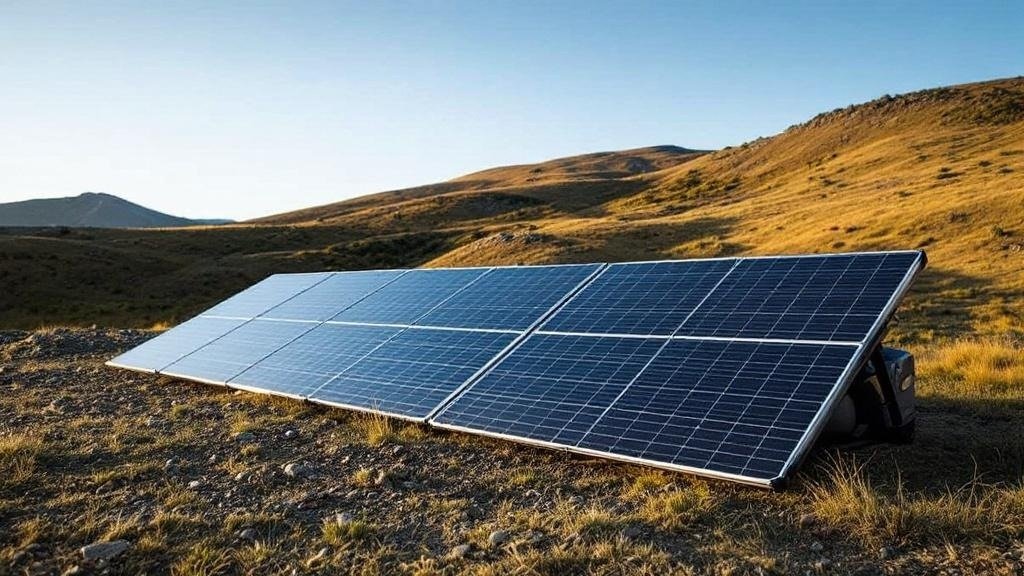
In terms of setup, this really does feel like a “plug and play” option, assuming you’ve already sorted your power station or charge controller. You unzip the protective case, unfold the two 50W panels like a book, flip out the metal kickstands, and point the surface roughly at the sun. With practice, you can set it up in under a minute.
The kickstands are more than a cosmetic touch. Being able to tilt the panel a bit through the day can make a noticeable difference, especially in the winter when the sun stays lower in the sky. If you’re used to flat-mounted rv solar panels on the roof, you’ll probably be pleasantly surprised at how much more you can squeeze out of a tilted suitcase panel.
The hardware feels reassuringly solid: tight hinges, strong latches, a handle that doesn’t feel like it will rip off when you grab it in a hurry. For those who are tough on gear, this is a plus. It’s clearly designed for frequent setup and takedown, not just sitting on a roof for years.
Portability and Storage
Folded, the panel is about the size of a medium briefcase, just thicker. At 26.5 lbs, you feel it, but it’s not unwieldy. For RV, van, or car camping, this is a very manageable weight–heavier than a thin flexible panel, but far easier to handle than a large framed 200W or 300W panel.
Storage is where this thing quietly shines. Because it folds down so compactly, you can slide it into a narrow gap: behind a van bench, along the side of a cargo area, or in a shallow RV bay. If you’ve ever tried storing multiple loose panels, you’ll immediately appreciate having everything combined into a single suitcase.
The canvas case earns its keep as well. It helps protect the glass from scratches and dings when you’re loading other gear, and it keeps dust and road grime off the surface so you’re not constantly wiping it down.
Solar Cell Quality and Output
Renogy uses Grade A+ monocrystalline solar cells in this suitcase. In simple terms, that means higher efficiency than the cheaper polycrystalline cells often found in bargain panels. The cells are laminated with multiple layers to improve performance and extend service life, which matters if you’re out in harsh conditions or using them regularly.
Under good sunlight, Renogy estimates around 500 watt-hours of output per day from this 100 watt solar panel. That’s a reasonable, real-world figure if you have several hours of strong sun and keep the panel angled decently. It’s not magic, but it’s enough to meaningfully top up a battery or power station.
To put that into perspective, 500Wh might cover a day’s worth of LED lighting, phone and laptop charging, a 12V fridge for part of the day, and some small electronics. If your power draw is modest and you’re careful, it can keep a simple off-grid system humming along nicely.
Weather Resistance and Durability
One of the standout features is the IP66 rating on the panels themselves. That means they’re protected against dust and strong water jets from any direction. Translation: rain, splashes, and road spray shouldn’t be a problem for the panels.
The caveat is that any charge controller you use must also be rated for outdoor use if you plan to leave it exposed. Renogy often pairs this suitcase with their Voyager 20A waterproof controller, which is worth a look if you want a weather-tough combination.
For marine or dock use, this ruggedness is a big plus. If you’re on a small boat or moored at a marina, having a folding monocrystalline solar panel set that can handle wet conditions without babying it too much is genuinely useful.
Specs: Technical Details That Actually Matter
Electrical Specifications
- Maximum Power (Pmax): 100W
- Open Circuit Voltage (Voc): 21.6V
- Short Circuit Current (Isc): 6.17A
- Maximum Operating Voltage (Vmp): 18.0V
- Maximum Operating Current (Imp): 5.71A
These numbers are in the typical range for a 100W 12V-class panel and line up nicely with most 12V battery systems and many power stations that accept a 100W DC input. Before buying, just double-check the input specs on your power station or controller to make sure the 21.6V Voc and 100W rating are supported.
Physical Specifications
- Panel Type: Monocrystalline (2 x 50W panels)
- Weight: 26.5 lbs (approx.)
- Folded Dimensions: 19.9 x 27.2 x 2.8 in
- Protective Case: Rugged canvas with handle and latches
- Weather Rating (Panels): IP66 – fully waterproof and dust-tight
It’s worth noting that if you’re comparing different rv solar panels, many fixed roof-mounted options will weigh less per watt but require drilling, mounting hardware, and cabling. The real value here is convenience and portability, not just raw watt-per-pound numbers.
System Compatibility
This suitcase is designed to be flexible in how it’s used. You can:
- Connect it to a 12V battery bank via a charge controller (sold separately).
- Plug it into many portable power stations that accept ~18–22V DC and up to 100W.
- Expand your existing Renogy solar system by adding another matching suitcase in parallel or series, provided your controller supports the total wattage.
If you’re unsure how to size a controller for this panel, Renogy’s own help center and resources on solar basics are excellent. For deeper technical reading, the U.S. Department of Energy’s guide to solar is also a good primer on how these systems fit together.
- Highly portable design-foldable solar suticase small in size, provide more flexibility for outdoor and off-grid use, eas…
- Remarkable efficiency- Renogy solar panels using grade A plus monocrystalline solar cells, providing ideal output: 500 W…
- Reailable quality- coming with a premium rugged canvas protective case, heavy-duty handle, and latches for longevity.
Why We Recommend the Renogy 100W Solar Suitcase
Real-World Convenience vs. Theoretical Output
On paper, you could assemble a higher-wattage system by mixing and matching cheaper panels, separate mounts, and cables. But in practice, the friction of setup often determines whether you actually use your gear. This is where a well-designed portable kit tends to win.
Because the Renogy suitcase keeps everything in one tidy package, you’re far more likely to throw it in the truck or RV “just in case.” That alone often leads to more consistent charging and better battery health over time, especially for weekenders and seasonal travelers who don’t nerd out on system design.
Balance of Efficiency and Durability
Monocrystalline solar panels are usually the sweet spot for off-grid users who care about efficiency per square foot and long-term reliability. Renogy’s Grade A+ cells, combined with multi-layer laminations and IP66 protection, make this kit a solid middle ground between budget and premium.
It’s not the cheapest 100W kit on the market, but you’re getting a proven brand, better-than-average build quality, and a layout that’s been road-tested by thousands of users. If you’re serious about reducing generator hours or keeping a fridge and electronics running off-grid, that reliability matters.
Great Starter Option for Off-Grid Power
For many people, this suitcase is the first real step into solar. It’s much less intimidating than designing a roof-mounted system from scratch, and it pairs nicely with a basic deep-cycle battery bank or a mid-sized power station.
If you already have (or are planning to buy) other Renogy solar gear, such as their deep cycle AGM batteries or starter kits, this panel can slot right into that ecosystem. It’s also compatible with many third-party power stations, as long as the voltage and wattage line up.
If you want to check current pricing or specs, you can view the official listing here: Renogy 100W Portable Solar Panel Suitcase.
Who This Is NOT For
As much as this suitcase works well for many people, it’s not a perfect fit for every scenario. Being clear on that will save you time, money, and frustration.
First, if you’re trying to power a large off-grid cabin, an energy-hungry RV with residential appliances, or a workshop full of tools, a single 100W panel will feel woefully inadequate. In those cases, you’re better off with a full rooftop array or a larger ground-mounted system with several hundred watts (or more) of capacity.
Second, if weight and size are absolutely critical – for example, long-distance hiking or minimalist motorcycle travel – 26.5 lbs and a suitcase form factor are overkill. Compact folding fabric panels or much smaller units will be more appropriate.
Finally, if you want a completely self-contained kit that includes its own charge controller, cables, and mounting options out of the box, you may prefer one of Renogy’s full starter kits or solar generator bundles instead of this bare-bones suitcase.
Complementing Ideas and Helpful Resources
To get the most from this suitcase-style panel, it helps to think of it as just one piece of a simple, flexible off-grid system. A few related ideas and resources can make planning much easier.
If you’re just starting to map out your power needs, you may find it useful to read a broader breakdown of panel sizing, wiring basics, and typical use cases for vans and RVs. We cover those topics in more detail in our guide to sizing solar for mobile living, which you can find here: RV and Van Solar Setup Basics.
For those comparing brands, we also have a head-to-head overview of several popular travel-friendly kits, including suitcase-style and rollable options. That article can help you see how this Renogy suitcase stacks up in terms of price, output, and portability: Best Portable Solar Kits for Camping and RVs.
Pairing this suitcase with a reliable power station or a modest 12V battery bank can turn it into a surprisingly capable little system. Once it’s dialed in, you’ll likely find yourself using it more often than you expected – for everything from weekend camping to backyard backup power when the grid flickers.
If you decide it fits your needs, you can check availability and recent user reviews here: see the Renogy 100W suitcase on Amazon.
If you’re leaning toward a full Renogy ecosystem, bundling this panel with compatible components can often save you money and simplify tech support. One starting point is to look at Renogy’s own accessory kits and batteries, then build outward from there: shop the Renogy suitcase and related accessories.
- Highly portable design-foldable solar suticase small in size, provide more flexibility for outdoor and off-grid use, eas…
- Remarkable efficiency- Renogy solar panels using grade A plus monocrystalline solar cells, providing ideal output: 500 W…
- Reailable quality- coming with a premium rugged canvas protective case, heavy-duty handle, and latches for longevity.
Your Questions, Answered
Can the Renogy 100W portable solar suitcase run an RV fridge by itself?
Not reliably on its own. The Renogy 100W suitcase can contribute a meaningful amount of power up to about 500Wh per day in good sun which helps offset the draw of a 12V RV fridge, but most fridges will consume a large portion of that, especially in hot weather. In practice, this panel works best as part of a small system that includes a decent battery bank and, ideally, additional fixed or portable solar panels. Think of it as a flexible booster panel rather than the sole power source for a full RV setup.
Do I need a charge controller to use this panel with a 12V battery?
Yes. This version of the Renogy 100W suitcase does not include a built-in charge controller, so you must add one between the panel and your 12V battery to regulate voltage and current. Without a controller, you risk overcharging or damaging the battery. Renogy’s Voyager series is a common match, but any quality controller that supports at least 100W at 12V and the panel’s Voc (21.6V) will work, as long as it’s wired and configured correctly.
Is this suitcase compatible with most portable power stations?
In many cases, yes, but you need to confirm the specs. The Renogy suitcase outputs up to 100W with an open circuit voltage of 21.6V, which falls within the input range supported by many power stations. Check that your power station accepts 18–22V DC and at least 100W on its solar input. You may also need an adapter cable to match the connector type. Always verify polarity and voltage compatibility before plugging it in to avoid damage.
How does this suitcase compare to roof-mounted RV solar panels?
Roof-mounted panels are ideal if you want a “set it and forget it” system with higher overall wattage, but they require installation, penetrations in the roof, and careful cable routing. The Renogy suitcase trades maximum capacity for flexibility: you can park your rig in the shade and place the panel in full sun, angle it toward the sun throughout the day, and easily move it between different vehicles or even use it at home. Many RV owners use both roof-mounted panels for baseline charging and a portable suitcase as a movable supplement.
Can I expand my system by adding a second Renogy 100W suitcase?
Yes, the suitcase is designed with expansion in mind. You can add another matching 100W suitcase and connect them in parallel or series, as long as your charge controller is rated for the combined wattage and resulting voltage/current. Renogy recommends using the same model for expansion to keep electrical characteristics consistent. Before you add a second unit, double-check your controller’s input limits and upgrade it if necessary to avoid overloading the system.

We are a collective of off-grid enthusiasts, solar technicians, and sustainable living advocates dedicated to making energy independence accessible. From blackout-proofing suburban homes to engineering mobile power for the road, we rigorously test every kit and component we review. Our mission is to help you cut the cord and power your life on your own terms.