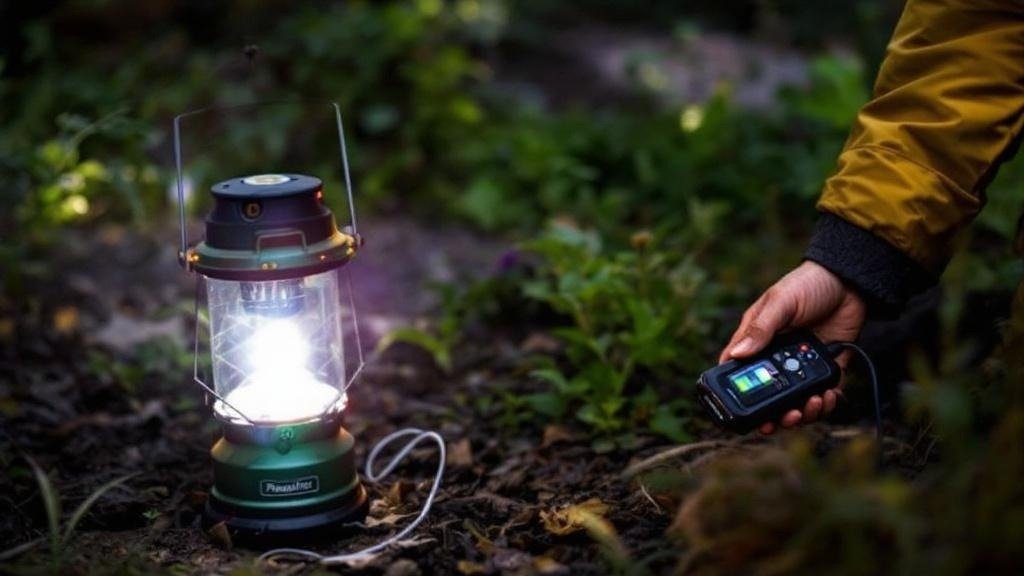


If you’ve ever tried to cook, set up camp, or just find the zipper on your tent with a weak, dim light, you already know how quickly a good lantern becomes non-negotiable. After spending time with different camping lights, the Coleman Quad Panel 800L LED Lantern really stood out because it doesn’t act like a single lantern at all – it’s more like a portable lighting system you can reconfigure on the fly.
This review walks through what it’s actually like to use this lantern in the real world – from power outages at home to late-night trips to the campground restroom. I’ll break down what works, what doesn’t, and who will genuinely appreciate its unique removable light panels and magnetic features.
Outdoor lanterns spotlight: Coleman Quad Panel 800L LED Lantern

- High Lumens: Up to 800 lumens for base; 100 for panels
- Impressive Beam Distance: Up to 18 meters for base and 13 meters for panels
- Extended Runtime: Up to 20 hours for base, 3 for panels
Coleman shortened the name on the box to something more manageable, but the idea is simple: one main lantern body with four removable LED light panels that snap on and off the base. Each panel doubles as a personal lantern lamp with its own control, plus a built-in flashlight-style beam on the end. When they’re docked, the panels recharge from the main unit.
In practice, that means you start your evening with a bright central lantern light on the picnic table, then peel off panels as people wander to the tent, the car, or the trailhead bathroom. You’re not stuck passing around a single beam or fumbling with multiple separate lights that all need their own batteries.
The design also feels distinctly “camp friendly.” The handle is sturdy, the body is compact enough for a family trip, and the IPX4 rating means it doesn’t panic at a bit of rain or splashing. It’s not a tiny ultralight backpacking unit, but for car camping, cabins, and emergencies, it hits a sweet spot between portability and serious illumination.
If you’ve ever wished your outdoor lanterns could follow everyone at once instead of just lighting one spot, this modular layout feels almost like cheating. It solves a problem most people don’t realize they have until that first trip where half the group ends up in the dark.
Pros & Cons
What this lantern does really well
The obvious headline feature is brightness. The base cranks out up to 800 lumens, which is more than enough to illuminate a typical campsite cooking area or a medium-sized room during a blackout. Each panel adds up to 100 lumens on its own, so even when you’re walking away from camp, you’re not downgrading to a weak keychain light.
Where the Coleman stands apart from more traditional outdoor lanterns is flexibility. The removable panels are magnetic, so they can stick to metal surfaces – think car hoods, trailer frames, or the inside of a shed. That gives you a kind of magnetic light you can position exactly where you want it without juggling or makeshift hooks.
There’s also a built-in USB port on the base, letting you top off a phone or headlamp in a pinch. It’s not going to replace a dedicated power bank, but in an emergency, having your main lantern double as a backup charger feels like smart redundancy. Combined with the water resistance and three-year limited warranty, the whole package feels built for real use, not just a pretty shelf display.
Where it could be better
No product is perfect, and the Coleman Quad Panel is no exception. The biggest compromise is runtime on the individual panels. The base can run up to about 20 hours on certain settings, but the detachable panels are rated around three hours, which is fine for evening tasks but not for all-night lighting without redocking them.
It’s also not a featherweight system. When you factor in batteries and the sturdiness of the construction, you’re getting a reliable lantern lamp, but it’s clearly aimed at car camping, cabins, RVs, and home emergencies rather than ultra-minimal hiking setups. If you’re counting every ounce, this won’t be your first pick.
Finally, the interface is straightforward but involves multiple controls: one on the base and one on each panel. That’s a plus for customization, but if you’re used to a single on/off button, there’s a small learning curve as you remember which mode each piece is in.
Description
- High Lumens: Up to 800 lumens for base; 100 for panels
- Impressive Beam Distance: Up to 18 meters for base and 13 meters for panels
- Extended Runtime: Up to 20 hours for base, 3 for panels
Modular lighting system with removable panels
The heart of this lantern is its four detachable panels, which dock into the main base like slices of a pie. When fully assembled, you get a classic 360-degree lantern light that throws a wide, even glow over your table or tent interior. Pop a panel off, and it turns into a handheld light with its own switch and beam pattern.
This modular approach is surprisingly practical. One person can keep the base on low to softly illuminate camp while others grab panels to handle tasks like washing dishes, organizing gear, or walking the dog. Instead of buying and packing several separate outdoor lanterns, this one unit effectively serves as four or five lights in one system.
Each panel recharges automatically when you snap it back into place on the base. There’s no separate charging cable for every panel, no tiny ports to fuss with, and no guessing which unit still has juice. As long as you keep fresh power feeding the main lantern, the detachable lights stay topped up for your next outing.
Lighting power and modes
The main base delivers up to 800 lumens at full tilt, with three modes: high, medium, and low. High is bright enough to light a good portion of your campsite or a living room during a power outage. Medium and low step things down to conserve battery life and create a more comfortable, less blinding ambiance when you’re just hanging out.
The individual panels come in at up to 100 lumens each, more than adequate for close-range tasks like reading, navigating a trail, or rummaging through gear in a trunk. They also include a small flashlight-style beam on the end, which is handy for pointed tasks like checking under the car or following a narrow path.
Because every piece has its own control, you can mix and match brightness to suit your environment. Leave the base on low as a nightlight while you use a single panel on high to walk to the restroom. Or keep two panels docked and two detached to balance general lighting with targeted beams.
Magnetic mounting and hands-free use
One of the more underrated features is the magnetic backing on the panels. This effectively turns each one into a compact magnetic light you can position on any ferrous metal: truck beds, support beams, toolboxes, or the side of a trailer. For quick roadside repairs or setting up a tailgate, it’s extremely convenient.
These magnets also come in handy in cramped or awkward spaces. In a van or small camper, you can stick the panels to interior metal ribs or brackets to create temporary area lighting without drilling hardware or running cables. Around the house, they double as emergency lights in the garage or basement.
If you’re using a trailer at night, they can function as improvised magnetic trailer lights in a pinch, helping mark the back or side of your setup so nobody trips over gear. They’re not a replacement for proper trailer illumination, but as supplemental safety lighting they’re surprisingly useful.
Water resistance and durability
The lantern carries an IPX4 water-resistance rating, which means it can handle splashing from any direction. In plain terms, it’s built for drizzle, camp kitchen splatter, and the occasional knocked-over drink, but it’s not designed to be submerged or left out in a serious downpour for hours.
Construction feels solid, with a sturdy handle and panels that click into place with satisfying firmness. You don’t feel like you’re going to snap anything off each time you remove a panel. This combination of weather resistance and rugged build is exactly what you want from outdoor lanterns that might be tossed into bins or handled by kids.
Coleman backs the unit with a three-year limited warranty, which adds some confidence that it’s meant to last for more than one season. Given that many cheaper lanterns feel disposable after a year or two, that extra backing is worth noting.
Specs
Brightness, beam distance, and runtime
According to Coleman’s figures, the base unit can reach up to 800 lumens with a beam distance of about 18 meters. That’s plenty to light a general work or camp area. The individual panels offer up to 100 lumens with around 13 meters of reach, giving them enough throw for short walks and common camp chores.
Runtime on the base is up to 20 hours depending on mode, with the longest life coming on lower brightness settings. The panels, on the other hand, offer around three hours per charge, which suits most evening activities as long as you remember to re-dock them between uses.
This balance makes sense for a multi-panel system: the main lantern becomes your “anchor” light, while the panels act as task lights. If you regularly run them all on max for extended periods, you’ll simply want to keep an eye on power and plan to charge when you can.
Charging, power, and USB port
The standout detail in day-to-day use is the built-in USB port on the base. It allows you to power or top off small devices like phones or rechargeable headlamps. During a quick outage, being able to keep a communication device alive off your led lantern is more than a minor convenience.
Because the panels recharge directly from the base when docked, there’s no juggling of separate cords for each one. You manage a single power hub, which reduces clutter and the odds of losing a crucial cable. It simplifies your gear layout, especially on trips where you’re already dealing with chargers for cameras, radios, and more.
While it’s not meant as a heavy-duty charging station, this dual role as both lighting and limited power backup fits how many people actually use their camping gear nowadays.
Why We Recommend This Lantern
- High Lumens: Up to 800 lumens for base; 100 for panels
- Impressive Beam Distance: Up to 18 meters for base and 13 meters for panels
- Extended Runtime: Up to 20 hours for base, 3 for panels
The main reason this model stands out is versatility. A lot of outdoor lanterns are bright, and many are weather-resistant, but very few turn into a full lighting kit that can be split among several people. If you’ve ever had a group all trying to share one light source, you’ll immediately see the appeal of four removable panels.
In real use, it helps reduce friction at camp. One person can cook, another can organize the tent, someone else can read, and no one is complaining that you walked off with the only lantern. The fact that each panel recharges on the base lets you treat the whole system like a self-contained lighting ecosystem.
It also shines as an emergency tool at home. During a power outage, you don’t have to shuffle a single lantern from room to room. Instead, hand a panel to each family member and keep the base in a central area. The panels serve as portable nightlights or flashlights, and when they’re not in use, they snap back on to recharge.
If you want to check current pricing or reviews, you can see the product here: Coleman Quad Panel 800L LED Lantern. It usually sits in a sweet spot where you’re getting more capability than a basic single lantern without stepping up into ultra-premium pricing.
Between its modular design, handy USB port, emergency readiness, and thoughtful touches like magnetic mounting and multiple brightness modes, this is one of those pieces of gear that tends to earn its place in your setup and stay there year after year.
Who This Is NOT For
Despite all its strengths, this isn’t the right choice for every scenario. If you’re a dedicated ultralight backpacker counting grams, the size and weight of this system will likely feel excessive. There are simpler, single-piece lanterns that pack smaller and lighter for long-distance trekking.
It’s also not aimed at people who only need a tiny, occasional-use emergency light. If you rarely camp and just want a single, inexpensive lantern for the odd storm, this might feel like more functionality than you truly need. A basic, simpler unit could make more sense for that use case.
Additionally, if you want a light you can mount permanently on a wall or ceiling, the modular, removable design here may be overkill. It really shines when flexibility and portability are priorities – moving around a campsite, cabin, backyard, or RV rather than living in one spot.
Finally, if you already own several strong spotlights and headlamps and prefer that setup, you may see less benefit from the multi-panel approach. This is best for people who value shared, area lighting that still splits into individual units when needed.
Complementing Ideas
This lantern pairs nicely with a few other pieces of gear that round out a practical camp or emergency setup. A compact power bank or solar charger, for example, helps you keep the USB port available for top-ups without draining your primary battery reserves too quickly.
For readers planning a full camping lighting kit, it can be helpful to combine this kind of multi-panel system with a couple of lightweight headlamps for hands-free tasks like cooking or setting up tents in the dark. You can find more gear suggestions and ideas in our camping lighting guide here: camp lighting tips.
If you’re more focused on emergency preparedness at home, consider pairing this lantern with a small, dedicated emergency radio and a basic backup-power setup for your router or phone charger. We cover that broader preparedness checklist in this article: emergency power essentials, which walks through how to keep your most important devices online.
For those who like to mix camping with tailgating or trailer-based adventures, combining this magnetic system with proper, wired trailer illumination gives you both compliant lighting and flexible, movable beams. The lantern will handle your around-camp needs while your main setup covers the road and parking lot safety side.
And if you simply want a reliable lantern to live in your go-bag, pairing it with a small waterproof storage bin and a spare set of batteries or power solution ensures it’s ready when you pull it out, whether for a last-minute weekend away or an unexpected outage.
To explore more user experiences or pick up this model, you can check it out directly on Amazon: see the latest details here. If you decide it’s not quite right, browsing similar lantern light options on that page can help you compare different formats side by side.
If you’re the type who likes to keep extras on hand for guests or family, you might even consider grabbing two of these and splitting the second one’s panels across different vehicles or emergency kits. You can look at the current multi-unit pricing and bundles here: Coleman Quad Panel offers.
For those who want something similar but are exploring alternative brands or layouts, browsing related products can be useful as well. You can start that comparison here: compare similar lanterns, where different sizes, battery types, and feature sets line up side by side.
Finally, if you know someone who consistently borrows your gear, this system actually makes a great gift. You can grab a unit with gift delivery options here: gift a Coleman Quad Panel. It’s one of those rare pieces of equipment that casual campers and more serious outdoor folks both tend to appreciate.
- High Lumens: Up to 800 lumens for base; 100 for panels
- Impressive Beam Distance: Up to 18 meters for base and 13 meters for panels
- Extended Runtime: Up to 20 hours for base, 3 for panels
Your Questions, Answered
Is the Coleman Quad Panel 800L bright enough to replace multiple outdoor lanterns at a campsite?
Yes. The base outputs up to 800 lumens, which is comparable to many stand-alone outdoor lanterns on its own, and each of the four detachable panels adds up to 100 lumens for personal use. In a typical campsite, you can comfortably use the base as your main area light on a table or hanging from a hook, then hand out panels so everyone has their own portable light. That approach often replaces the need for several separate lantern light sources, especially for car camping or cabin trips.
How long do the removable panels last on a single charge?
The detachable panels are rated for around three hours of runtime per charge, depending on how you use them. That’s usually enough for an evening of camp chores, reading, or walking to and from the restroom. Because they recharge whenever you dock them back on the base, the most practical approach is to treat them as short-term task lights, returning them to the main lantern between uses so they’re topped up for the next outing or emergency.
Can the magnetic panels be used as temporary magnetic trailer lights?
They can work as helpful supplemental lighting on a trailer thanks to the built-in magnets, but they’re not designed to replace official road-legal magnetic trailer lights. Where they shine is in camp or around a parked trailer: you can stick them on metal surfaces to mark tripping hazards, light up gear, or create a path. For actual towing and legal signaling, you should still use dedicated trailer lighting systems made for that purpose.
Is the lantern suitable for heavy rain or harsh weather?
The lantern carries an IPX4 water-resistance rating, which protects it from splashing water from any direction. In real terms, it can handle light rain, drizzle, and normal outdoor use around a damp campsite or backyard. However, it is not intended for full submersion or prolonged exposure to driving rain. For most camping and emergency scenarios, that level of protection is sufficient, but you’ll want to avoid leaving it out unprotected in severe storms.
Can I charge my phone from this LED lantern, and does it drain the light quickly?
The base unit includes a USB port that can power or top off small devices like smartphones. It’s best thought of as an emergency backup rather than your main charging hub. Using it to give your phone a partial charge will draw from the lantern’s battery, so if you plan to rely heavily on the USB feature, it’s wise to manage brightness levels and usage time. For longer trips, pairing the lantern with a dedicated power bank or solar panel can help you keep both your devices and lighting in good shape.

We are a collective of off-grid enthusiasts, solar technicians, and sustainable living advocates dedicated to making energy independence accessible. From blackout-proofing suburban homes to engineering mobile power for the road, we rigorously test every kit and component we review. Our mission is to help you cut the cord and power your life on your own terms.