

If you’ve ever been stuck in a blackout or tried to keep an RV or campsite powered without annoying everyone within a 200-yard radius, you already know how hard it is to find a generator that hits the sweet spot: quiet, efficient, and easy to live with. That’s exactly where the Westinghouse generator we’re looking at today comes in. After spending time digging into its specs, use cases, and real-world quirks, I’ve come away thinking it’s one of the more practical dual-fuel options for households and casual RV users who don’t want the hassle of a huge, noisy machine.
This model isn’t trying to be the biggest powerhouse on the block. Instead, it focuses on being something you’ll actually want to use: light enough to carry, quiet enough to run without stress, and flexible enough to sip either gasoline or propane depending on what you’ve got on hand. If that sounds like your kind of setup, read on, because there’s a lot to like and a few limitations you should know about before you buy.
Westinghouse Generator iGen2550DFc Overview

- 2550 Peak Watts and 1900 Rated Watts at Less Than 3% THD – Weighs Only 42.4 Lbs. – Gas or Propane Powered – One RV Ready…
- Great Choice for Home Use as an Emergency Backup in a Power Outage – Strong Enough to Run All Your Home Essentials
- Extremely Quiet, Extremely Fuel Efficient: As Low As 52 dBA Noise Output and Up to 12 Hours of Run Time on a 1.16 Gallon…
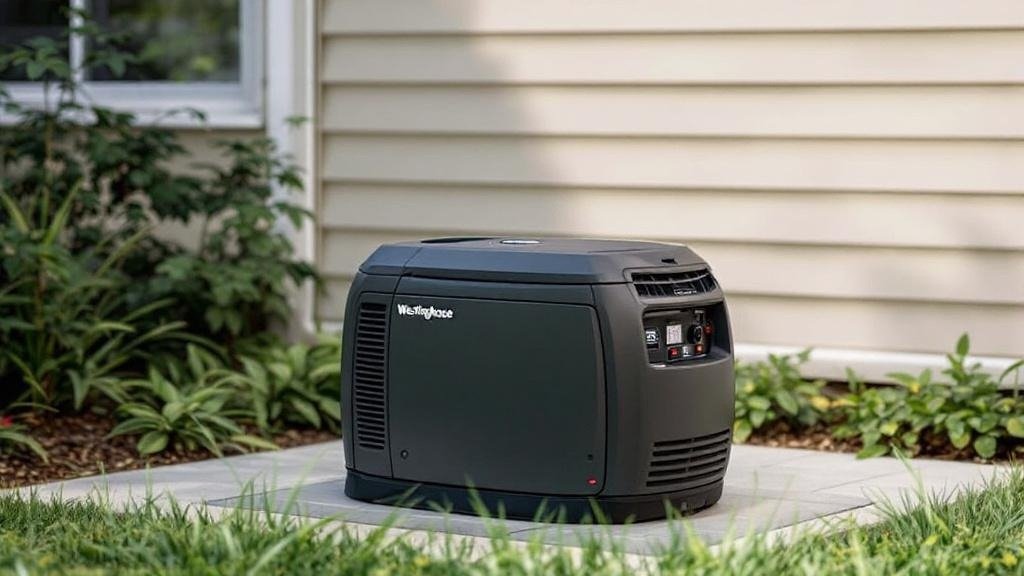
The product we’re talking about here is the Westinghouse iGen2550DFc, a compact dual-fuel inverter model designed for home backup, RVs, and light recreational use. In simple terms, it’s built for people who care as much about noise levels and portability as they do about raw wattage. It’s rated at 2,550 peak watts and 1,900 running watts, which puts it into that sweet “can handle the essentials” category without being overkill.
Where it really stands out is the combination of dual fuel and inverter technology in a relatively small, 42-pound package. You can run it on standard gasoline or hook up a propane tank when that’s more convenient or safer to store. Being an inverter unit means it produces clean, stable power suitable for laptops, TVs, and sensitive electronics something traditional open-frame generators often struggle with.
This unit is also RV-ready out of the box. The built-in TT-30R 30A outlet makes it simple to connect to a travel trailer without hunting for adapters. That’s a small detail on paper, but in real life it means less fiddling around in the dark when the power goes out or when you pull into a campsite late. It also offers a couple of standard 120V outlets and USB ports so you can plug in home appliances or charge devices directly.
If you’re curious about price and current deals, you can check the latest offer on Amazon here: Westinghouse iGen2550DFc listing.
Pros & Cons
What This Generator Does Really Well
The first standout advantage is noise. Westinghouse rates this unit as low as 52 dBA, which is quieter than an average conversation. In practice, that means you can run it in a backyard or campground without it dominating the soundscape. If you’ve ever stood next to a traditional open-frame unit yelling over the noise, this is a very real upgrade in day-to-day comfort.
Fuel flexibility is another big win. Being able to choose between gasoline and propane adds a layer of resilience during emergencies. Gas might be easier to find at a moment’s notice, but propane stores better for the long term and burns cleaner. If you already use a portable propane generator or have tanks for your grill or RV, this will fit into your existing setup with minimal fuss.
Portability is genuinely good here. At around 42 pounds with a built-in handle, it’s realistic for one reasonably healthy adult to carry short distances, lift into a vehicle, or shuffle around the yard. That’s not always the case with more powerful portable diesel generator models, which can quickly become “semi-permanent” just because they’re too heavy to move comfortably.
I also like that Westinghouse includes a plug-and-play kit: oil, funnel, tool kit, and user manual. It sounds basic, but not having to run to the store for oil before first use is a small but welcome quality-of-life perk. Combined with the clear labeling on the panel, it feels beginner-friendly even if this is your first generator.
Trade-Offs and Limitations to Consider
Of course, no generator is perfect, and this one has its limits. The most obvious is output. With 1,900 running watts, it’s great for essentials but not meant to power an entire large house. You’ll need to prioritize what’s plugged in think fridge, some lights, and a few electronics rather than running every appliance at once.
Another point is that dual-fuel units can deliver slightly less power on propane versus gasoline. That’s normal across the board, but it’s worth keeping in mind if you’re planning your load carefully. The engine is optimized for efficiency, so you’re trading some brute strength for longer run times and quieter operation.
If you’ve used heavy-duty portable diesel electric generator systems before, the lighter build here may feel less “industrial.” For most homeowners and RV users, that’s a good thing, but if you’re planning daily use on a construction site, this isn’t the best match. It’s really optimized for occasional to moderate use.
Lastly, like most inverter units, this model commands a higher upfront price than basic open-frame generators with similar wattage. You’re paying for the quieter operation, cleaner power, and dual-fuel flexibility. Whether that’s worth it comes down to how much you value comfort and electronics safety.
Description & Real-World Use
Power Output and Everyday Scenarios
On paper, 2,550 peak watts and 1,900 running watts might not sound like much compared with some monster units, but in real life it covers a surprising amount of ground. For home backup, you can usually run a refrigerator, a modem/router, some lighting, charge devices, and possibly a small window AC or space heater if you manage the load carefully. For RVs, it’s a solid match for keeping a smaller air conditioner, lights, and basic appliances going.
The inverter technology means voltage and frequency are regulated to stay nice and stable with less than 3% THD (total harmonic distortion). In non-technical terms, that’s exactly what you want for laptops, TVs, game consoles, and anything with a sensitive power supply. If you’ve ever worried about plugging expensive electronics into a loud, rattling generator, this is a reassuring upgrade.
One of the more practical aspects is parallel capability. If you decide later that you need more power, you can pair this with another compatible Westinghouse inverter unit using a parallel kit. That gives you a modular upgrade path without having to replace your existing machine. It’s a nice security blanket if your needs grow over time.
Noise Levels and Community-Friendly Operation
Generator noise is one of those things people underestimate until they actually live with a unit. At 52 dBA under certain loads, this model is impressively quiet, especially compared with traditional open-frame designs. You can carry on a conversation nearby or sit around a campsite without feeling like you’re next to a lawn mower.
This low noise output also makes it easier to stay on good terms with neighbors during a power outage. In a dense neighborhood, a screaming generator can quickly become a source of tension. With this one, you’re far less likely to get complaints, especially if you place it at a reasonable distance and angle it away from neighboring homes.
Economy Mode deserves a mention here too. When activated, the generator automatically adjusts its engine speed to match the load. That not only saves fuel but can keep noise levels down when you’re just running lighter loads like lights and chargers instead of heavier appliances.
Dual Fuel Convenience and Safety
Dual fuel is easily one of the most practical features of this model. Running on gasoline is straightforward and gives you full rated output, which is great when you need maximum wattage. On the other hand, running on propane can be cleaner, less smelly, and easier to manage for longer-term storage and emergency readiness.
If you’re used to relying on portable propane generator setups for grilling and RV use, being able to tap into the same fuel type keeps things simple. You can keep a couple of propane tanks on hand for backup power without worries about gasoline going stale as quickly in storage. For people in areas with frequent storms, that’s a real advantage.
From a safety perspective, the built-in carbon monoxide (CO) sensor is a very welcome addition. It’s designed to shut the unit down if it detects unsafe levels of CO, which is critical when people are tempted to run generators in partially enclosed spaces. Combined with low-oil shutdown and overload protection, it feels like Westinghouse put real thought into the “what ifs,” not just performance on a spec sheet.
Specs & Key Technical Details
- 2550 Peak Watts and 1900 Rated Watts at Less Than 3% THD – Weighs Only 42.4 Lbs. – Gas or Propane Powered – One RV Ready…
- Great Choice for Home Use as an Emergency Backup in a Power Outage – Strong Enough to Run All Your Home Essentials
- Extremely Quiet, Extremely Fuel Efficient: As Low As 52 dBA Noise Output and Up to 12 Hours of Run Time on a 1.16 Gallon…
Core Performance Specs
This generator delivers 2,550 peak watts and 1,900 running watts, powered by a 4-stroke OHV Westinghouse engine. It’s designed to automatically modulate engine speed to only produce the power you need, which helps both fuel economy and engine longevity. The clean power output (less than 3% THD) is ideal for modern electronics.
Run time is up to 12 hours on a 1.16-gallon gasoline tank under certain conditions, which is very respectable for a tank this size. In practical terms, that can mean getting through an overnight outage without refueling if your load is modest and you’re using Economy Mode where appropriate.
The unit weighs about 42.4 pounds and includes a built-in carrying handle. Dimensions are compact enough to tuck into an RV storage compartment or a corner of the garage without taking over your space. It’s EPA compliant and functionally tested at the factory, which may leave a small amount of residual oil or fuel odor when you first unbox it.
Outlets and Connectivity
The control panel is set up with everyday users in mind. You get one RV-ready TT-30R 30A outlet for direct travel trailer hookups, two 120V 20A household-style outlets, and two USB ports for charging smaller devices. This mix lets you power both campsite or home essentials and personal electronics without extra adapters.
The inclusion of USB ports is especially handy when you’re camping or during shorter outages. Instead of tying up a whole 120V outlet just to charge phones or tablets, you can use the dedicated ports and keep the main outlets free for appliances. It’s a small detail that ends up making the generator feel more versatile in actual use.
Because it’s parallel capable, there are also connections for linking with another compatible unit. That’s ideal if you start with one generator and later decide you want more power for a growing RV setup or added home backup capacity.
Warranty and Support
Westinghouse backs this model with a 3-year limited service, labor, and parts warranty. That’s competitive in this category and suggests the company expects the unit to hold up over years of regular but reasonable use. They also emphasize having a nationwide customer service network, which can make a big difference if you ever need repairs or troubleshooting.
It’s worth noting that all Westinghouse portable generators are factory tested, which is generally a positive sign for quality control. The trade-off is that you might notice a hint of oil or fuel smell when you first unpack it, but that’s normal rather than a defect.
Why We Recommend This Model
The reason this westinghouse generator stands out is balance. It doesn’t try to be everything to everyone. Instead, it focuses on doing a handful of things very well: staying quiet, being easy to move, offering dual-fuel flexibility, and providing clean power for sensitive electronics. That mix lines up almost perfectly with what most homeowners and casual RV users actually need.
In an emergency, the last thing you want is a generator that’s finicky or overwhelming. Here, the combination of a clear panel layout, plug-and-play starter kit, and reliable inverter technology means you can get up and running quickly, even if you’re not mechanically inclined. Add the CO sensor and automatic shutdown protections, and it feels like a generator designed with real families in mind.
From a lifestyle perspective, the low noise levels are genuinely transformative. Being able to keep your fridge cold, charge devices, and maybe even run a small AC unit or heater without feeling like you’re camping next to a construction site changes how you think about backup power. You’re more likely to actually use the generator instead of dreading the noise every time you pull it out.
Finally, the dual-fuel design and parallel capability give you long-term flexibility. Maybe you start by using gasoline because it’s convenient, then later shift more toward propane as you build out your emergency storage. Or maybe you begin with one unit and add a second down the line. This model fits neatly into both of those growth paths without making you start from scratch.
If you want to dig deeper into real-time pricing or reviews, you can compare details directly on the product page: see the latest listing here.
Who This Is NOT For
Despite all its strengths, this isn’t the right generator for everyone. If you’re trying to power a large home with central air conditioning, multiple big appliances, and high-demand tools all at once, you’ll simply outgrow the 1,900 running watts. In that case, a larger unit or even a whole-house system would be a better fit than a compact inverter model like this.
Likewise, if you’re used to heavy-duty portable diesel generator setups for daily jobsite use, this unit may feel too light-duty. It’s engineered more for residential, RV, and recreational scenarios than for rough-and-tumble commercial environments where generators run hard for many hours every day.
Budget-wise, if your main goal is the absolute cheapest way to get watts, and you don’t care about noise or power quality, a basic open-frame gasoline generator might be more your speed. You’d trade away quiet operation and clean electronics-friendly output, but you’d save on upfront cost.
Finally, if you live in a small apartment with no outdoor space and no ability to safely run a generator away from doors and windows, no portable unit this one included is going to be appropriate. In those situations, battery backup stations or power banks are usually the better route.
Complementing Ideas & Related Resources
If you like the concept of this model but want to explore broader power options, it can help to compare it against other portable inverter generators in a similar wattage range. Looking at noise levels, outlet configurations, and fuel flexibility side by side can clarify whether this Westinghouse unit is your best match or if another style suits your habits better.
For households planning a full emergency readiness setup, pairing a compact dual-fuel inverter like this with a well-thought-out outage checklist can go a long way. Think about how you’ll prioritize loads, where the generator will live, and how you’ll safely manage fuel. Our guide on building a practical home backup plan walks through those decisions step by step: home backup power checklist.
RV owners might also want to look at how this unit fits into a broader off-grid strategy. Combining a quiet generator with solar panels and a modest battery bank can give you a lot of flexibility for boondocking or longer stays without hookups. For more on that, see our overview of travel-friendly power solutions here: RV generator and solar guide.
If you’re comparing this model with other fuel types, it’s worth reading up on the pros and cons of gasoline, propane, and diesel in portable units. A helpful technical breakdown can be found on the U.S. Department of Energy’s resources page: U.S. Department of Energy. Understanding fuel behavior, storage, and efficiency will make whatever generator you choose work better for you.
And if you’ve decided this specific model sounds right and just want to move forward, you can review current pricing and package options directly here: check availability and bundles.
- 2550 Peak Watts and 1900 Rated Watts at Less Than 3% THD – Weighs Only 42.4 Lbs. – Gas or Propane Powered – One RV Ready…
- Great Choice for Home Use as an Emergency Backup in a Power Outage – Strong Enough to Run All Your Home Essentials
- Extremely Quiet, Extremely Fuel Efficient: As Low As 52 dBA Noise Output and Up to 12 Hours of Run Time on a 1.16 Gallon…
Your Questions, Answered
Can the Westinghouse iGen2550DFc run a refrigerator and a small AC at the same time?
In many cases, yes, but it depends on the exact wattage of your appliances. The iGen2550DFc offers 2,550 peak watts and 1,900 running watts, which is usually enough for a modern energy-efficient refrigerator plus a small window AC or RV air conditioner, as long as you manage other loads carefully. The key is to check both the running and starting (surge) watt requirements of each appliance. If their combined starting draw exceeds the generator’s peak output, you may need to stagger start-up turning one on, letting it stabilize, then turning the other on. Always add some safety margin so the westinghouse generator isn’t operating at its absolute limit for long periods.
How long will this generator run on a tank of gas?
Westinghouse rates the iGen2550DFc for up to 12 hours of run time on its 1.16-gallon gasoline tank under typical load conditions, especially when Economy Mode is enabled. Real-world run time will vary based on how much power you’re drawing. Lighter loads, like lights and device charging, can stretch fuel further, while running heavier appliances like an air conditioner or space heater will shorten that window. As a rule of thumb, plan for several hours of continuous operation on moderate loads and top off the tank during natural breaks, such as during the day when you don’t need as many powered devices.
Is this generator safe for laptops, TVs, and gaming consoles?
Yes. The iGen2550DFc is an inverter model that produces clean, stable electricity with less than 3% total harmonic distortion (THD), which is exactly what you want for sensitive electronics. Traditional open-frame generators can produce power that fluctuates more, potentially stressing or damaging delicate power supplies over time. With this unit, you can confidently run laptops, flat-screen TVs, streaming devices, and gaming consoles as long as you stay within the overall wattage limits. It’s still wise to use high-quality surge protectors, but the clean sine wave output is a major advantage for modern electronics.
How loud is the Westinghouse iGen2550DFc compared to other generators?
This model is rated as low as 52 dBA under certain loads, which is quieter than a normal conversation at a short distance. In practice, that makes it far less intrusive than many conventional portable units, especially open-frame designs often used on jobsites. You can comfortably talk nearby, watch TV, or relax at a campsite without feeling overwhelmed by engine noise. As with any generator, sound can increase with heavier loads and closer proximity, but overall the acoustic profile is one of the key reasons people choose this inverter-style unit over louder alternatives.
What maintenance does this generator require over time?
Maintenance is fairly straightforward and similar to other small engines. You’ll need regular oil changes based on the hours of use (consult the owner’s manual for specific intervals), periodic air filter cleaning or replacement, and occasional spark plug inspection. It’s also smart to run the generator periodically, even when you don’t need it, to keep the engine and carburetor in good shape. If you use gasoline, adding a fuel stabilizer and not letting fuel sit for many months can prevent starting issues. For propane use, maintenance is often a bit simpler because the fuel burns cleaner, but the basic checks oil, filters, and general inspection still apply.

We are a collective of off-grid enthusiasts, solar technicians, and sustainable living advocates dedicated to making energy independence accessible. From blackout-proofing suburban homes to engineering mobile power for the road, we rigorously test every kit and component we review. Our mission is to help you cut the cord and power your life on your own terms.