



If you’ve been shopping around for solar panels kits for a van, RV, small cabin, or off‑grid setup, you’ve probably noticed something: space and weight disappear fast. That’s exactly where the Renogy 200W 24V N‑Type Solar Panel shines. It aims to pack serious power into a compact footprint that actually fits on a Class B van roof or a small camper without turning installation into Tetris on hard mode.
I’m going to walk through what this panel really offers, where it stands out, and a few situations where it might not be the best fit. I’ll also point you to a couple of helpful resources if you’re just starting to piece together your first DIY solar panel kit and want to avoid the classic “I bought the wrong components” mistake.
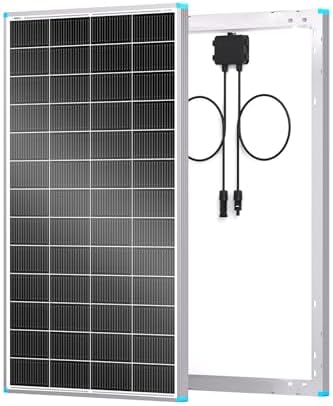
- 【Perfect Size for Class B Vans】This 200W N-Type solar panels are 7.5% smaller and 11.7% lighter than previous models, pr…
- 【25% Cell Efficiency】The 200 watt solar panel features a remarkable 25% efficiency, utilizing advanced 16BB cell technol…
- 【Improved Efficiency and Flexibility】The 24V solar panel minimizes current loss and boosts system efficiency, generating…
Renogy 200W Solar Panel Product Showcase
The product we’re looking at is the Renogy 200 Watt 24V N‑Type monocrystalline panel. Renogy has been a go‑to brand in the RV solar panels world for years, and this panel is part of their newer N‑Type line, which is designed to squeeze more power out of a smaller, lighter package compared with traditional panels.
In plain terms, this is a rigid, high‑efficiency 200 watt solar panel built for off‑grid use. It’s especially optimized for Class B vans, compact RVs, and marine or cabin roofs where every inch counts. Renogy claims it’s about 7.5% smaller and nearly 12% lighter than their previous 200W panels, while still delivering that full 200W rating under standard test conditions.
If you’re planning a rv solar panel kit for boondocking or van life, that smaller footprint is a big deal. It gives you more freedom in layout, lets you avoid awkward mounting over vents and fans, and still allows you to scale up by adding more panels later in series or parallel.
You can check current pricing and availability here: Renogy 200W 24V N-Type Solar Panel.
Pros & Cons of the Renogy 200W N‑Type Panel
Key Advantages
First, the efficiency. This panel uses advanced N‑Type monocrystalline cells with 16 busbars and a rated cell efficiency of up to 25%. The overall module efficiency is around 20.7%, which is very solid for a rigid panel in this price range. In practice, that means more watt‑hours out of the limited real estate on your roof, which is exactly what you want in a camper solar panel kit.
The second advantage is its performance in heat and partial shade. N‑Type cells generally handle high temperatures better than older P‑Type designs, and Renogy pairs that with bypass diodes to reduce power loss when part of the panel is shaded. If you’ve ever parked under a tree and watched your output tank because of a single branch shadow, this kind of design improvement matters.
Third, the physical design is very user friendly. The panel measures about 49.7 x 30.1 x 1.2 inches and weighs only 23.4 lbs. The framed aluminum construction, corner protection, and IP67 junction box give it the durability you want on a moving vehicle, while still making it manageable for a solo DIY install with standard mounting brackets.
Potential Drawbacks
Of course, no panel is perfect. The most obvious “con” here is that this is a single 200W panel, not a complete solar panels kits bundle. You’ll still need to add a charge controller, wiring, fuses, mounting hardware, and a battery bank to build a fully functional system. For some people, a pre‑boxed kit might feel simpler.
Another thing to keep in mind: this is a 24V‑class panel (designed for 24V systems), even though the actual open‑circuit voltage is about 37.44V. That’s not a downside, but it does mean you need to choose a compatible charge controller that can comfortably handle the panel’s voltage, especially if you wire multiple panels in series.
Lastly, if you’re working with an extremely small or curved roof and absolutely need flexible panels, this rigid design might not be ideal. Renogy does make flexible options, but they come with their own trade‑offs in terms of longevity and mounting.
Quick Pros & Cons Snapshot
- Pros: High efficiency, compact size, lighter weight, excellent hot‑climate performance, long‑term degradation rates, and strong brand support.
- Cons: Panel only (not a full kit), requires correct controller selection, and rigid form factor may not suit all roof shapes.
- 【Perfect Size for Class B Vans】This 200W N-Type solar panels are 7.5% smaller and 11.7% lighter than previous models, pr…
- 【25% Cell Efficiency】The 200 watt solar panel features a remarkable 25% efficiency, utilizing advanced 16BB cell technol…
- 【Improved Efficiency and Flexibility】The 24V solar panel minimizes current loss and boosts system efficiency, generating…
Description & Real‑World Use
Designed for Tight Spaces and Mobile Setups
One of the biggest selling points of this panel is its fit for Class B vans and compact rigs. Traditional 200W panels can feel oversized on a short or narrow roof, forcing weird layouts that block hatches or crowd roof fans. This Renogy model trims both footprint and weight, so you can usually fit two panels lengthwise or side‑by‑side without running into every vent and antenna.
If you’re building a rv solar panel kit for a van or small motorhome, two of these panels (400W total) often hit the sweet spot for running a 12V fridge, lights, fans, water pump, and keeping lithium batteries topped off with moderate laptop use. For heavier loads (like frequent induction cooking or AC), they’re a solid starting point to scale from.
The IP67 protection rating on the junction box and the durable aluminum frame mean it’s ready for highway wind, rain, dust, and salt spray in marine applications. Mounted correctly with quality brackets and sealed hardware, it’s the kind of component you put up once and don’t need to babysit.
High Efficiency and Better Heat Handling
Solar output always drops as panels heat up, which is frustrating when you’re parked in full sun in a hot desert. This is where the N‑Type cells and lower temperature coefficient really come into play. The panel is engineered to lose less efficiency as temperatures climb, so you hold onto more usable power even on scorching summer days.
Compared with older panels that might sag significantly under high heat, this can be the difference between comfortably running your 12V fridge and watching your battery slowly fall behind. For off‑grid van life, cabin setups in hot climates, or boats in sunny regions, that reliability under heat is a huge plus.
Renogy also promotes very low degradation rates: roughly ≤1% in the first year, then about ≤0.4% annually. Combined with their 10‑year material and workmanship commitment and 25‑year 80% output promise, this panel is clearly aimed at long‑term use, not a disposable short‑term solution.
Flexible System Compatibility
Even though the title calls it a “24V” panel, it works very well in both 12V and 24V battery systems when paired with the right MPPT controller. For a small camper solar panel kit, many people wire one or two of these into a 12V battery bank using an MPPT that can handle at least 40V input per panel and an appropriate current rating.
For larger builds say a 24V battery bank in a bus, fifth‑wheel, or off‑grid cabin you can wire multiple panels in series to bump up the voltage and keep wire sizes reasonable over longer runs. Renogy recommends ensuring the controller’s maximum PV input voltage is at least 40V for single or parallel connections, or 40V times the number of panels if you go series.
This flexibility makes the panel a good candidate if you think you might upgrade from a smaller system to something more robust later. You can start with one or two and add more as your energy needs grow, as long as your controller and wiring are sized with expansion in mind.
What You Still Need to Add
Since this isn’t a full diy solar panel kit, you’ll need a few more pieces to build a complete off‑grid system:
- A compatible MPPT charge controller (check voltage and current limits).
- Appropriate gauge solar cable and connectors (often MC4 type).
- Mounting brackets or roof rails suitable for your vehicle or cabin roof.
- A properly fused connection to your battery bank (AGM, GEL, or lithium).
- Possibly a battery monitor and inverter, depending on your loads.
If you prefer something more plug‑and‑play, Renogy also sells starter bundles like their 200W kit, which pair panels with the right controller and basic wiring. You can see an example of that type of all‑in‑one solution here: Renogy 200W RV Kit Overview.
Specs & Performance Details
Electrical Specifications
Here are the core performance numbers you’ll want to know when designing or upgrading your system:
- Max power (Pmax): 200W at STC
- Open circuit voltage (Voc): 37.44V
- Short circuit current (Isc): 6.85A
- Optimum operating voltage (Vmp): 31.03V
- Optimum operating current (Imp): 6.45A
- Maximum system voltage: 600V DC
- Maximum series fuse rating: 15A
- Module efficiency: 20.7%
These figures matter when you’re sizing your charge controller and wiring. For example, running two panels in series would roughly double the voltage while keeping the current similar, which is great for long roof runs to a controller near your batteries.
- 【Perfect Size for Class B Vans】This 200W N-Type solar panels are 7.5% smaller and 11.7% lighter than previous models, pr…
- 【25% Cell Efficiency】The 200 watt solar panel features a remarkable 25% efficiency, utilizing advanced 16BB cell technol…
- 【Improved Efficiency and Flexibility】The 24V solar panel minimizes current loss and boosts system efficiency, generating…
Physical & Environmental Specs
On the physical side, the panel is built with an aluminum alloy frame, corner protection, and a weather‑sealed junction box rated IP67. That means it’s dust‑tight and protected against temporary immersion in water more than enough for roof exposure on a van or RV.
- Dimensions: 1262 x 764 x 30 mm (49.7 x 30.1 x 1.2 in)
- Weight: 10.6 kg (23.4 lbs)
- Operating temperature: -40°F to 185°F (-40℃ to 85℃)
- Cell type: N‑Type monocrystalline, 16 busbar
- Protection rating: IP67 junction box
- Warranty: 10‑year materials & workmanship, 25‑year 80% output commitment
Those temperature limits cover pretty much any realistic environment you’ll drive or ship this panel into. The long‑term output guarantee is especially reassuring if you plan to use this in a semi‑permanent cabin or tiny home setup and want predictable performance for the long haul.
Why We Recommend the Renogy 200W N‑Type Panel
This panel hits a sweet spot of efficiency, size, and brand reputation that’s hard to ignore. If you’re building a compact off‑grid system and want more power per square foot, N‑Type cells and 16‑busbar construction are exactly the kind of technology you want on your roof. You’re essentially getting the output of a bulkier legacy panel in a form factor that’s easier to fit around fans, vents, and racks.
In day‑to‑day use, the benefits of higher efficiency and better hot‑weather performance show up as fewer compromises. You don’t have to obsessively chase every bit of shade, and you’re less likely to feel “power poor” in summer just because your panels are cooking on the roof. That kind of predictability matters when your fridge, lights, and work devices depend on steady solar input.
We also like that Renogy is realistic about system design. Their own documentation and videos explain that the panel needs to be combined with a proper charge controller, battery storage, and the right wiring strategy (series vs parallel) to get the best results. That transparency is helpful if you’re new to building a diy solar panel kit and don’t want to guess your way through electrical specs.
Finally, the long‑term degradation and warranty support give this panel an edge for anyone thinking beyond a single season. If you’re investing in your rig or cabin for the next decade or more, it makes sense to choose components designed to hold their output, not fade quickly after a couple of hot summers.
You can see user reviews and current pricing here: Renogy 200W N-Type Solar Panel on Amazon.
Who This Is NOT For
As solid as this panel is, there are a few situations where it might not be the best match. If you’re looking for a completely turnkey package where every cable, fuse, mount, and controller comes in one box and you don’t want to think about system design at all, a bundled starter kit or even a portable power station plus folding panels may make more sense.
It’s also not ideal if you’re working with an extremely small teardrop trailer, pop‑up camper, or ultra‑minimal build that can only fit a single 100W panel. In those cases, a smaller or flexible panel might integrate more cleanly and still cover your basic needs. This 200W panel really shines once you have enough roof space for at least one or two units.
Similarly, if your roof is highly curved or irregular and you absolutely need flexible panels glued directly to the surface, a rigid framed panel like this could be awkward to mount. Flexible panels are usually lighter and can conform better, though they typically trade off some durability and airflow underneath.
Lastly, if you never plan to leave campgrounds with full hookups and you’re rarely off‑grid, a robust rv solar panel kit might be overkill. In that scenario, a small trickle‑charge setup or even no panels at all could be sufficient, depending on how you camp.
Complementing Ideas & Helpful Resources
To get the most from this panel, it’s worth looking at how it fits into a complete system. Renogy offers matching charge controllers, adapters, and even full starter bundles built around similar panels. For a quick sense of how a complete kit compares, you can browse their dedicated RV and van packages, which often combine panels, controllers, and mounting hardware into a single bundle.
If you’re just starting to map out your system, a good next step is to calculate your daily power usage and then size your battery bank and panels around that number. Our in‑depth guide to planning off‑grid power walks through this process in simple, non‑technical language: Off‑Grid Solar Sizing Guide.
For more practical examples especially if you’re planning a van or small RV build our van power setup breakdown shows how people combine panels like this Renogy 200W unit with MPPT controllers, lithium batteries, and inverters in real‑world rigs. You can check that out here: Van Solar Power Examples.
If you’d rather let someone else bundle most of the components for you, it’s worth comparing this standalone panel with all‑in‑one options. For instance, Renogy’s starter bundles package similar panels with matched controllers and basic cabling, which can simplify your shopping list. Here’s one such option for context: Renogy 200W Starter Solar Kit.
And if you’re thinking beyond RVs like small cabins, sheds, or off‑grid workspaces a couple of these panels paired with a 24V battery bank and MPPT controller can build a surprisingly capable fixed system. In those setups, pay particular attention to series wiring, wire gauge, and controller voltage limits to get the safest and most efficient performance from your array.
For readers who want a more technical deep dive into how panel efficiency and cell type affect performance, the U.S. Department of Energy offers an accessible overview of solar technologies here: Solar Energy Technologies Office.
To recap, this Renogy 200W N‑Type panel makes the most sense if you value efficiency, compact size, and long‑term reliability, and you’re comfortable either assembling your own components or pairing it with a compatible kit. For the right kind of build, it’s a smart, future‑proof foundation that gives you room to grow your system as your needs evolve.
- 【Perfect Size for Class B Vans】This 200W N-Type solar panels are 7.5% smaller and 11.7% lighter than previous models, pr…
- 【25% Cell Efficiency】The 200 watt solar panel features a remarkable 25% efficiency, utilizing advanced 16BB cell technol…
- 【Improved Efficiency and Flexibility】The 24V solar panel minimizes current loss and boosts system efficiency, generating…
Your Questions, Answered
Is the Renogy 200W N-Type panel a complete solar panels kit?
No. The Renogy 200W 24V N-Type is a single high-efficiency panel, not a full solar panels kit. You’ll still need a compatible charge controller (preferably MPPT), appropriate cables and connectors, mounting hardware, fuses or breakers, and a battery bank to build a working off-grid system. Think of this panel as a premium building block rather than an all-in-one solution. If you want something closer to plug-and-play, you can pair this panel with a preconfigured controller-and-wiring bundle or choose a full starter kit that already includes most of those components.
Can I use this 200W panel in a 12V RV solar panel kit?
Yes, the Renogy 200W 24V N-Type panel works very well in 12V RV systems when paired with an appropriate MPPT charge controller. The controller will step down the higher panel voltage to charge your 12V battery bank efficiently. Many van and RV owners run one or two of these panels on 12V lithium batteries, powering fridges, fans, lights, and small inverters. Just make sure the controller’s maximum PV input voltage and current ratings are comfortably above the panel specs, especially if you wire multiple panels in series.
How many 200W panels do I need for a typical camper solar panel kit?
For a small camper or van running a 12V fridge, lights, water pump, and occasional laptop charging, many people find that 200–400W of solar is a practical starting point. That’s one or two of these Renogy 200W panels. If you’re running heavier loads like frequent induction cooking, large inverters, or plan to stay parked for long periods without moving you may want 400–600W or more. The best approach is to calculate your daily watt-hour usage, then size your panels and batteries around that number with some buffer for cloudy days.
What’s the difference between N-Type monocrystalline and regular panels?
N-Type monocrystalline cells are a newer cell technology that typically offer higher efficiency, better performance at high temperatures, and lower long-term degradation compared with many older P-Type cells. In practice, that means more power from the same roof area and more consistent output in hot conditions. The Renogy 200W N-Type panel combines this cell tech with 16-busbar construction, which helps reduce the impact of microcracks and shading. It’s part of why this panel is a good fit when roof space is limited and you want maximum energy per square foot.
Can I mix this panel with other brands or different wattages in a diy solar panel kit?
You can mix different panels, but it requires careful planning. When you connect panels in series, they should ideally have similar current (amps); when in parallel, similar voltage is preferred. Mixing this 200W Renogy N-Type panel with older or mismatched models can cause the array to perform closer to the lowest-rated unit in the string. For the simplest, most efficient diy solar panel kit, it’s best to use matching panels with similar specs from the same line. If you do mix, keep different panels in separate strings with their own MPPT controllers for best results.

We are a collective of off-grid enthusiasts, solar technicians, and sustainable living advocates dedicated to making energy independence accessible. From blackout-proofing suburban homes to engineering mobile power for the road, we rigorously test every kit and component we review. Our mission is to help you cut the cord and power your life on your own terms.