
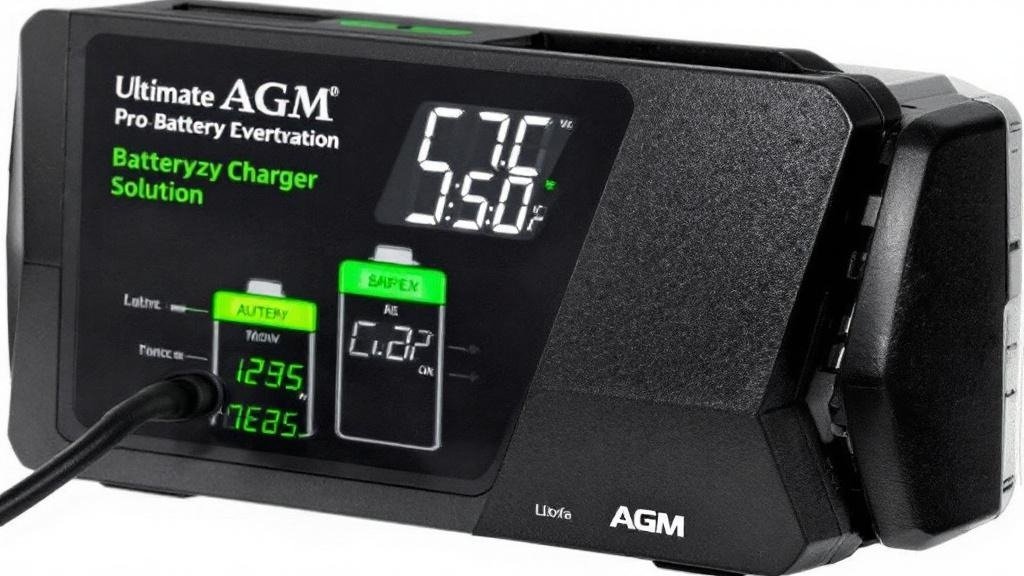


If you run a camper van, RV, off-grid rig, or even a boat, you quickly learn that keeping your batteries healthy is just as important as having the right fridge or solar panels. I’ve seen more trips cut short by a dead battery than by bad weather, and in almost every case the culprit was a weak or mismatched charging setup not the battery itself.
That’s exactly where a dedicated DC to DC charging system comes in. Instead of relying on a vague connection between your alternator and house bank, a unit like the Renogy 60A DC to DC charger brings proper multi-stage charging, better protection, and a lot more peace of mind. Below, I’ll walk through what it’s like in real-world use, who it’s ideal for, and a few reasons you might want to consider an alternative approach.

- 【Compatible Multiple Battery Types】 Compatible with a multitude of alternator types, the Renogy 12V DC to DC charger off…
- 【Smart Multi-Stage Charging】 The 60A DC to DC smart charger will charge your house batteries from the starter battery by…
- 【Various Protections For Ultra Safety】 The Renogy on-board battery charger with high-quality offers Over-voltage Protect…
Renogy 60A DC to DC Charger: Product Showcase
The Renogy 60A DC to DC charger is designed as an onboard link between your starting battery and your auxiliary bank. Instead of a basic relay, it behaves like a proper charger, tailoring voltage and current to what your house batteries actually need. You mount it in your van, RV, boat, or overland vehicle, wire it to the starter battery and to your house bank, and it quietly manages the rest while you drive.
What makes this unit stand out is how versatile it is. It’s not just a dedicated lifepo4 battery charger; it also supports AGM, gel, and flooded lead-acid chemistries from a wide range of alternators. That makes it a strong fit if you’re upgrading batteries now or plan to switch chemistries later. Rather than buying a different agm battery charger or separate unit for lithium, the Renogy can handle everything in one compact package.
Renogy also leans heavily into safety and protection. This charger isolates input and output, which means a wiring mistake or voltage spike on one side is less likely to ruin your house bank on the other. Add in protections like over-voltage, over-temperature, and reverse polarity, and you get a device that’s not just about faster charging, but kinder charging over the long term.
In practice, the 60A capacity is beefy enough for medium to larger battery banks without being ridiculous for smaller builds. It hits a sweet spot for most van conversions, weekend RVs, and small to mid-size boats. You don’t need to be an electrical engineer to get it running, but you do want to plan your installation carefully, especially with cable sizes and ventilation.
If you want to check current pricing or specs straight from the source, you can see the Renogy 60A DC to DC charger on Amazon.
Pros & Cons
What This Charger Does Really Well
The first big win is battery chemistry flexibility. Whether you’re running AGM, flooded, gel, or lithium (including LiFePO4), this one unit can be configured to give each battery the charging profile it needs. That’s useful if you’re currently on lead-acid but plan to move to lithium later; you don’t have to replace your whole charging system when that day comes.
The second strength is true multi-stage functionality. Instead of blasting your bank with a fixed voltage, the Renogy walks through bulk, boost, and float phases automatically. That’s a major upgrade compared to older setups where a basic relay essentially turns your alternator into a crude charger. Long term, it means better capacity retention and less risk of undercharging or overcharging.
Another advantage is the focus on safety and protection. The isolation between input and output isn’t just a buzzword it genuinely reduces the chance of back-feeding or accidentally pushing alternator voltage directly into sensitive house electronics. Combined with over-voltage, over-temperature, and reverse polarity protections, it’s designed to fail safe rather than fail loud.
Finally, the 60A rating hits a nice middle ground. It’s strong enough to give a meaningful charge to larger banks on a decent drive, but still manageable for most OEM alternators if your wiring and system design are sensible. In that way, it doubles as a smart battery charger for life on the road that doesn’t demand a full custom alternator upgrade.
Potential Drawbacks and Limitations
On the downside, 60A DC to DC charging is not a plug-and-play toy. You’ll need to be comfortable with proper cabling, fusing, and layout, or be willing to pay a professional installer. The physical size is compact for what it does, but it still needs a breathable mounting spot and clear cable runs, which can be tricky in tightly packed vans.
Another consideration is alternator load. While the charger helps regulate current to the house bank, pulling a continuous 60A from a small factory alternator on hot days isn’t always ideal. You may want to configure for lower current or think about alternator health if you’re building a heavy-use expedition rig.
There’s also a learning curve with settings and system design. This isn’t the same as tossing in a simple portable battery charger for vehicles and calling it good. If you rush through wiring or skip reading the manual, you can end up with nuisance shutdowns or suboptimal performance as the protections kick in.
Price is another mild con. While fair for the capabilities, it’s definitely more of an investment than entry-level solutions. For minimal power needs or weekend-only usage, that upfront cost might be overkill, and a simpler setup could be more appropriate.
- 【Compatible Multiple Battery Types】 Compatible with a multitude of alternator types, the Renogy 12V DC to DC charger off…
- 【Smart Multi-Stage Charging】 The 60A DC to DC smart charger will charge your house batteries from the starter battery by…
- 【Various Protections For Ultra Safety】 The Renogy on-board battery charger with high-quality offers Over-voltage Protect…
Description & Real-World Performance
How the 3-Stage Charging Actually Feels in Use
On paper, multi-stage charging always sounds technical, but in daily life what you notice is predictability. With this charger, you can drive a couple of hours and have a reasonable expectation that your bank is genuinely topped up, not hovering in that frustrating 80–90% range. The unit automatically cycles through bulk, then boost, then float, without you touching a thing.
That’s especially helpful if you’re running sensitive loads like 12V fridges, routers, and inverters. Rather than seeing your voltage creep down over days of driving and camping, the system stays tighter and more stable. It doesn’t behave like a random solar battery charger that depends on weather; it’s tied directly to engine runtime, which makes planning power much easier.
If you’re used to the anxiety of constantly checking battery monitors, the calmer voltage behavior is one of the first things you notice. Trips feel less like battery babysitting and more like actual travel. The charger doesn’t fix every power issue, but it removes one major variable from the equation.
Battery Type Compatibility in Mixed or Upgraded Systems
Plenty of people upgrade to lithium long after they buy their rig. The nice part here is not needing to rip out your existing charger each time you change chemistries. If you start with AGM, you set it accordingly. Later, when you move to LiFePO4, you adjust the configuration and the charger effectively becomes a dedicated lithium battery charger tuned for your new bank.
Because it supports flooded, gel, and other formats, it’s also a good match for used RVs or boats with unknown histories. If you clean up the wiring and set the unit to the correct profile, you can give older banks the best possible chance at survival while planning a more modern replacement.
In short, chemistry flexibility gives this charger a long useful life across rebuilds. That’s often overlooked when comparing prices; spending a bit more upfront to get a unit that survives multiple battery generations usually works out cheaper than buying a series of disposable chargers.
Protection Features and Peace of Mind
The isolation between starter and house banks matters more than most people realize. instead of directly tying the two sides together, the charger acts as a controlled gatekeeper. If something goes wrong downstream say, a failed battery or poor connection the impact is less likely to propagate back up to your vehicle’s core electrical system.
Over-voltage and reverse polarity protections also soften the consequences of human error. No device is completely idiot-proof, but having built-in safeguards reduces the chance that one bad crimp or reversed wire turns into a burned-out alternator or ruined battery bank. For DIY builders, that margin of safety is very welcome.
Over-temperature protection shows up on long climbs, hot days, or cramped installations. If the charger does get pushed too hard, it’s designed to protect itself instead of quietly cooking to death. That kind of graceful failure mode isn’t flashy, but it often determines whether a system fails annoyingly or catastrophically.
Installation Experience and Everyday Living With It
Installation isn’t trivial, but it’s also not outrageous if you’ve done any basic 12V work. You’ll need to plan fuses, cable sizes, grounding, and ventilation. The compact form factor is helpful in smaller vans or tight battery lockers, and the robust casing feels more “equipment grade” than “cheap gadget.” It’s the kind of device you install once and then don’t think about much.
In actual use, the charger quietly does its thing while you drive. There’s no constant fussing with buttons or settings after initial setup. If you’ve paired it with solar, it also plays very nicely in hybrid systems, letting your panels handle daytime charging at camp while the alternator tops things up on the move.
Think of it as a backbone component rather than an optional accessory. Once it’s in and tuned properly, your overall power ecosystem just feels more predictable, which is priceless when you’re far from hookups and need your batteries to behave.
- 【Compatible Multiple Battery Types】 Compatible with a multitude of alternator types, the Renogy 12V DC to DC charger off…
- 【Smart Multi-Stage Charging】 The 60A DC to DC smart charger will charge your house batteries from the starter battery by…
- 【Various Protections For Ultra Safety】 The Renogy on-board battery charger with high-quality offers Over-voltage Protect…
Specs & Technical Notes
Core Electrical Capabilities
This model is a 12V in, 12V out DC to DC charger, rated at 60A output. That rating is substantial enough to support medium and larger house banks, particularly for LiFePO4 setups where higher charge currents are common. Because it’s a true charger, not just a relay, it tailors its output rather than mirroring alternator voltage.
It’s designed to be compatible with a wide range of alternator types, which matters on modern vehicles with smart alternators that don’t behave like older, constant-output units. The charger mediates between whatever the alternator is doing and what your house bank expects, smoothing out those differences.
While the exact efficiency numbers depend on operating conditions, it’s engineered for regular, sustained use in mobile environments. That makes it a strong backbone for off-grid systems that rely heavily on engine runtime, either as the primary charging source or as a backup to solar.
Supported Battery Chemistries
The unit supports AGM, flooded, gel, and lithium chemistries, including LiFePO4. Each of these types benefits from different ideal voltages and charging behaviors, and the charger adapts accordingly. You configure it so that your specific batteries see the correct profile rather than a generic one-size-fits-all approach.
For lead-acid types, this means proper absorption and float stages, which help reduce sulfation and maintain usable capacity over time. For lithium chemistries, it means controlled bulk and appropriate finishing behavior that aligns with their flatter voltage curves and different needs.
This flexibility basically turns the Renogy into a configurable brain rather than a fixed agm battery charger locked into a single profile. For builders who tweak or upgrade systems over time, that’s a significant advantage.
Physical Design and Environmental Considerations
The charger’s housing is compact yet robust, meant to live in vehicles, RVs, and marine environments. It’s not a dainty desktop device; it feels built for heat, vibration, and less-than-perfect mounting spots. That sturdiness makes it easier to trust when you’re rattling down washboard roads or dealing with marine moisture.
You’ll still want to give it reasonable airflow and avoid direct contact with water, but it doesn’t demand a pristine lab environment either. For most DIY van and boat builds, that balance of toughness and size is exactly what you’re after.
Why We Recommend This Charger
There are simpler and cheaper ways to move energy from your alternator to your house bank, but they rarely treat the batteries with the same care. This charger feels like the right level of sophistication for people who genuinely rely on their electrical system, not just dabble in it. It’s an upgrade from “it works most of the time” to “I can actually trust this.”
The combination of multi-stage charging, chemistry flexibility, and protective isolation makes it more than just another box of electronics. It becomes the backbone that lets your batteries live closer to their full rated lifespan, which is no small thing when lithium banks can cost as much as a small used car.
We also like that it plays nicely with broader systems. If you’re building out a full power setup with solar, shore power, inverters, and monitoring this charger doesn’t fight that complexity; it slots right into it. For many owners, it ends up being the “set and forget” piece that quietly underpins the rest.
In terms of value, the upfront cost makes more sense when you compare it to the price of prematurely replacing a large battery bank. A thoughtful charger is a form of insurance: less dramatic than a new fridge or lights, but absolutely crucial to keeping everything else running smoothly.
If you’re curious how this fits into a complete off-grid or RV power system, you can explore our broader guide to off-grid battery setups, where we talk about integrating alternator, solar, and shore power in one cohesive design.
- 【Compatible Multiple Battery Types】 Compatible with a multitude of alternator types, the Renogy 12V DC to DC charger off…
- 【Smart Multi-Stage Charging】 The 60A DC to DC smart charger will charge your house batteries from the starter battery by…
- 【Various Protections For Ultra Safety】 The Renogy on-board battery charger with high-quality offers Over-voltage Protect…
Who This Is NOT For
Despite its strengths, this charger isn’t the perfect fit for everyone. If you only take your RV out a couple of weekends a year and spend most nights on full hookups, a complex alternator-based charging system might be unnecessary. In that case, your existing converter and a basic shore-powered charger may already cover your usage just fine.
It’s also not the best choice if you’re allergic to wiring diagrams. If you’re uncomfortable working with heavy gauge cables, fuses, and 12V layouts and you don’t want to hire a professional this level of hardware may feel like more project than it’s worth. A small plug-in portable battery charger for vehicles could be simpler for occasional top-ups at home.
For ultra-light power needs, such as minimal lighting and a phone or two, a combination of a compact solar battery charger and a modest power station might be a better path. Those setups tend to be more modular and less invasive to your vehicle’s factory wiring.
Finally, if your alternator is already marginal or you drive very short distances, relying on alternator charging as a main strategy may not be wise. You might be better served investing first in solar, shore power options, or even a small generator before layering on something like this.
Complementing Ideas & System Add-Ons
This charger really shines when it’s part of a complete ecosystem rather than the lone hero. Pairing it with a quality MPPT solar controller gives you two robust charging legs: alternator while you’re driving and solar while you’re parked. That combination evens out the gaps and reduces how often you need to think about power at all.
Another smart pairing is a solid battery monitor. Knowing what’s going in and out of your bank, and how full it truly is, helps you see just how much work the charger is doing. It also helps you spot issues early like a weak cell or bad connection before they turn into a trip-ending problem.
If you’re working through a full RV or van build, you might also want to read our guide to RV electrical upgrades, which walks through prioritizing components and avoiding common pitfalls as you scale up your system.
For shoppers comparing a few different options, it can help to look at alternative DC-based solutions too. For instance, if you lean heavily on shore power and want a more traditional charging route as a backup, you might consider a dedicated AC charger like this capable unit on Amazon or a focused lithium-only model such as this compact Lifepo4 charger on Amazon.
And if you want a quick comparison between alternator-focused and solar-heavy systems, this small yet capable solar-focused unit on Amazon and a balanced DC system like this hybrid-ready model on Amazon are useful benchmarks as you decide how central alternator charging will be in your overall design.
- 【Compatible Multiple Battery Types】 Compatible with a multitude of alternator types, the Renogy 12V DC to DC charger off…
- 【Smart Multi-Stage Charging】 The 60A DC to DC smart charger will charge your house batteries from the starter battery by…
- 【Various Protections For Ultra Safety】 The Renogy on-board battery charger with high-quality offers Over-voltage Protect…
Your Questions, Answered
Can I use the Renogy 60A DC to DC charger as my primary agm battery charger for house batteries?
Yes, you can absolutely use the Renogy 60A DC to DC charger as the main charging source for your AGM house bank while you are driving. It’s designed to behave like a proper multi-stage charger rather than a simple relay, so AGM batteries get appropriate bulk, absorption, and float stages when the engine is running. That said, if your rig often sits parked for long stretches, it’s smart to pair this with shore power or solar so the batteries are maintained when the vehicle is off. Think of the charger as your primary mobile source, and use a shore-based or solar system to complement it during storage or long stays.
Is this charger compatible with LiFePO4 and other lithium batteries?
Yes. One of the key strengths of this unit is its compatibility with lithium chemistries, including LiFePO4. You can configure the charger for the correct voltage and profile, allowing your lithium bank to receive a more appropriate charge curve than it would from a bare alternator connection. This is especially important for protecting your investment in a high-capacity lithium bank. When you upgrade from AGM or gel to lithium, you simply adjust the settings rather than replacing the whole charger, which makes long-term system evolution much smoother.
Will a 60A DC to DC charger be too much for my factory alternator?
It depends on your vehicle and how you use it. A continuous 60A draw is a meaningful load for many factory alternators, particularly in hot climates, but the charger is designed to regulate and protect rather than just pull blindly. In practice, as long as your cabling is correctly sized, your alternator is in good health, and you’re not idling endlessly in extreme heat, most modern vehicles handle it well. For more conservative setups, you can configure the system or choose a lower current model. If you’re unsure, it’s worth checking your alternator’s rating and consulting a knowledgeable installer.
Do I still need a solar battery charger if I install this DC to DC unit?
Not strictly, but many people choose to run both for a more resilient system. The DC to DC charger shines while you’re driving, turning engine runtime into reliable charging. A solar battery charger, on the other hand, keeps things topped up when you’re parked for long periods, especially off-grid. Using both means you’re not entirely dependent on either sunlight or driving time. If you travel frequently and move most days, alternator charging may cover the bulk of your needs. If you like to sit in one spot for a week or more, adding solar makes life easier and reduces engine idling.
How hard is it to install for a DIY builder with basic 12V experience?
For someone comfortable with basic 12V wiring, installing the Renogy 60A DC to DC charger is very doable, but it does require careful planning. You’ll be working with heavier gauge cables, proper fusing on both sides, and thoughtful routing to keep runs short and safe. The physical mounting is straightforward, but you should take your time with crimping, protection, and grounding. The manual provides clear guidance, and many DIYers successfully install it themselves. If you’re at all unsure, it’s worth at least having a professional double-check your design before you energize the system.

We are a collective of off-grid enthusiasts, solar technicians, and sustainable living advocates dedicated to making energy independence accessible. From blackout-proofing suburban homes to engineering mobile power for the road, we rigorously test every kit and component we review. Our mission is to help you cut the cord and power your life on your own terms.