
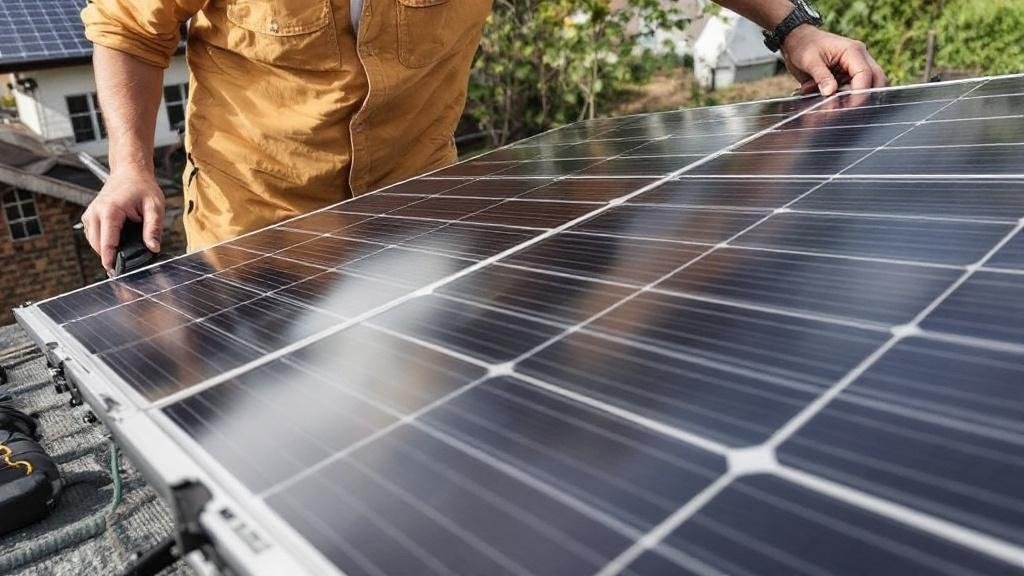


If you’ve ever tried to keep your RV or camper powered on a longer trip, you already know the pain of noisy generators, fuel runs, and hunting for hookups. That’s exactly where an off grid solar kit can make life dramatically easier and quieter. The Renogy 200W 12V Monocrystalline RV Solar Panel Kit is one of those setups that aims to hit the sweet spot between simplicity, reliability, and real-world output.
Instead of piecing together panels, charge controllers, and cables from different brands, this Renogy kit gives you a matched system in one box. Two 100W monocrystalline solar panels, a 30A Adventurer PWM charge controller, cabling, brackets the essentials are there. What matters more, though, is how it actually performs when you’re parked in the middle of nowhere, depending on it to keep your batteries happy.
In this review, I’ll walk through what stands out about this kit, where it shines, where it doesn’t, and who it’s really for. I’ll weave in some practical scenarios boondocking, weekend camping, small off grid solar system setups so you can quickly decide if this fits your needs or if you should be looking at something bigger or more advanced.

- [Wide Application] 800Wh daily output depends on the 4 hours sunlight availability; suited for applications that require…
- [Excellent Performance] 22% High solar cell efficiency; Corrosion-resistant aluminum frame for outdoor use, allowing the…
- [Multiple Protection] The Renogy Adventurer-Li 30A PWM charge controller is designed for aesthetically clean flush mount…
Renogy 200W RV off grid solar kit Overview
The heart of this kit is simple: two 100W 12V monocrystalline solar panels paired with Renogy’s Adventurer 30A PWM charge controller. On paper, Renogy rates the system for up to about 800Wh of daily output in good sun, assuming around four hours of solid sunlight. In practical terms, that’s enough to comfortably run lights, fans, water pump, charge phones and laptops, and keep a well-sized battery bank topped off.
If you’re someone who spends a few days off-grid at a time, this hits a nice balance. You’re not over-investing in a massive off grid solar system, but you’re also not stuck with a too-small trickle setup that barely makes a dent in your battery usage. It’s particularly well-suited for RVs, campers, boats, and small trailers where roof space and weight both matter.
Renogy has been around the DIY solar world for a while, and this kit reflects that experience. The cables are sized appropriately, the mounting hardware is straightforward, and the Adventurer controller is designed to be flush-mounted inside your rig for a cleaner look instead of just dangling on a wall. That seems minor, but when you’re living in a small space, the details matter.
Most importantly, it’s a relatively approachable first system for people who want to get into solar without learning every single technical nuance. You still need to know basic wiring and safety, but you’re not starting from a blank slate trying to match random parts.
Check current pricing and availability for the Renogy 200W RV Solar Panel Kit
Pros & Cons
What This Kit Does Really Well
The first big plus is efficiency relative to size. These 12V solar panel modules use monocrystalline cells rated at up to 22% efficiency, which is strong for this category. In a real RV roof layout where every inch matters, that efficiency helps squeeze more wattage into a limited footprint. The corrosion-resistant aluminum frames and tempered glass are built to live on a roof year-round, facing rain, dust, high winds, and snow loads up to 5400Pa.
Another real advantage is how quietly this system works in the background. Unlike a portable gas generator, there’s no engine noise or exhaust smell. The panels just sit on your roof and silently push power into your batteries. For people who value peaceful campsites not to mention avoiding campground generator restrictions that’s a big lifestyle upgrade.
On the electrical side, the Adventurer 30A charge controller offers multiple protections: overcharging, overload, short-circuit, and reverse polarity. That’s safety you want when you’re living in a small space filled with flammable materials. It’s also compatible with several battery chemistries, including lithium, AGM, flooded, and gel, which gives you room to upgrade your battery bank later without replacing the whole control system.
Finally, installation is relatively friendly. The panels come with pre-drilled holes, the cables are plug-and-play style MC4 connectors, and the included Z brackets get you started with roof mounting. It’s not a zero-effort install, but it’s a “weekend project” for a careful DIYer rather than an overwhelming wiring nightmare.
Where the Renogy Kit Falls Short
There are a few trade-offs worth calling out. First, this is a PWM (Pulse Width Modulation) charge controller, not an MPPT one. PWM is perfectly functional and reliable, but not as efficient at harvesting power in lower light or colder conditions. If you’re chasing every last watt, an MPPT controller would be an upgrade but it also adds cost.
Second, 200W is a good baseline, but it’s not a magic bullet if you have power-hungry gear. Running a big inverter, residential-style fridge, or heavy-duty electronics all day may push this system beyond its comfort zone. You can expand the kit using additional panels in parallel (and Renogy even includes extra branch connectors), but that means thinking about roof space and possibly future controller limits.
Another consideration is that mounting hardware is basic. The Z brackets work, but some people will prefer tilt mounts or more aerodynamic low-profile mounts. Those would be separate purchases. Also, while the kit is quite complete on the DC side, you’ll still need to integrate it with your battery bank and possibly a separate inverter if you want AC power.
Lastly, the LCD interface on the Adventurer controller is practical but not particularly modern. It relays critical info, but it’s not nearly as slick as app-based systems that pair with Bluetooth. That’s not a deal-breaker, just a trade-off at this price point.
Quick Pros & Cons Snapshot
Pros:
– Solid 22% monocrystalline efficiency in a 200W package
– Clean, flush-mount 30A PWM controller with good protections
– Designed for RVs, campers, boats, and small off-grid setups
– Straightforward installation with pre-drilled panels and plug-and-play connectors
– 5-year warranty plus 24/7 technical support from Renogy
Cons:
– PWM controller is less efficient than MPPT options
– 200W may be undersized for heavy electrical users
– Basic Z brackets included; tilt or specialty mounts not in the box
– No built-in app connectivity or smart monitoring without add-ons
- [Wide Application] 800Wh daily output depends on the 4 hours sunlight availability; suited for applications that require…
- [Excellent Performance] 22% High solar cell efficiency; Corrosion-resistant aluminum frame for outdoor use, allowing the…
- [Multiple Protection] The Renogy Adventurer-Li 30A PWM charge controller is designed for aesthetically clean flush mount…
Description & Real-World Use
Everyday Life With a 200W RV Solar Setup
On a typical sunny day, this kit can produce up to about 800Wh of energy, assuming you position your rig to get roughly four hours of solid sun exposure. In practice, that usually looks like a battery that gets nicely topped up by early afternoon if you’ve been modest with your power use overnight. For many RV owners, that means fans, LED lighting, water pump use, and device charging are all comfortably covered.
If you add a small 12V fridge or compressor cooler to the mix, this is where planning matters. The system can absolutely help support it, but you’ll want to pair the kit with an appropriately sized battery bank and keep an eye on your daily consumption. The good news is the Adventurer controller displays basic performance info so you can quickly see whether you’re using more than you’re producing.
For boondockers or weekend campers, this kind of setup takes the edge off “power anxiety.” Instead of rationing every amp-hour, you can relax a bit, plug in your laptop, charge cameras and phones, and still have confidence that the sun will help restore your batteries for the next overnight. It’s not unlimited power, but it’s reliable autonomy without a constant generator rumble.
Monocrystalline Panels for RV and Marine Use
The two 100W panels are monocrystalline, which is a solid choice for mobile and marine applications. They’re more efficient and generally more space-conscious than older polycrystalline designs, which is critical when mounting a camper solar panel kit on a crowded roof. The corrosion-resistant aluminum frame is designed to withstand salt air on boats as well as road grime on RVs.
The tempered glass front and robust frame are rated to handle high wind loads and heavy snow, so if you camp in harsher climates, you’re not dealing with delicate, easily damaged modules. Open-circuit voltage sits at around 21.6V, which is typical for this class and works well with the included controller.
Heat, of course, is the enemy of solar efficiency, so no panel is at its peak output in scorching temperatures. But in moderate climates and with decent airflow under the panel, this 200W solar panel array does a good job delivering dependable wattage through most of the day.
Charge Controller Experience
The Adventurer 30A PWM controller is a flush-mount unit, so you cut an opening in an interior wall or panel and the controller sits nearly flat, giving your RV or boat a more finished look. For many people, that small aesthetic upgrade is surprisingly satisfying compared to a bulky box screwed to the wall with exposed wires.
From a safety standpoint, it handles the essentials: it prevents overcharging, protects against overload, deals with short-circuits, and guards against reverse polarity mistakes. That’s especially important for DIY installs, where a simple miswire could otherwise cause damage. Its 30A rating gives you some headroom to expand with additional panels later, provided you stay within its current and voltage limits.
The controller also supports a range of battery types, including lithium, which is a big deal if you plan to upgrade from lead-acid to LiFePO4 batteries down the road. Being able to keep the same controller means you’re not re-buying huge chunks of your off grid solar system just to modernize your storage.
Specs & Technical Details
Solar Panel Specifications
The kit includes two 100W 12V monocrystalline solar panels, for a total of 200W. Each panel is built with high-efficiency cells rated around 22%, giving you a strong watt-per-square-foot performance that’s ideal for RV and boat roofs. Open-circuit voltage is specified at 21.6V, which pairs properly with the Adventurer controller.
The panels are framed in corrosion-resistant aluminum, which matters if you’re in coastal environments or store your rig outdoors long-term. They’re rated to handle wind loads up to 2400Pa and snow loads up to 5400Pa, which translates into being comfortable on highways at speed and in moderate winter conditions. Pre-drilled mounting holes simplify installation with the included brackets or with aftermarket mounts.
Controller & Electrical Components
The Adventurer 30A PWM charge controller is the electrical brain of the kit. It’s designed for flush mounting, giving a cleaner installation than many surface-mounted boxes. It manages charging for 12V battery banks, including lithium, AGM, flooded, and gel batteries, and includes multiple safety protections.
Wiring-wise, you get a 30 ft 10AWG solar adapter cable to run from roof to controller, plus a 16 ft 10AWG tray cable for the controller-to-battery connection. Renogy also includes branch (Y) connectors that support parallel panel wiring, including future expansion. All cabling uses standard solar-style connectors, so replacements and add-ons are easy to source.
- [Wide Application] 800Wh daily output depends on the 4 hours sunlight availability; suited for applications that require…
- [Excellent Performance] 22% High solar cell efficiency; Corrosion-resistant aluminum frame for outdoor use, allowing the…
- [Multiple Protection] The Renogy Adventurer-Li 30A PWM charge controller is designed for aesthetically clean flush mount…
What’s Included in the Box
The Renogy 200W kit is fairly complete for the DC side of your system. Inside the box, you’ll find:
- Two 100W 12V monocrystalline solar panels
- Renogy Adventurer 30A PWM charge controller
- 30 ft 10AWG solar adapter cable
- 16 ft 10AWG tray cable
- Branch (Y) connectors for parallel panel wiring
- Two sets of Z brackets and associated mounting hardware
Renogy backs the system with a 5-year warranty and 24/7 technical support, which matters more than most people realize. When you’re halfway through an install or chasing down a weird behavior from your RV solar panel kit, having a support line to call can be the difference between a ruined weekend and a quick fix.
See full specs and user reviews for the Renogy 200W kit
Why We Recommend This Kit
A Practical Balance of Power, Price, and Simplicity
This setup sits in a sweet middle ground: it’s more powerful and more complete than entry-level trickle chargers, but far more approachable than custom high-wattage roof arrays that demand serious planning and budget. For many RVers, van lifers, and boat owners, 200W of solar with a robust 12V solar panel configuration is the difference between “we can stay out for one night” and “we can comfortably stay a long weekend or more off-grid.”
You’re not paying a premium for bells and whistles you may never use. Instead, you’re getting solid, proven hardware from a known brand, bundled in a way that avoids compatibility headaches. That’s especially reassuring if this is your first real dive into solar and you’d rather follow a clear recipe than build from scratch.
The inclusion of lithium battery support is another strong point. A lot of older kits lock you into lead-acid chemistry, but this one lets you grow into a more modern, lightweight battery bank when you’re ready. That future-proofing makes the investment feel more secure, particularly if you plan to keep your RV or boat for years.
Realistic Performance for Real-World Users
Not everyone needs a giant off grid solar system. If your power expectations are realistic LED lights, fans, pumps, electronics charging, maybe a modest cooler or fridge it’s surprising how far a well-managed 200W array can take you. The key is combining it with an appropriately sized battery bank and paying attention to your daily usage patterns.
Where this kit shines is in predictable, repeatable performance. You know that with a decent weather forecast, your batteries are likely to be back in a healthy range by midday. That predictability reduces stress and gives you confidence to choose more remote, hookup-free campsites without worrying about running dry on power.
For many people who’ve been hesitant to go fully solar because it feels technical or intimidating, this kit is a gentle but capable entry point. You learn the basics, gain experience, and always have the option to expand later with more panels or a larger battery bank.
Check the latest deals on the Renogy 200W RV Solar Kit
- [Wide Application] 800Wh daily output depends on the 4 hours sunlight availability; suited for applications that require…
- [Excellent Performance] 22% High solar cell efficiency; Corrosion-resistant aluminum frame for outdoor use, allowing the…
- [Multiple Protection] The Renogy Adventurer-Li 30A PWM charge controller is designed for aesthetically clean flush mount…
Who This Is NOT For
As capable as this kit is, there are some situations where it’s not the right tool. If you’re trying to run an energy-hungry setup like a full-sized residential fridge, large AC unit, induction cooktop, or high-wattage entertainment system this 200W array will feel limited. It can be a component of a larger installation, but not the entire backbone.
It’s also not ideal if you live full-time in cloudy, heavily shaded environments where reliable sun is rare. No solar kit performs miracles in those conditions, but smaller arrays are especially challenged. In that case, you’d either want more wattage, a backup generator plan, or both.
Finally, if you strongly prefer fully app-connected, smart-home style monitoring, you may find the Adventurer controller a bit old-school out of the box. You can work around that with add-ons or different controllers, but if phone-based control is a must-have, you might want to consider a kit built around a native app ecosystem.
Complementing Ideas & Helpful Resources
To get the most out of a camper solar panel kit like this, it helps to think about the system around it batteries, inverters, and energy-efficient appliances. A high-quality LiFePO4 battery bank, for example, can dramatically improve how much usable power you get from your solar setup and how quickly it recharges.
You may also want to combine this RV solar panel kit with a small, quiet backup generator for those stretches of bad weather. Using the generator to top off batteries occasionally while letting solar do the heavy lifting on sunny days gives you a very flexible, resilient power system overall.
If you’re comparing different portable power approaches, you might find our guide to off-grid charging gear and backup solutions helpful over at this homeowner-focused solar resource. For deeper technical dives into battery sizing and system design, the tutorials on Solar Electric’s learning center are also worth a look.
And if you’re exploring other gear that pairs nicely with this setup, check out these related picks:
– Renogy 200W RV Solar Panel Kit (current product)
– Compatible lithium battery options and bundles on Amazon
– DC-DC chargers and accessories for alternator plus solar setups
Used thoughtfully, this kit can be the core of a reliable, flexible, and surprisingly liberating mobile power system that lets you spend more time where you actually want to be off the grid, but not off the map.
- [Wide Application] 800Wh daily output depends on the 4 hours sunlight availability; suited for applications that require…
- [Excellent Performance] 22% High solar cell efficiency; Corrosion-resistant aluminum frame for outdoor use, allowing the…
- [Multiple Protection] The Renogy Adventurer-Li 30A PWM charge controller is designed for aesthetically clean flush mount…
Your Questions, Answered
Is the Renogy 200W RV kit enough to power my entire off-grid setup?
For many users, the Renogy 200W RV kit is enough to comfortably run lights, fans, water pump, and charge phones, tablets, and laptops, especially when paired with a decent-sized battery bank. It can also help support efficient 12V fridges or coolers, but if you want to run power-hungry appliances like air conditioning, electric heaters, or large residential fridges, you’ll likely need a larger off grid solar kit or additional panels and batteries.
Can I expand this system with more panels later?
Yes. The included Adventurer 30A PWM charge controller and branch connectors allow for expanding the array with additional compatible panels, within the controller’s current and voltage ratings. Many people start with this 200W base and later add more monocrystalline solar panels in parallel as they better understand their energy needs. Just be sure to account for roof space, wiring, and battery capacity when planning an expansion.
Is this kit suitable for a camper or small trailer roof?
This kit was specifically designed with RVs, campers, boats, and small trailers in mind. The two 100W panels provide a compact footprint, and the included Z brackets make it straightforward to mount on typical camper or trailer roofs. As long as you have enough unobstructed space and a reasonably direct path for routing cables to your battery compartment, it’s a strong candidate for a camper solar panel kit or small RV solar panel kit.
Do I need an inverter with this solar kit?
You only need an inverter if you plan to run AC (household-style) devices that can’t operate on 12V DC. The Renogy 200W kit covers the solar charging side for your batteries, but AC power requires a separate inverter sized to your loads. Many people start by running mostly 12V gear lights, fans, USB charging and then add a modest inverter later for occasional AC use like charging camera batteries or running a small laptop charger.
How difficult is the installation for a DIY user?
For a reasonably handy DIYer, installation is a manageable weekend project. The panels come with pre-drilled holes, the connectors are plug-and-play style, and Renogy includes clear wiring diagrams. You’ll still need to plan roof layout, drill mounting holes, seal all penetrations, and route cables safely to your batteries and controller. If you’re uncomfortable working with electrical systems or on your roof, it may be worth hiring a professional to handle the install.

We are a collective of off-grid enthusiasts, solar technicians, and sustainable living advocates dedicated to making energy independence accessible. From blackout-proofing suburban homes to engineering mobile power for the road, we rigorously test every kit and component we review. Our mission is to help you cut the cord and power your life on your own terms.